
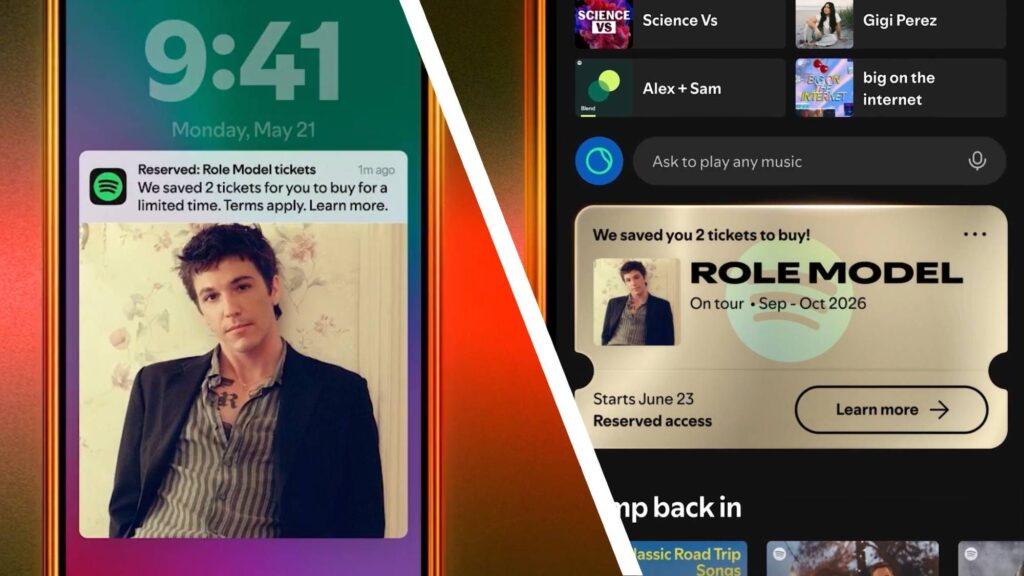
- Spotify is rolling out its booked gig priority scheme in the US.
- ROLE MODEL is the first associated artist, with more to follow
- ‘Top fans’ are determined based on overall engagement on Spotify, which raises questions about who the real fans really are.
A few weeks ago, Spotify introduced Reserved, its new priority scheme that gives top fans first choice of tickets to see their favorite artists on tour, and it’s finally available in the US today (June 18).
Premium subscribers aged 18 and over will be eligible for reserved access, which arose from Spotify’s partnership with Live Nation, powered by Ticketmaster. To start the new scheme, the singer ROLE MODEL will be the first official artist partner, who has just announced his tour of the United States.
Starting today, listeners will receive notifications letting them know if they meet Spotify’s criteria and qualify as ROLE MODEL’s “top fans.” From there, Spotify will reserve two tour tickets for eligible fans, which they will be able to purchase within a 24-hour period before tickets go on sale to the general public.

In addition to push notifications, Spotify says it will notify you if you’re a big fan via email and pop-ups in the “Your Updates” section of the Spotify app. The platform recommends having live event notifications turned on and making sure your app is up to date.
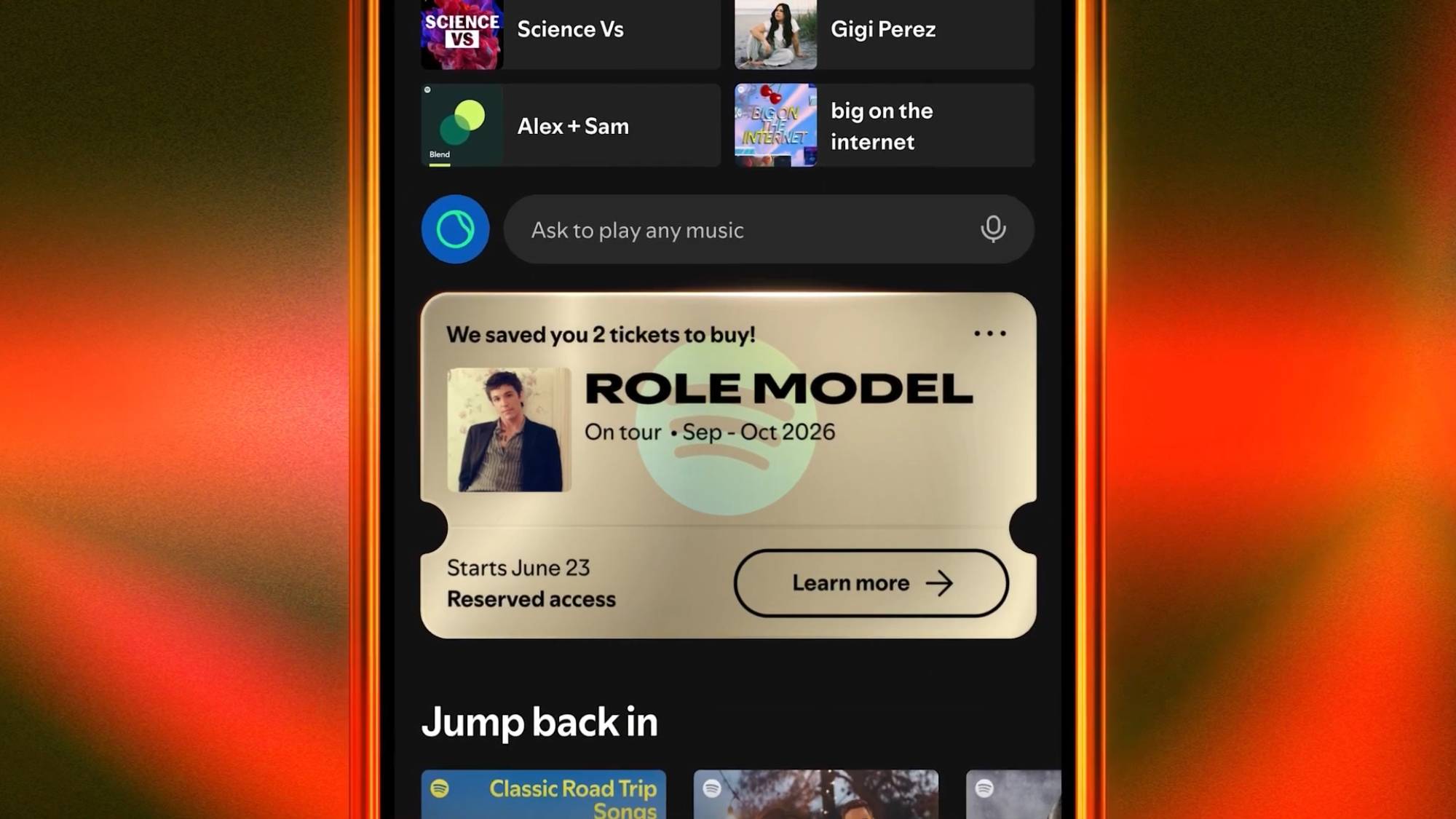
If you would like to claim your reserved tickets, tap the “Buy Now” button when the purchase window opens. Once you have selected your tickets, you will be taken to Ticketmaster where you can complete your purchase.
According to Spotify’s announcement, the platform says that if prompted, you will need to connect your Spotify account to your Ticketmaster account to verify your reserved access. When it comes to availability, Spotify notes that “reserved assignments include a variety of seats and prices, and specific availability varies by show,” adding the following:
“For some high-demand shows, you may enter a queue before reaching the ticket selection page. No matter what, two tour tickets will be reserved for you during the entire sales period. Each show has its own availability, so if you get to the end of a queue and your preferred seats are sold out, you will still have the opportunity to purchase other tickets.”
Once the purchase window closes, unclaimed reserved tickets will be given to the next most dedicated fans, and Spotify will notify them in the same way.
How do I know if I’m on the list?
This is the burning question we all want the answer to, and in short, there’s no way to know if you’ve met Spotify’s criteria before you receive a Reserved notification.
When deciding who qualifies as a “top fan,” Spotify doesn’t just take into account the number of times someone has streamed an artist. For the platform, everything is based on engagement, meaning it considers shares, saves, and your overall streaming history with the artist. “There’s nothing random about who gets chosen!” Spotify claims so, but the company keeps its cards close to its chest.
While the company says it uses the above to measure engagement, it refrains from revealing all the details about how it decides who the top fans are. This is because Spotify wants to avoid strategic compromise and prioritize authentic fandom (it also makes it clear that relying on background listening to increase streams won’t get you on the list).
Although you can buy tickets for any date on an artist’s tour, regardless of where you are, Spotify takes your location into account when deciding who the biggest fans are, which is a big deal. So, if an artist is on tour in a city that’s not far from you, you’ll be more likely to receive a Reserved notification, which is a punch in the gut for mega fans living in the sticks. Then there is the case of the fandom itself.
While I think Reserved could be a good preventive measure to stop ticket scalpers, there’s always the chance that it could make fan culture even more of a battleground for people to prove they’re “genuine” fans and gain bragging rights, when fandom has always been a place of community and not competition.
Does this mean that those who stream an artist to the end of the world are “bigger fans” than those who participate through other means outside of Spotify, for example by investing in physical music that goes directly into the artist’s pocket? Will Reserved solve a legitimate problem plaguing fans or is it simply a badge of honor?

Follow TechRadar on Google News and add us as a preferred source to receive news, reviews and opinions from our experts in your feeds.


