
CHAKWAL:
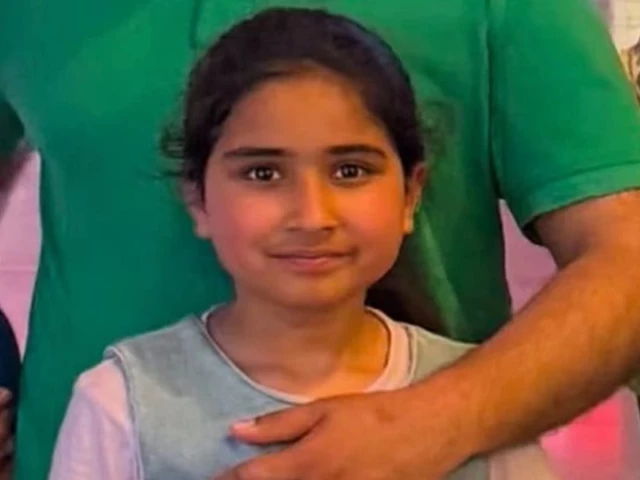
The Human Rights Commission of Pakistan (HRCP) on Thursday demanded a judicial inquiry into the murder of a nine-year-old Pakistani-Australian girl by the Punjab Crime Control Department (CCD) in Chakwal.
Hania Ahmed was fatally shot after law enforcement officers in Chakwal shot at her family’s car last Wednesday. The attack also seriously injured his father, Adeel Ahmed, 39, and his brother, Aafan Ahmed, 10, while his mother was unharmed in the incident.
The shooting was widely covered by Australian and international media, prompting calls for an independent investigation to determine the actual circumstances that led to the incident.
“We call for an immediate judicial investigation into the incident,” the HRCP said in a post on
“CCD appeared to be routinely adopting the use of lethal force as a tactic to ‘control’ crime,” the organization lamented.
He noted that he had documented 808 police encounters that killed at least 1,100 suspects since the department was formed in April of last year.
“The fact that this normalization of lethal force outside of due process has directly resulted in the death of a nine-year-old child should be a wake-up call for the Punjab government,” the publication notes.
“While CCD has acknowledged that this incident was a ‘violation’ of departmental rules, the incident cannot be treated as an isolated operational failure, nor can internal accountability substitute for independent oversight.”
HRCP notes with alarm that extrajudicial killings have continued in Punjab even though the organization had warned the Punjab government in an earlier report that @CCD_Punjab appeared to be routinely adopting the use of lethal force as a tactic to “control” crime. Since…
– Human Rights Commission of Pakistan (@HRCP87) June 18, 2026
On the other hand, a civil society activist appealed to Federal Constitutional Court (FCC) Chief Justice Aminuddin Khan to take suo motu cognizance of the Chakwal incident.
Pakistan Civil Society Network President Abdullah Malik, in a video message shared on social media, referred to a letter sent to the judge seeking “intervention” of the constitutional court for the “execution” of fundamental rights enshrined in the Constitution.
The letter cited Articles 9 and 10A of the Constitution, which guarantee all citizens the fundamental rights to due process and a fair trial. Furthermore, he stated that articles 8 to 28 emphasized that the State and its institutions were obliged to protect and enforce these fundamental rights.
The petition expressed “deep grief and concern” that the nation had witnessed “the tragic murder of nine-year-old Hania in Chakwal, allegedly due to indiscriminate firing by officials of CCD, Punjab”.
Malik highlighted the immense trauma the family suffered following the child’s death, caused by gunshot wounds.
The letter noted that the first information report (FIR) was initially registered under Section 322 of the Pakistan Penal Code and was later updated to include Section 302 “only after widespread public outrage, media scrutiny and civil society demands.”
He added that “such circumstances have created serious concerns regarding the fairness, transparency and independence of the investigation. The present matter is not simply an isolated incident but raises serious constitutional questions that affect the lives and freedoms of all citizens.”
Malik further asked, “Why are the suspects not produced before competent courts for a fair and impartial trial as guaranteed by Article 10A?”
He questioned that law enforcement “assumes the role of investigators, prosecutors, judges and executioners, contrary to the constitutional framework.”
Malik also asked why the due process established by law was not followed.
The letter underlined that all suspects and accused enjoyed fundamental rights under constitutional protection and no executive authority had the right to punish or execute any individual without a judicial determination.
Malik called for an immediate investigation into the circumstances surrounding the tragedy, noting that “extrajudicial executions seriously undermine the rule of law, weaken public confidence in the judicial system and erode the supremacy of the constitution.”
The activist hoped that the FCC would take suo motu note of the murder and order the establishment of an independent and transparent investigation under its supervision.
He also asked Justice Khan to ask the Punjab government and the CCD to explain the legal basis, statutory authority and standard operating procedures governing the use of lethal force.
The civil society leader also demanded that all officials involved in the “unlawful killing” be prosecuted strictly in accordance with the law.
He asked the FCC Chief Justice to examine the role and responsibility of the Punjab CCD chief to determine any shortcomings on his part and initiate proceedings as per law.
The activist pleaded with the judge to issue relevant instructions and orders to ensure the protection of human life and dignity, while noting that exceptions could be established through legal discourse.
the incident
According to police and family sources, Adeel, an Australian citizen residing in Perth, had arrived in Pakistan with his wife, Dr Sidra, and their children for a family holiday. The couple had recently performed the Haj and were visiting relatives across the region.
The incident took place late at night when the family was heading to a relative’s house for dinner. Near the CCD police station in Chakwal, armed suspects on a motorcycle intercepted the family’s vehicle and robbed them of cash and jewellery.
An exchange of fire subsequently took place between the arriving CCD personnel and the robbers. Panicked, Adeel tried to speed up and get his family away from the scene. However, CCD officials, assuming that the speeding vehicle belonged to fleeing suspects, opened indiscriminate fire.
The vehicle was hit multiple times by bullets, seriously injuring nine-year-old Hania. She was rushed to the district central hospital (DHQ) but succumbed to her injuries soon after her arrival.
His father, Adeel, and brother, Affan, also suffered serious gunshot wounds in the incident and were taken to a specialized medical center in Rawalpindi, where they remain under treatment. Dr. Sidra was unharmed.
The incident sparked a strong public reaction on social media and drew condemnation from civic circles, which demanded accountability for the alleged arrogance of law enforcement.
In a significant legal development, authorities amended the case against the arrested CCD official, upgrading the charge to Section 302 (premeditated murder) of the Pakistan Penal Code from the initial registration under Section 322, which refers to manslaughter or manslaughter.
On June 16, Australian Prime Minister Anthony Albanese had called for a “transparent” investigation into the death of the nine-year-old Pakistani-Australian girl shot dead “accidentally” by the Punjab CCD in Chakwal.
Hania’s post-mortem report, released today, revealed that at least 11 gunshot wounds were found on her body.
According to the legal medical report, five vital organs were hit by gunshots, causing wounds of between 1.5 and 3 centimeters. His head and neck were unharmed, while his liver, small and large intestines, lungs and other vital organs were injured.
The initial post-mortem report prepared by the Chakwal district central hospital identified the cause of death as fatal gunshot injuries, multiple trauma, excessive bleeding and cardiopulmonary arrest. Sources said the Punjab Forensic Laboratory in Lahore will issue a detailed report later.


