

You could say that Walt Disney Imagineering has been on a decades-long journey with audio-animatronics, which is essentially the technology behind iconic characters in parks around the world. What started with Tiki Birds has grown to give us legendary looks at other characters and, in recent years, Walt Disney himself.
Like the walking, talking wandering character Olaf, the BDX droids, or the Walt Disney animatronic, that innovation comes from a specific part of Walt Disney Imagineering, and that is the R&D (Research and Development) lab.
In late November 2025, Imagineering gave us our first look at next-generation audio-animatronic technology, one that could be expressive in entirely new ways because it used front projection.

As Leslie Evans, executive director of R&D at Walt Disney Imagineering Research & Development, told me: “We’re really looking for more tools to tell stories in an incredible way.”
Now, just seven months later, that same system is debuting inside a Disney park for the first time, and TechRadar has the exclusive first look, as I was one of the first to see it in Imagineering’s R&D lab.
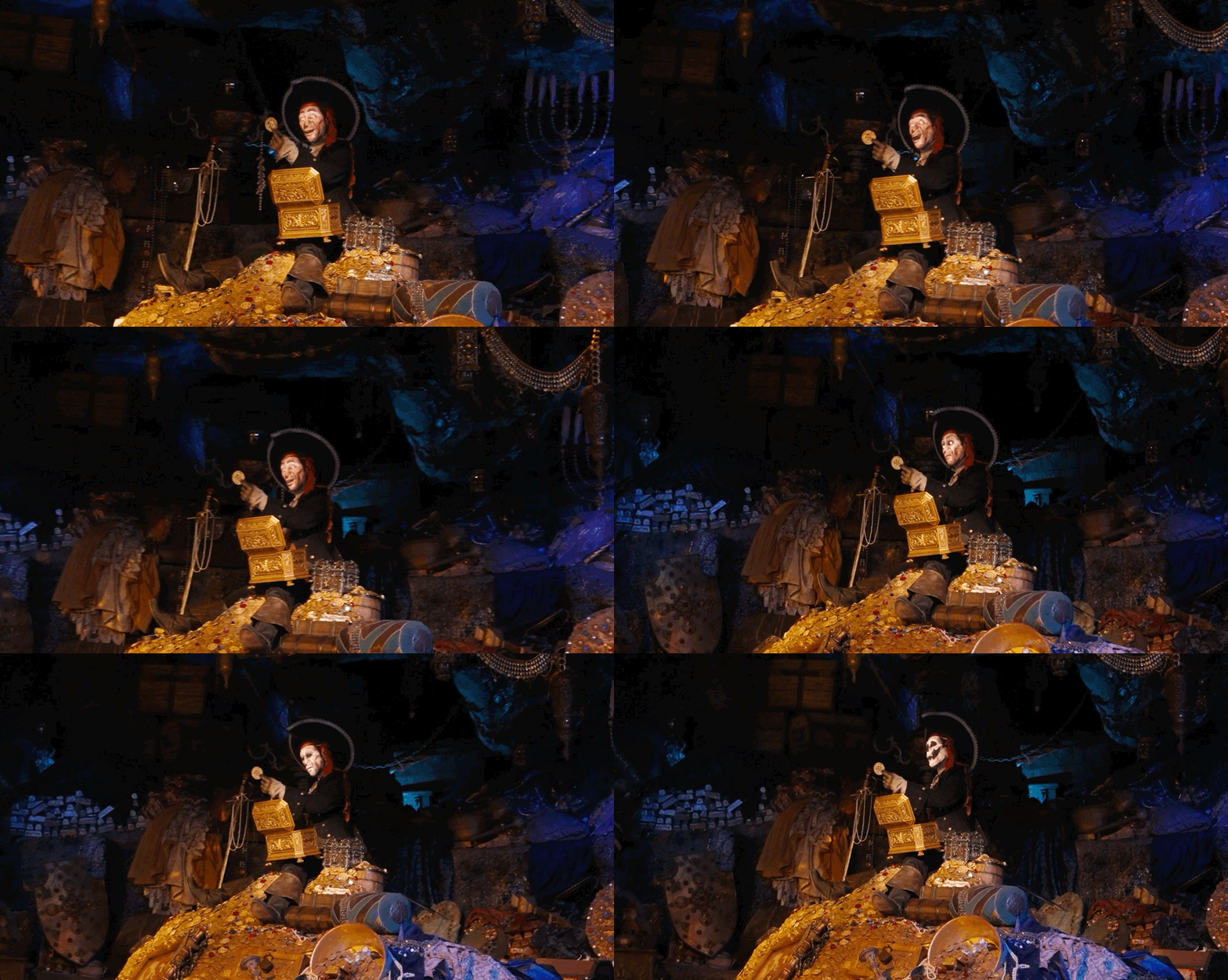
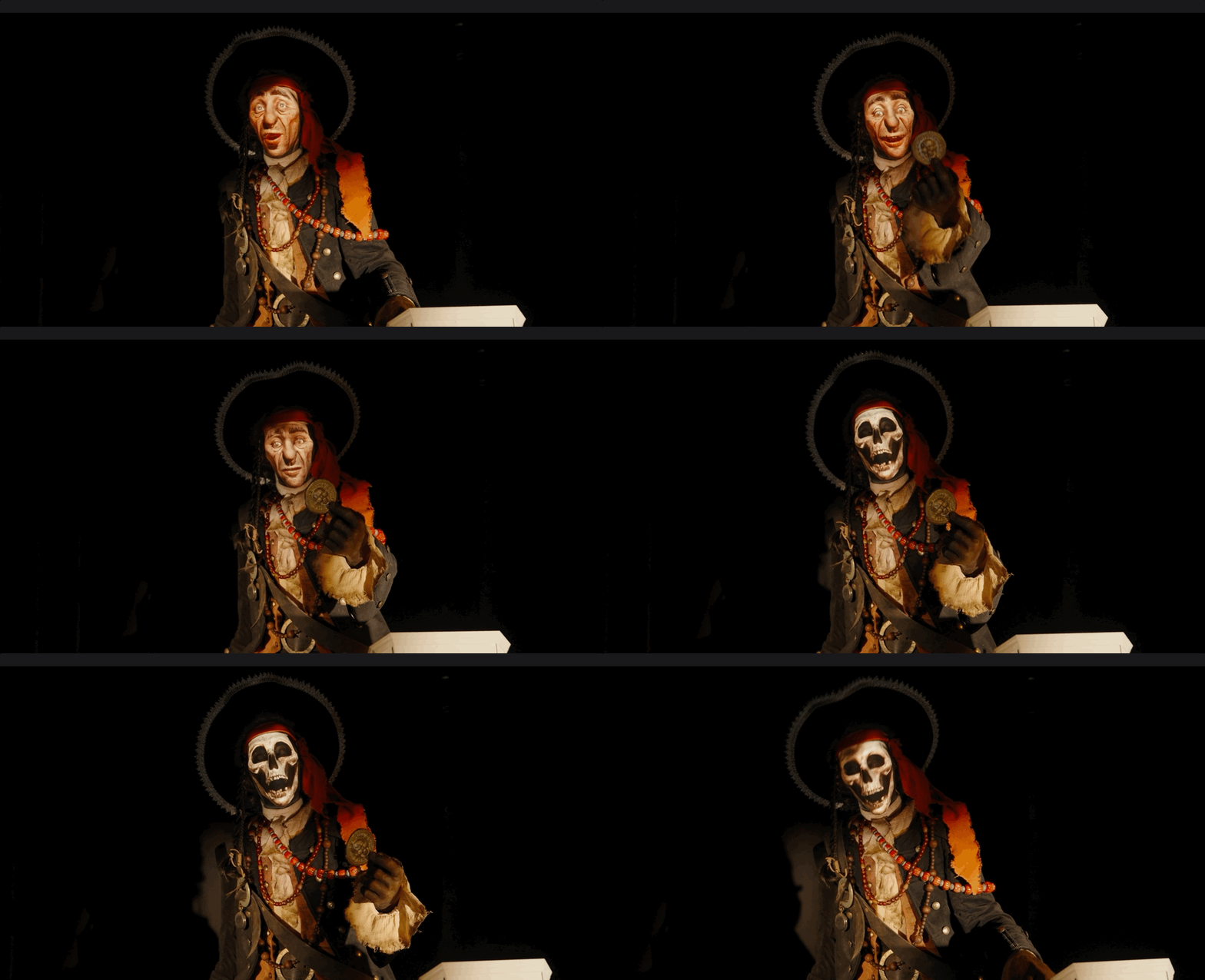
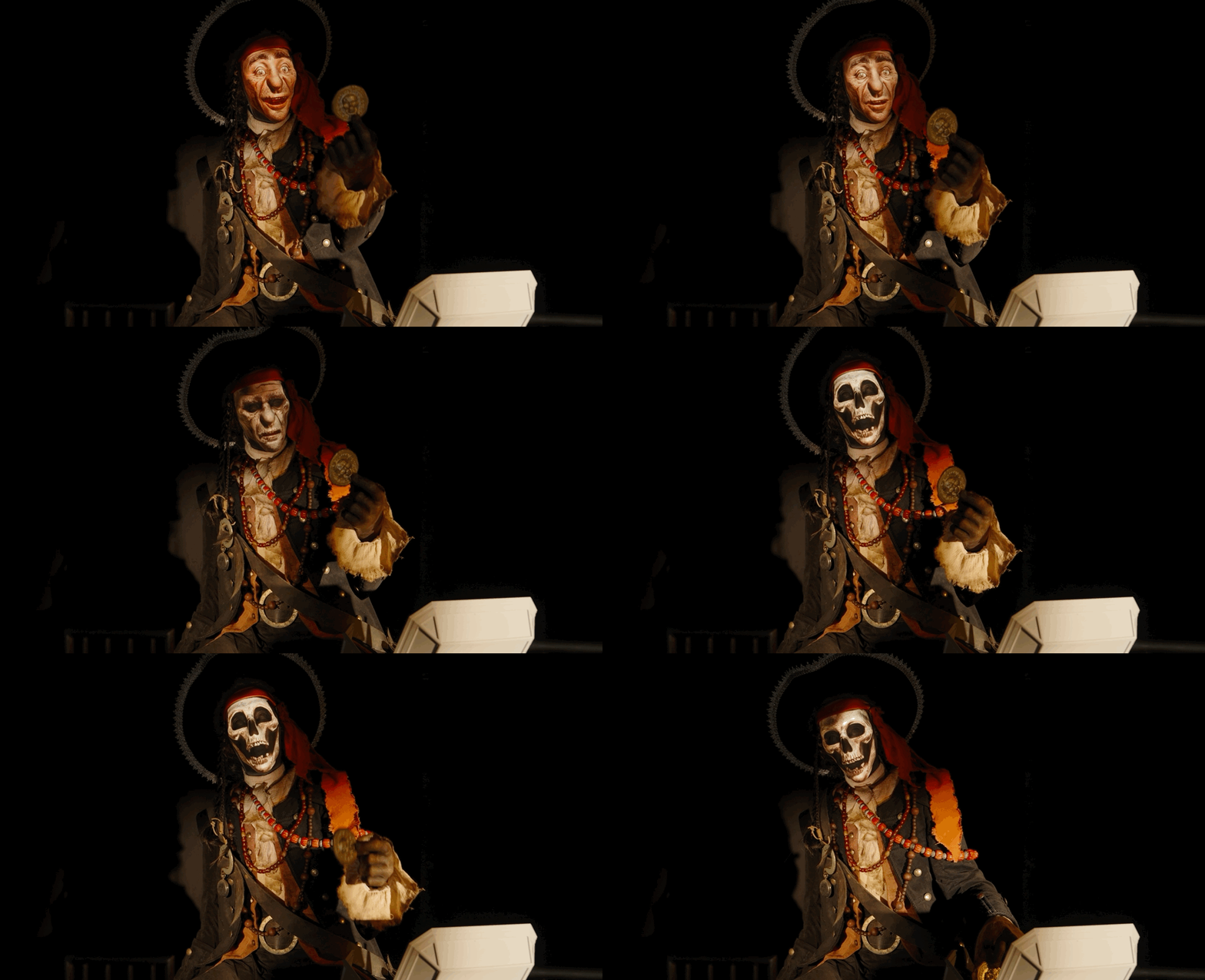
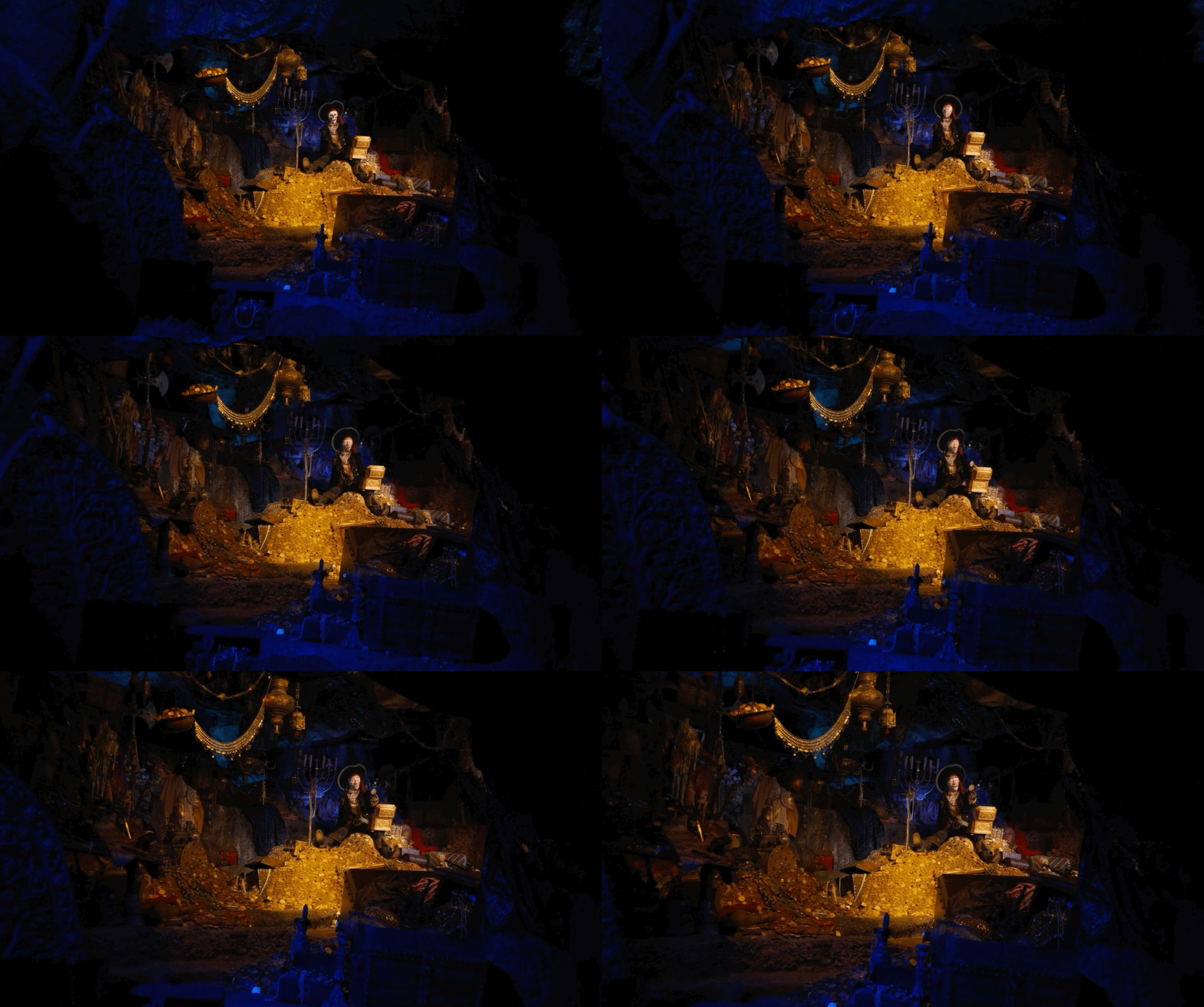
This next-generation pirate will make his Disneyland debut in the iconic Pirates of the Caribbean attraction, which reopens on Friday, June 26, 2026. For the first time, guests floating through the treasure-filled grotto will witness a pirate atop a pile of cursed gold transform from a flesh-and-blood pirate to a skeleton in a matter of seconds.
The choice of Pirates was no accident: as Evans explained, the team was “looking for a figure that we could creatively do a big transformation on” and ultimately came to the conclusion that “this pirate transformation would be a great first place to do it.” And considering it’s a long-running attraction at the original Disney park filled with countless audio-animatronics, it makes sense that this next-generation technology would debut there.
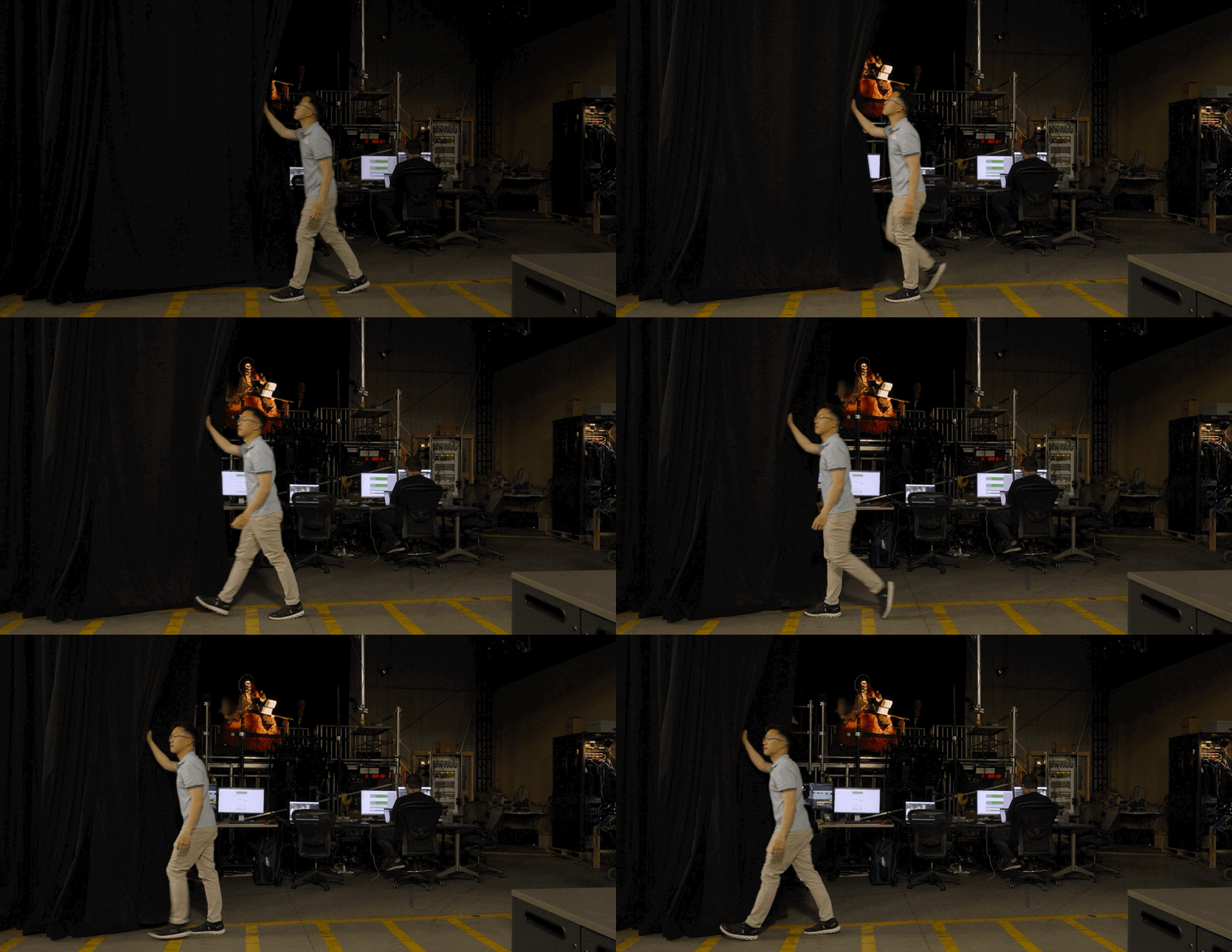
But let’s back up from the trip itself and come to Imagineering’s modest research and development laboratory in Glendale, California. I walked through a garage-like space with high ceilings and workstations, alongside generations of hydraulic animatronics (up to the A-1000 systems) before approaching a pirate figure elevated on scaffolding above a bank of workstations, with the Imagineers actively executing it below. That staging is intentional: Guests will look at the figure from a boat, and the lab reflects that line of sight exactly.
The technology behind the illusion
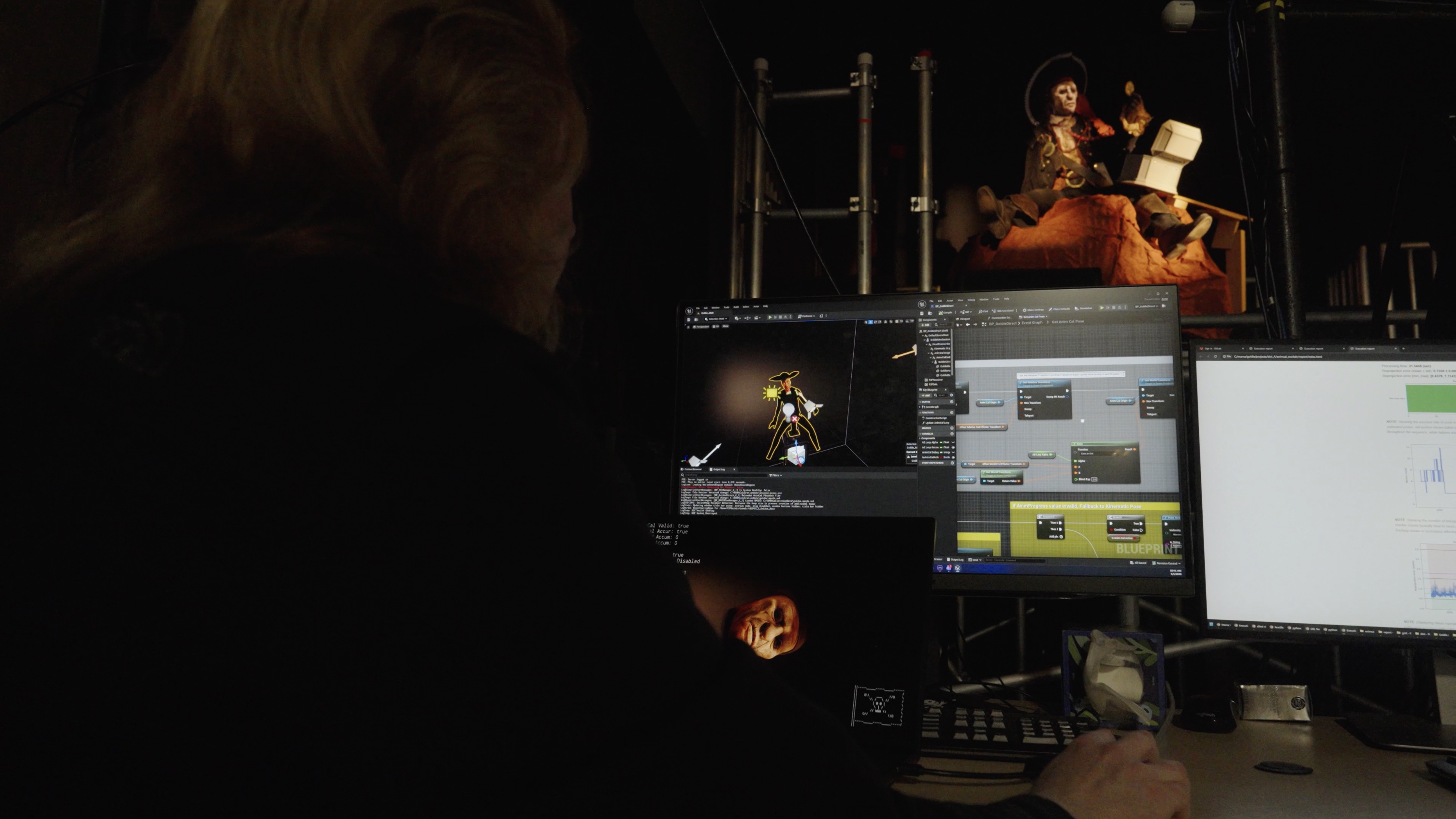
That, in fact, was the new next-generation animatronic. At first glance, it seems almost deceptively simple. But as Evans explained, the ambition behind it runs deep. “How can we allow transformations that before were perhaps really challenging or, in some cases, impossible? I want characters who can blush, who can cry,” he told me.
Unlike traditional Audio-Animatronics, which rely on complex mechanical systems for facial movement, this figure starts with a 3D printed shell and almost no visible mechanical articulation in the face.
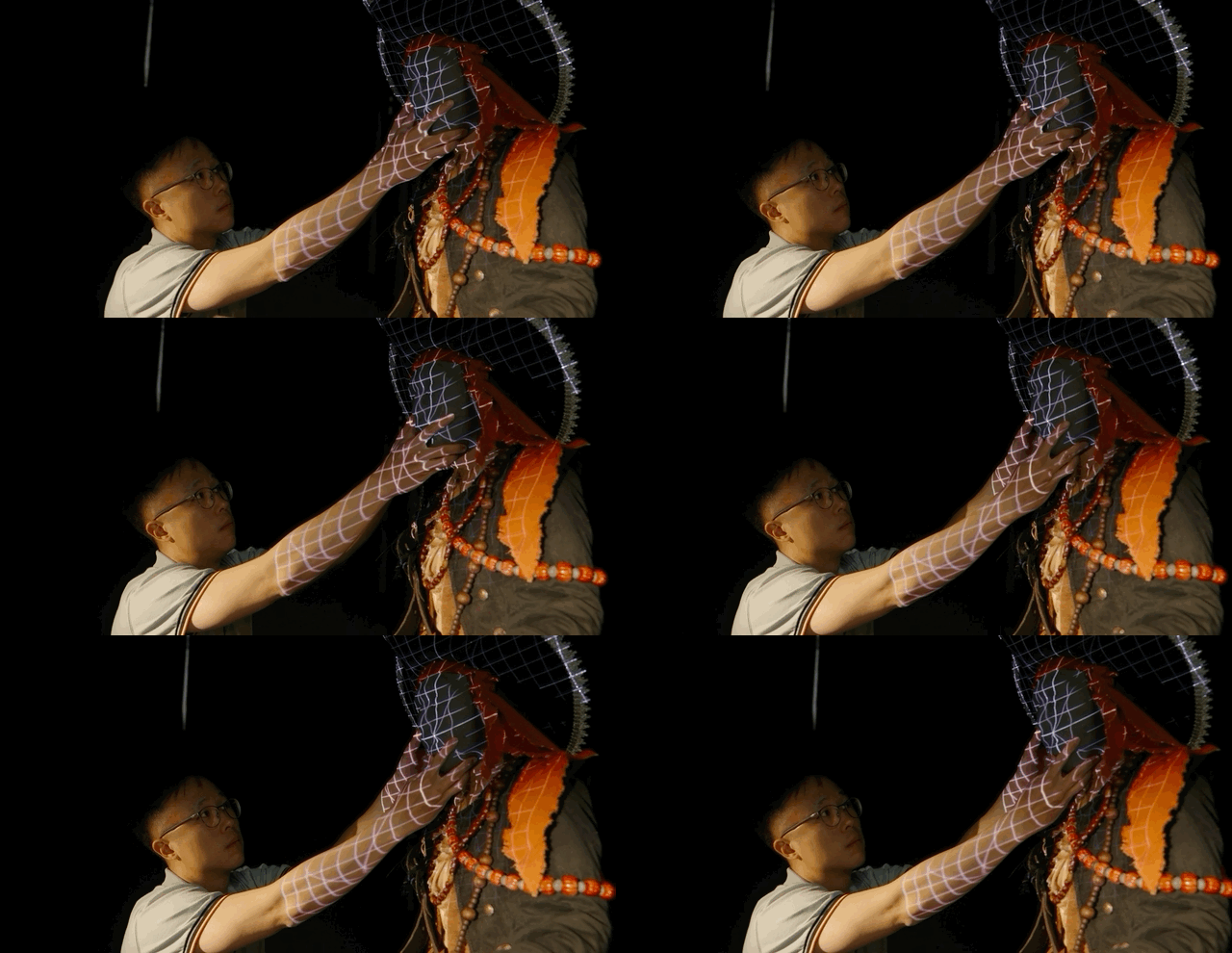
Instead, expression is driven almost entirely by a high-fidelity frontally projected image mapped directly to the character, and considering how far computer graphics and rendering have come, this dramatically expands what Imagineers can create with physical characters. Think of a person who cries, laughs, smiles with emotion, and is ultimately more human.
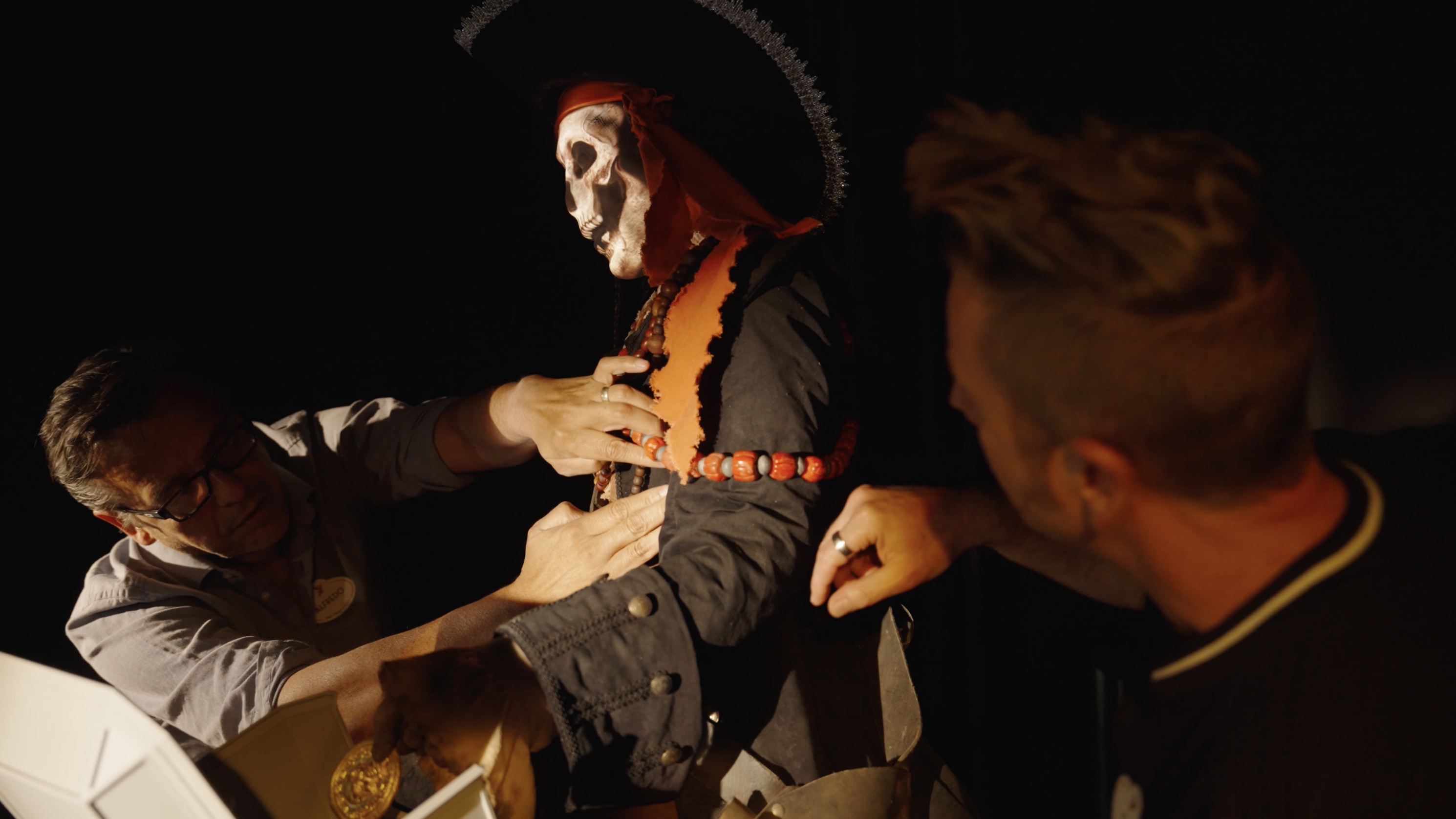
The appearance of that process up close is striking in its own right. During calibration, a blue and white mesh grid is projected across the entire figure, mapping the projection system precisely to each contour of the physical surface, from the brim of the hat to the beads around the neck. It’s a peek behind the curtain that makes technology suddenly legible: that’s how light turns into skin or bone. Once the mapping is locked, the projected character snaps into place with a precision that’s really hard to believe until you’re in front of it.
Installed in Pirates of the Caribbean, this next-generation audio animatronic system has multiple sensors that complete calibration daily, as well as the necessary computer system and projection technology, and redundancies for all of them. Considering it also works on a dark water ride, there is a cooling system and filtration system for the various components to keep them running day after day.
However, that simplicity was deliberate – the result of rigorous testing. Evans and his team actually built and tested versions of this next-generation technology with individual facial features, including the nose, projecting onto them and asking a specific question each time: “Does this add anything? Does this bit of extra complexity give us anything from a creative standpoint?” If the answer was no, it was cut.
As Evans described it: “We started from that moment of ‘let’s try this and we’ll only keep what we really need.'”
The nose didn’t make it. The jaw did it.
Disney’s new combination of animatronics and game engines
Evans called it simply “a very interesting tool,” and while he’s not interested in where it goes beyond Pirates, that understatement might be the point.
That shift takes expressive details out of mechanics and into real-time rendering, powered by a digital pipeline connecting Unreal Engine-based systems and animation tools. Evans talked about the moment those pieces converged. “When you actually had animatronic technology, real-time game engines, and incredible CG assets all together… that’s when we said, wait, we really have something here,” he said.
But getting there required bringing all disciplines together. As Evans said: “That’s the absolutely magical thing about this team of people… when you bring them all together and say, ‘this is the North Star, what are those key components that we need to make this happen?'”
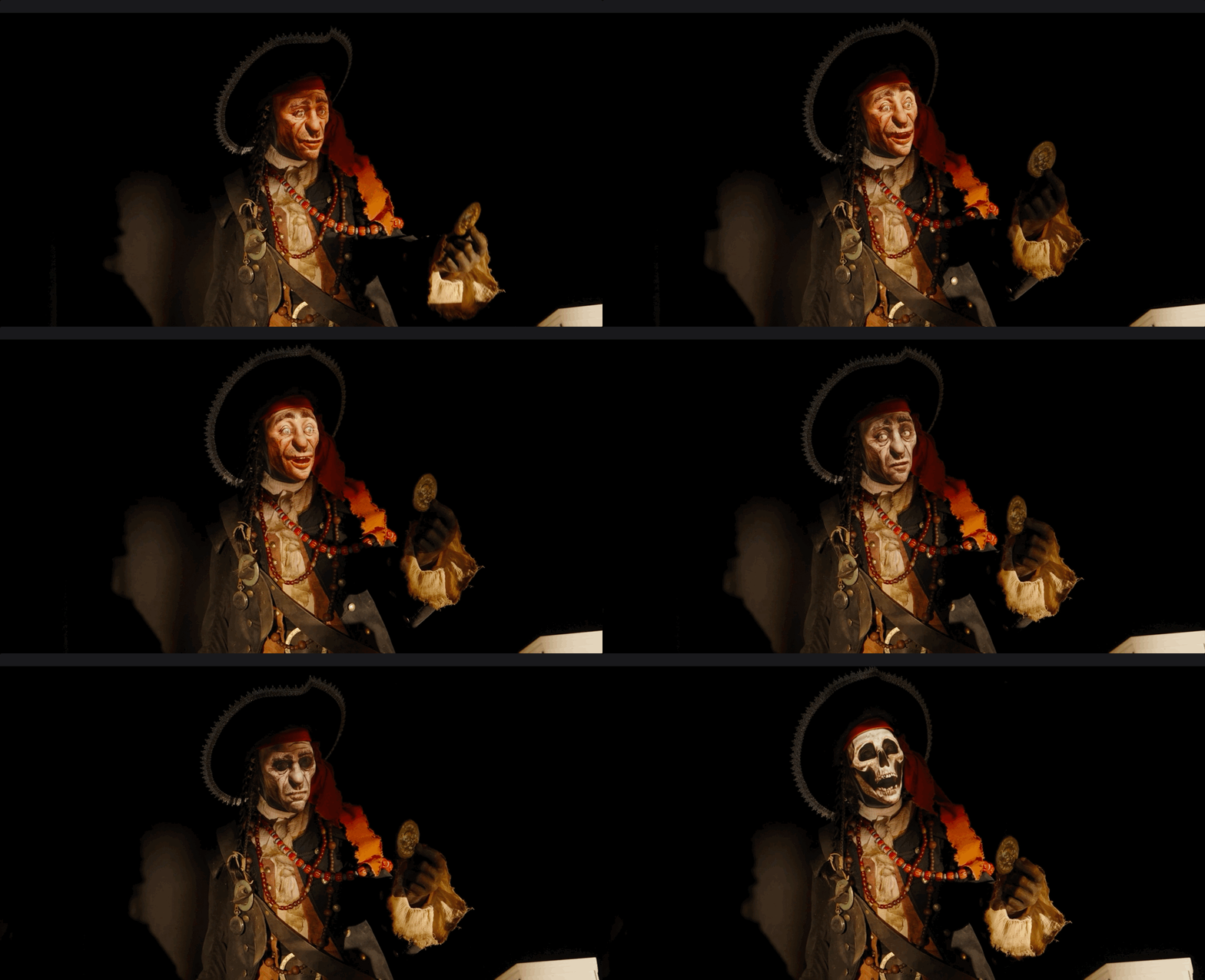
What that unlocks is a character capable of performing a visual transformation in real time. Because the projection is dynamic, the character can change emotional tone and surface details in ways that traditional animatronics simply cannot: from subtle expressions such as sadness or joy, to more dramatic changes that reshape the way the character is perceived entirely. In Pirates, that means watching a single figure move between the pirate and the skeleton in real time, telling a more complete version of a story.
The underlying physical system is still there, but simplified. The body retains enough traditional mechanical movement to interact with the environment, while the face becomes a canvas for projection-driven expression. Redundant projection systems are also incorporated for greater reliability, essential for a high-performance attraction like Pirates of the Caribbean.
And while Disney wouldn’t go into complete technical breakdowns, the computing setup that runs it is more architecturally similar to a high-end gaming PC than traditional show-control hardware. However, as we’ve seen with Smugglers Run and Buzz Lightyear Space Ranger Spin, the confusion between attraction systems and games is becoming blurred.
Disney engineers even physically mapped the attraction’s route within the R&D lab to simulate what guests will see from the ship’s vehicles, ensuring the transformation reads correctly from multiple angles.
A platform, not just a pirate
Evans was clear about what’s driving all of this, telling me, “We want you to believe it’s real…we’re trying to make people feel it.”
He added: “We don’t build technology for the sake of it. It’s all about telling a great story to our guests.”
The proof that it works came not from the engineers who built it, but from the first people who didn’t. Evans described seeing new audiences encounter the figure for the first time. “Our people are standing in front of this character for minutes, watching this transformation of cycling happen over and over again, and they’re still a little hypnotized by it. That’s when we had that moment of going, yeah, I think we did something good,” he said.
And I can echo that. After the first look, I stood in front of him, walking from different angles, watching this pirate cycle from human to skeleton after taking the bait of a gold coin. It provokes a genuine reaction of joy; It’s deeply impressive and I look forward to seeing it up and running at Disneyland along with the other animatronics that have defined that ride for decades.
It is a combination of past, present and future in terms of technology. And that’s where things start to open up beyond Pirates. What Disney is building here is not a single animatronic, but a platform to bring real-time characters with much more detailed expressions to physical environments and attractions in a very scalable way.
So if a pirate can transform from human to skeleton in real time, the question is what will happen when that system reaches the rest of the Disney character universe. Pirates of the Caribbean is where visitors will see it for the first time, but if Imagineering’s track record is any indication, it won’t be the last.

Follow TechRadar on Google News and add us as a preferred source to receive news, reviews and opinions from our experts in your feeds.


