
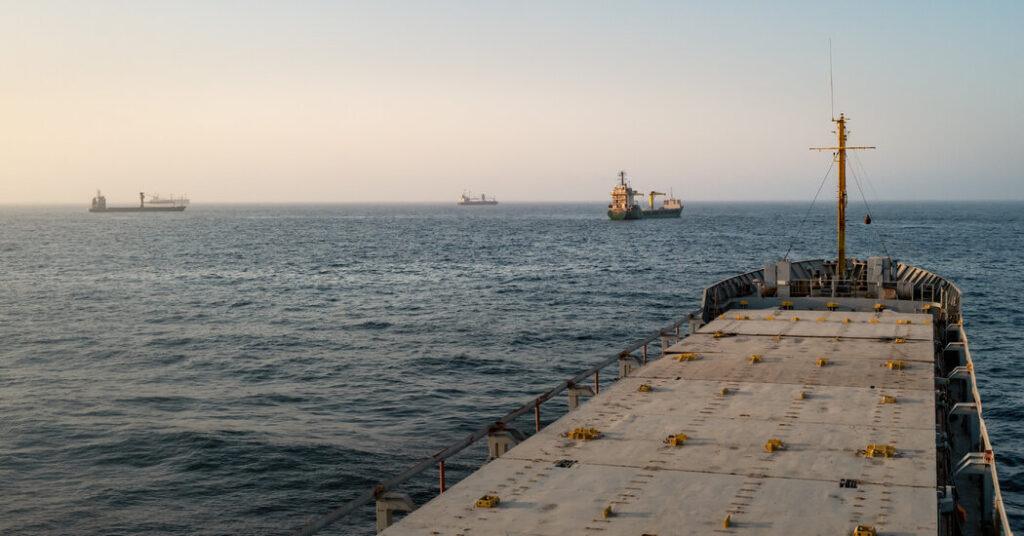
Traffic through the Strait of Hormuz recovered on Monday after a weekend slowdown caused by an upsurge in attacks between Iran and the United States.
According to data from Kpler, a maritime monitoring company, 40 ships transited the waterway, compared to 24 the previous day and 39 on Saturday.
Ships began moving in greater numbers last week after the United States and Iran agreed to a ceasefire and a 60-day negotiating period to end the war. Last Wednesday, 76 ships passed through the strait, a critical route for oil and gas shipments, the most since March 1.
Hundreds of vessels have been stranded in the Persian Gulf since Iran effectively blocked the waterway after the United States and Israel attacked it in late February. Iran has insisted that ships now use a route close to its coast to pass through the strait. While many ships have complied, others have been transiting an alternative route near the coast of Oman, often with the help of the US military.
Ships passing through the strait on Monday were roughly divided between the Omani route, which has primarily been used to travel from west to east, and the Iranian route, which has primarily been a route for ships going from east to west. But many ships turn off their transponders before crossing the strait, making it difficult to identify details of the route they have taken and providing a partial picture of the volume of traffic.
American and Iranian negotiators are expected to arrive in Qatar on Tuesday for a new round of talks. The two countries remain far apart on important issues, including the future of Iran’s nuclear program.


