
Once a niche crypto product, perpetual futures have become one of the fastest growing markets in the industry. In addition to cryptocurrencies like bitcoin, trading platforms are increasingly listing contracts tied to stocks, commodities, and other real-world assets, blurring the line between traditional and crypto-native financial markets.
Led by former Revolut chief cryptocurrency officer Ruslan Fakhrutdinov, Extended had processed more than $245 billion in trading volume as of June and supports more than 100 perpetual markets, according to the company.
The firm said it plans to expand into spot trading, real-world tokenized assets, and multi-asset collateral.
“The first phase was construction for DeFi natives,” Fakhrutdinov said in a statement. “The next step is to expand the infrastructure and partnerships needed to support the next stage of on-chain derivatives.”
The investment points to a broader race to become what is best described as the “everything exchange” or “everything app” for the financial markets. Coinbase (COIN) has expanded into perpetual futures, Robinhood is combining tokenized stocks with event contracts and commodity felons, and prediction market operator Kalshi recently entered the perpetual futures business.
As trading increasingly moves toward a blockchain environment, the lines between brokerages, cryptocurrency exchanges, and prediction markets are becoming harder to distinguish.
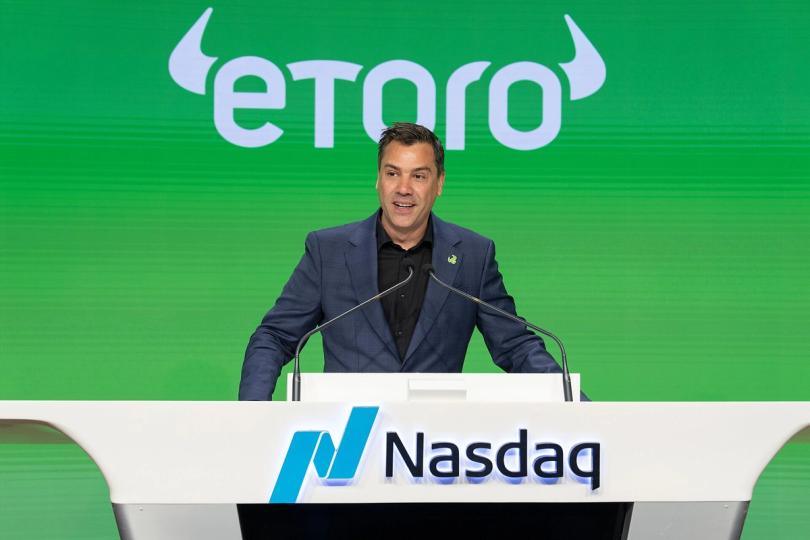
“Capital markets are increasingly converging with digital asset infrastructure,” Zengo CEO Ouriel Ohayon said in a statement. “eToro’s investment in Extended reflects a mutual belief that the future of trading will be digital, accessible and able to operate 24/7, beyond the traditional trading week.”


