NEWNow you can listen to Pak Gazette articles!
After celebrating a long-awaited victory in the World Cup knockout round on Wednesday night, United States men’s national team head coach Mauricio Pochettino now has a big decision before him: what to do as a center forward.
Folarin Balogun is suspended for Monday’s next round of 16 match against Belgium after receiving a red card in the 64th minute against Bosnia and Herzegovina. Balogun has been excellent in this World Cup, scoring twice against Paraguay, forcing an own goal in the United States’ victory over Australia and scoring again on Wednesday before being sent off.
The American team will now be left without its best scoring option against Belgium. Pochettino has several different ways of approaching the team’s attack, but these are the options he is likely to consider:
Option 1: All Aboard ‘The Train’
(Photo by Sarah Stier – FIFA/FIFA via Getty Images)
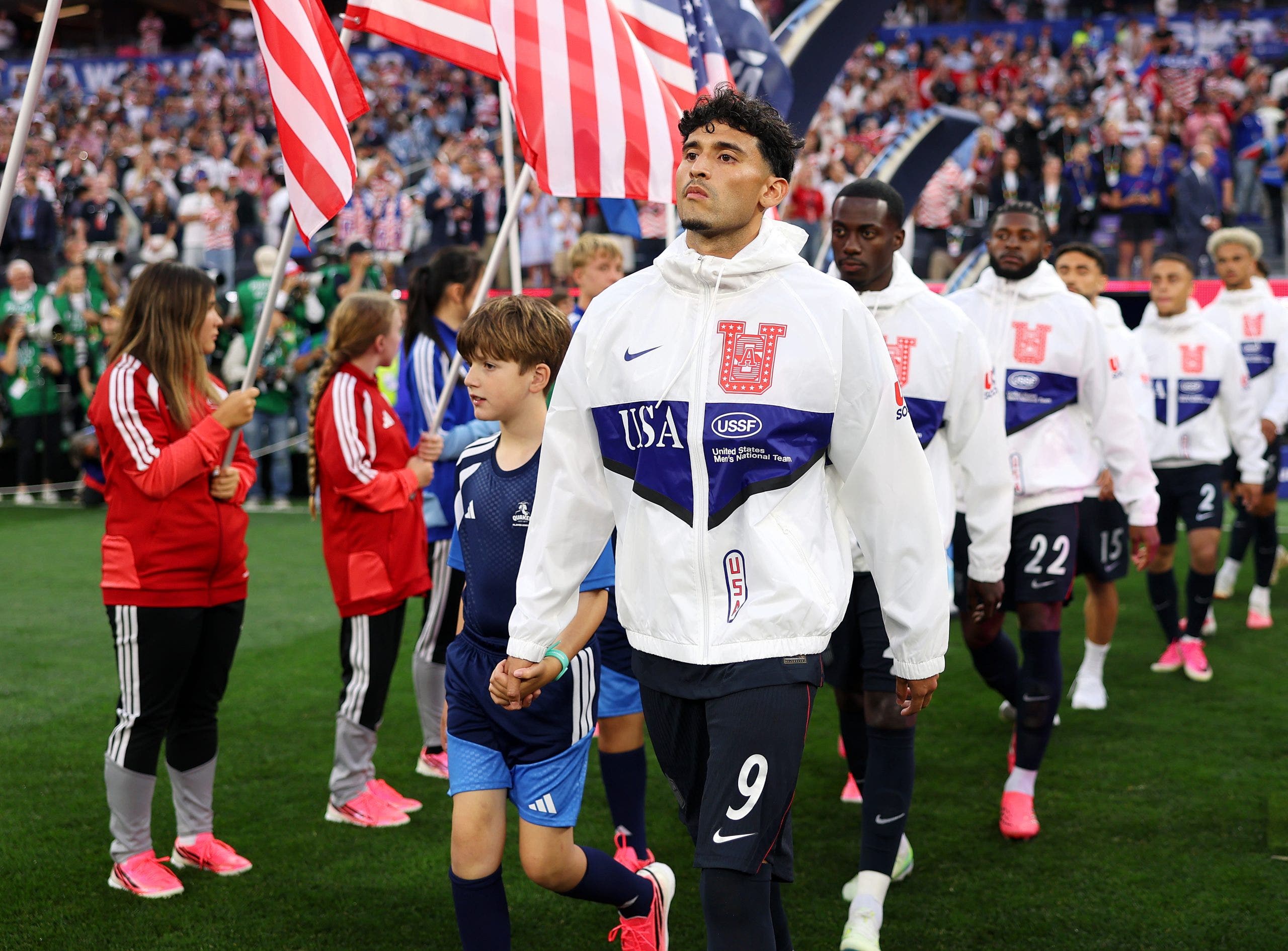
Pochettino has used the same starting line-up and formation in the matches against Paraguay and Bosnia and Herzegovina. In those two games, the United States won each time and outscored their opponents 6-1.
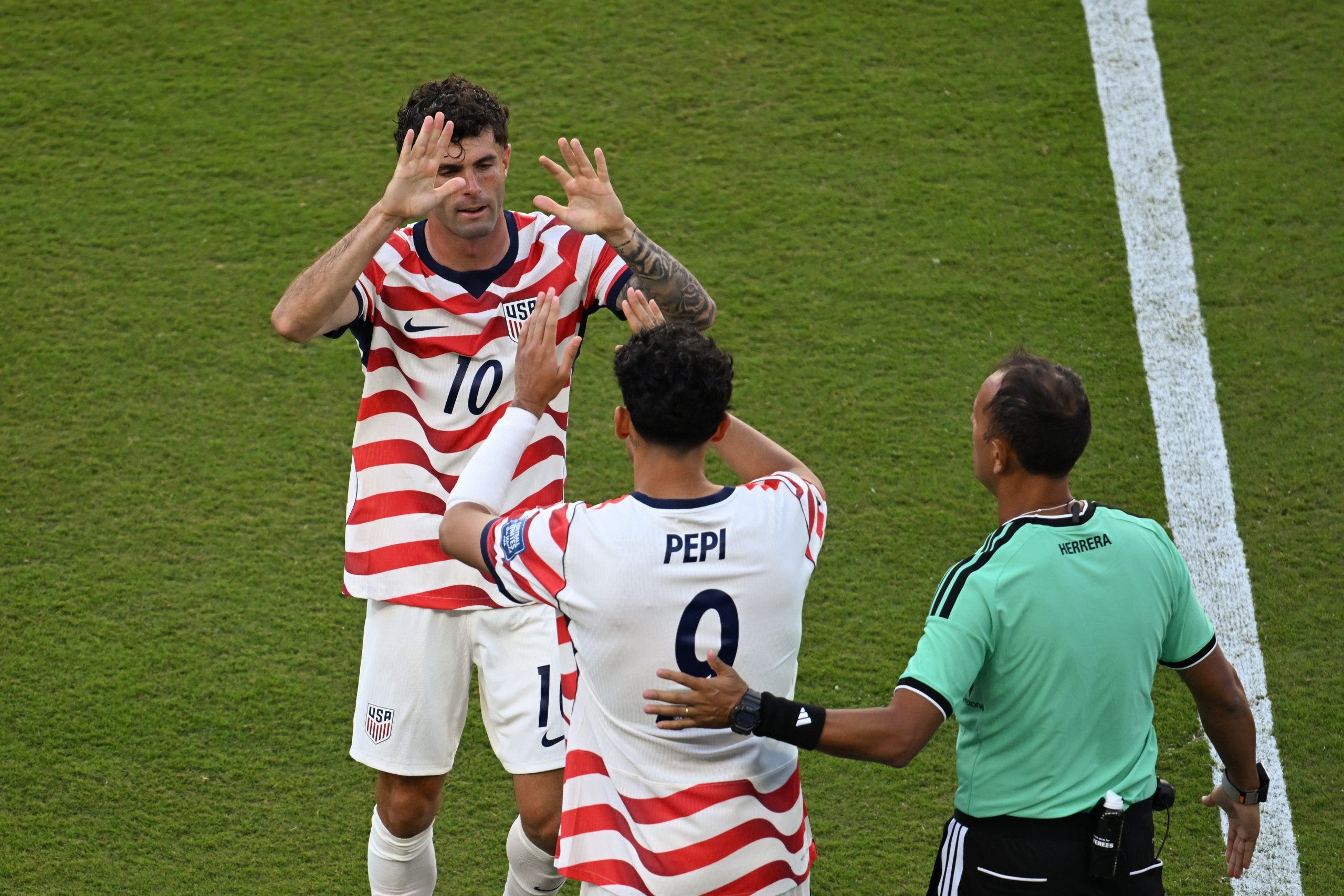
The most likely thing against Belgium is to change Ricardo Pepi for Balogun and keep the other 10 players in the same position and with the same responsibilities. That option requires fewer changes and keeps players moving forward with the same assignments that have been working.
The good news for the American team is that Pepi is still a very successful striker who scored 19 goals for PSV Eindhoven this season. This included a highly efficient career in the UEFA Champions League, where he scored three goals and picked up one assist in just 149 minutes in the sport’s premier club competition.
There are two concerns about this approach. Firstly, Pepi has not played very well for the national team under Pochettino and there are doubts about his fit in the Argentine system. Secondly, Pepi has a very different profile than Balogun.
Balogun’s style is that he is world class when it comes to running behind opposing defences. For Balogun to be effective, he needs a lot of positive chemistry with his teammates who know when to run and how to deliver the ball to him. This takes time to develop and is probably the main reason why it took until last season for Balogun to be at his best with Monaco. Likewise, it took a long time for Balogun to play comfortably with the American team.
Pepi doesn’t need that kind of chemistry. He is more of a classic striker who reads the game in the box, knows how to get into dangerous spots and is much more of an aerial threat than Balogun.
But the reason Pepi might get the nod was because his best performance for the U.S. team came right before the tournament, in a 3-2 win over Senegal. In that match Pepi did not score, but he combined very well with Pulisic in counterattacks after losing the ball.
The American team won’t be able to play exactly the same way with Pepi instead of Balogun. But they get someone who can combine better in the build-up and will be a good finisher in the box.
Senegal’s game just before the tournament gives the best idea of how the team will play without Balogun. Expect Pochettino to emulate Senegal’s game plan, but with key players like Tillman and McKennie available (neither started that game).
 Option 2: the price is ‘correct’
(Photo by Jane Gershovich/ISI Photos/ISI Photos via Getty Images)
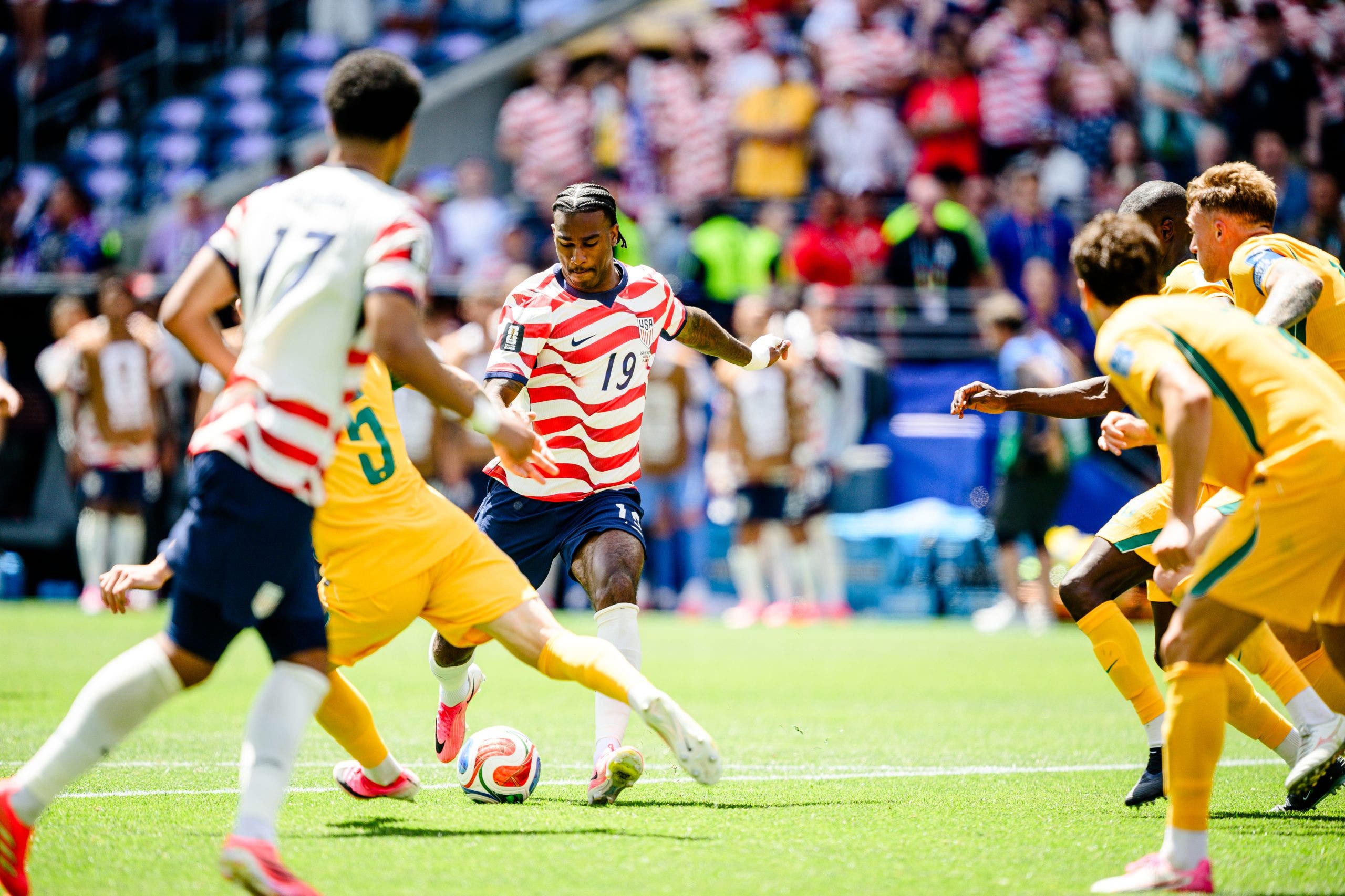
Casting Haji Wright in the role of Balogun is another option Pochettino could consider. Wright is more like Balogun than Pepi. His goals for Coventry, as well as for the US team in the friendly against Australia in October 2025, show that Wright wants to run and get behind the defence.
But Wright hasn’t been a great option for Team USA in the past month either, and seems like a very distant backup. Even with squads rotated in the pre-tournament friendly and the match against Turkiye, Wright has only made one appearance (a late cameo against Australia).
Now giving Wright a big role in a World Cup qualifier seems like a stretch unless there are injuries to players like Pepi and Pulisic.
 Option 3: Pulisic as a ‘false 9’
(Photo by John Todd/ISI Photos/ISI Photos via Getty Images).
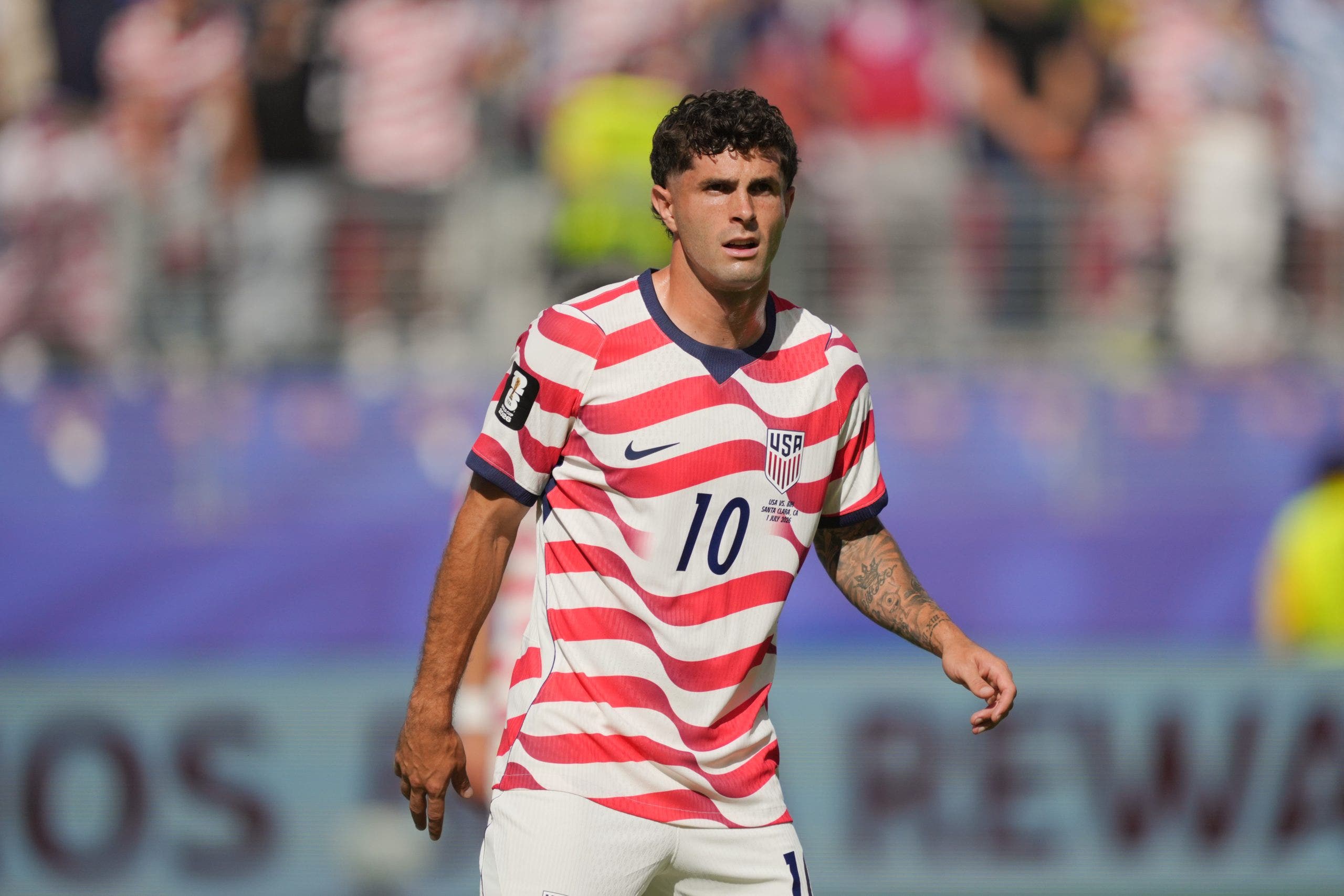
Exploring other approaches Pochettino has used, there was also the 2-0 friendly defeat against Portugal, when Pulisic played as a false nine forward without a true centre-forward in the mix.
That match didn’t go particularly well, but Pulisic is in much better shape now than he was in March.
The obvious problem with this formation is that it eliminates the team’s best one-on-one attacker from the outside. That’s where so many of Team USA’s best opportunities originate that it seems reckless to take the team’s best player and put him in an uncomfortable role.
If Pulisic were to come into a false nine position, he would need another winger like Gio Reyna, Alex Zendejas or Tim Weah (who seems to have lost confidence). There is also a chance that Tillman or McKennie move out and then Sebastian Berhalter moves into midfield.
Pochettino has used it, so it cannot be completely ruled out. But it does require the team to deviate from its three World Cup victories so far.
 Option 4: two-forward configuration
(Photo by Lyndsay Radnedge/ISI Photos/ISI Photos via Getty Images).
Pochettino is not afraid to mix things up. When Pulisic was injured for the group match against Australia, Pochettino mixed up the formation and opted for a two-forward setup with Pepi and Balogun starting together.
Apart from Pulisic in a false nine role, is there another formation that Pochettino could use as a surprise against Belgium?
It is possible but unlikely. Pepi and Wright were able to mimic the two-striker setup used against Australia, but only with Pulisic remaining in the lineup. A big problem, of course, is that someone, probably a midfielder, would have to leave the lineup. Tillman, McKennie and Adams are overly critical of the way they have been playing.