

It appears that Microsoft has explored the idea of building Windows entirely around AI in the past, according to a leaked video from a couple of years ago.
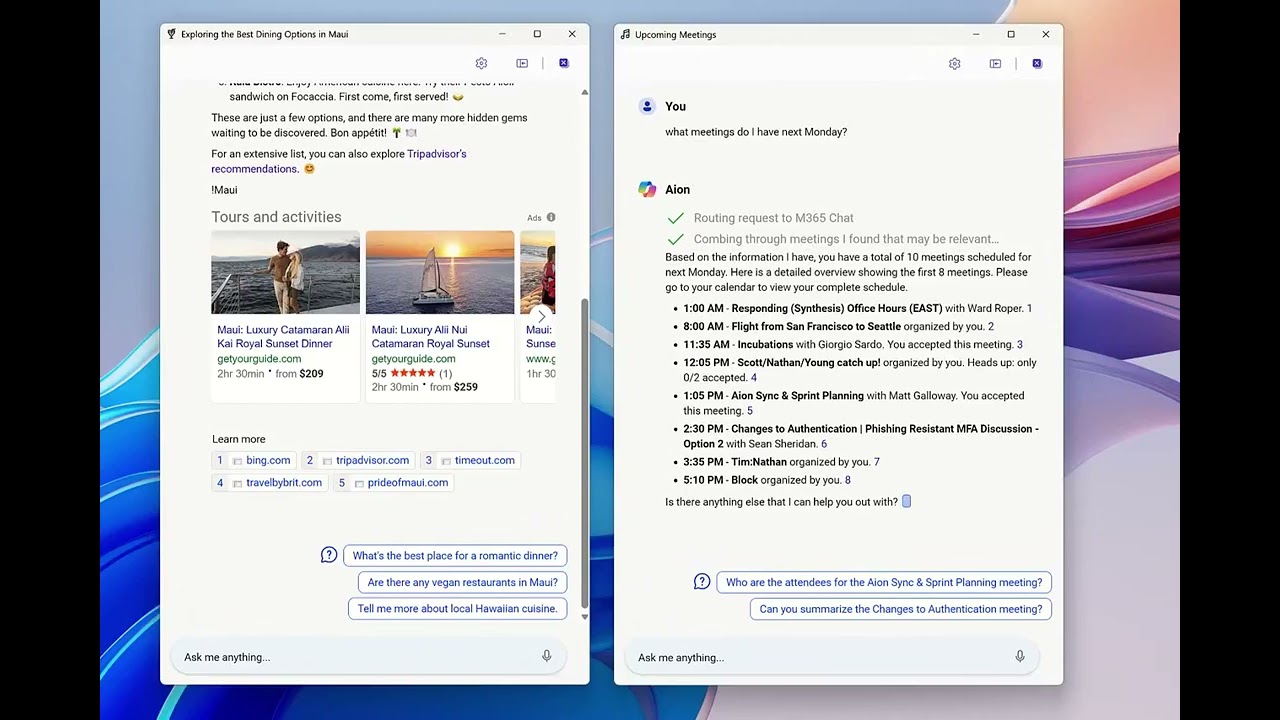
Windows Central highlighted a video (see below) that lasts a few minutes and was leaked via the BetaWiki Discord server, and Zac Bowden of our sister site noted that sources have provided assurances that the clip is real. It shows an AI-focused version of Windows built around Copilot and apparently codenamed Aion.
The concept shown is a lightweight web-based operating system, meaning it is built on top of web applications rather than native Windows applications. In other words, it won’t run standard Windows (Win32) software, with the idea being to stream those apps to the desktop if necessary (meaning they run from the cloud, or more specifically, Windows 365, Microsoft’s cloud PC offering).

It’s kind of like Microsoft’s version of ChromeOS, leveraging the cloud, except it’s built around the Edge browser and Copilot.
Copilot runs the program and is the central actor in the Start menu, and the idea is that the AI will provide contextual suggestions here, remembering previous interactions to try to anticipate what the user might need.
In the video, Microsoft explains that Aion aims to break the “traditional app-centric” approach to grouping on the taskbar, instead using ‘Spaces’ that act as groups into which applications, websites or files belonging to the same targets are deposited.
Look
Analysis: AI on or off? He seems more inclined towards the latter.
Spaces’ thematic approach sounds more like the Sets idea that Microsoft toyed with in Windows 10 almost a decade ago, only to abandon the concept. Except this time it’s grouped content organized and curated by AI.
The Aion concept has not been well received by the computing public as you might imagine. One commenter on the video simply states, “This company has completely lost its way.”
Another observes that it’s “like ChromeOS for people who don’t know how to use a computer at all.”
And yet another points out: “How did they make even simple web apps look sluggish and sluggish? One of the strengths of ChromeOS is that it’s very fast even on old, slow machines.”
In fact, there are some people who are not impressed with how clunky and slow the operating system appears to be in the video. However, to be fair to Microsoft, it’s just a conceptual illustration and initial working code (although it must be said that the obvious lack of fluidity doesn’t look good). Bowden explains that the video was recorded sometime in 2024 and that “it’s not clear if this was just a Hackathon project or something else.”
However, the ideas explored within Aion could well be a clue as to where Microsoft is headed with next-generation Windows. Which may be worrying to some, of course, but you better get used to these ideas.
While Microsoft has promised to reduce AI excesses in Windows 11, it’s more about streamlining submenus here and there and removing Copilot features from certain apps than any kind of wholesale change in philosophy regarding AI. Windows 11 is getting AI agents, and in fact, they’re the next big thing for the operating system, if Microsoft has anything to do with it (and, oddly enough, it does).
In fact, with Project Solara, Microsoft plans to bring AI agents to all types of devices in the world, beyond simple PCs and phones. Bowden theorizes that perhaps Aion evolved into Solara.
Whatever the case, Aion is still around, believe it or not: Microsoft revealed a new family of local AI models running under the same name in Build 2026. These are a “new generation of small language models that are smaller, faster, and more efficient than our previous Windows OS SLMs,” as Microsoft explains here. Aion is apparently still alive in some form, even if it’s a very different idea than the notion of a completely Copilot-based operating system.

Follow TechRadar on Google News and add us as a preferred source to receive news, reviews and opinions from our experts in your feeds.


