
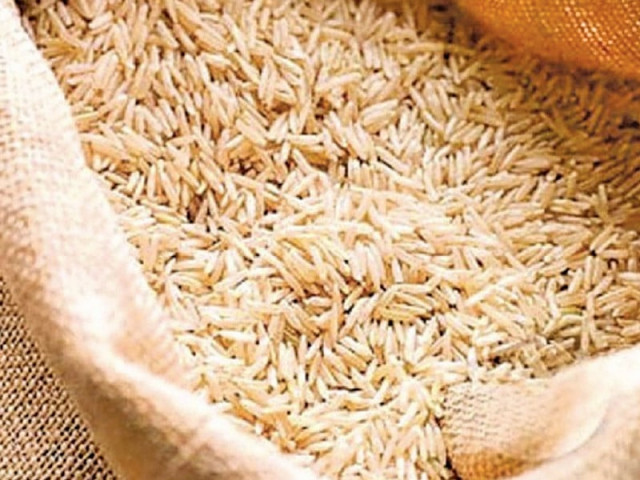
Basmati rice exports are slowing down, with exporters shipping 66,863 metric tons worth $76.861 million. The decline is attributed to stiff competition with India, which offers Pusa rice varieties that resemble Basmati at lower prices. photo: file
ISLAMABAD:
Pakistan has suffered export losses worth $1.1 billion due to the closure of the Afghan border, while the conflict in the Middle East has further eroded overseas shipments by about $2 billion, the National Assembly’s Standing Committee on Trade reported on Friday.
Meeting under the chairmanship of Javed Hanif Khan, the committee examined the impact of regional conflicts on Pakistan’s foreign trade.
Commerce Secretary Jawad Paul told lawmakers that transit trade and exports had declined by $1.2 billion during the first nine months of the current fiscal year.
He said the food sector had recorded a 25 per cent decline in exports, while rice shipments had fallen sharply due to increasing competition from cheaper Indian rice in international markets.
The Commerce Secretary said Pakistani rice remained of superior quality but was losing market share because Indian rice was sold at lower prices.
Ministry officials told the committee that Indian rice was selling for around $1,100 per ton, compared to about $1,300 per ton for Pakistani rice, making Pakistani exports less competitive.
They also said there had been complaints that Indian traders were rebranding Pakistani rice before selling it abroad, although no evidence had been found to support those claims.
Earlier, the committee received reports from its subcommittee on the Copyright (Amendment) Bill, 2026 and the Insurance Bill, 2026, tabled by subcommittee convenor Muhammad Nauman.
Nauman informed the committee that the Commerce Ministry had prepared a new Insurance Bill, 2026. However, he said that the Business Organizations (Amendment) Bill, 2026 had been returned to the main committee as member Farooq Sattar could not attend the meeting.
The committee passed the Copyright (Amendment) Bill, 2026.
Briefing lawmakers on the proposed insurance legislation, Commerce Secretary Jawad Paul said the government had decided to replace, rather than amend, the existing insurance law because it was about 25 years old and required extensive reforms.
He said the federal cabinet had ordered the ministry to draft an entirely new law instead of introducing piecemeal amendments.
The officials informed the committee that the initial draft of the Insurance Bill 2026 had been prepared by the Securities and Exchange Commission of Pakistan (SECP).
They said the proposed law would open up the insurance sector to greater competition while simplifying insurance business operations and licensing procedures.
Responding to a question from the committee chairman on regulation of the sector, officials said the SECP would continue to regulate the insurance industry after the new law comes into force.
Additionally, they informed the committee that government institutions would be allowed to obtain insurance services from private companies in addition to state insurers.
Officials also said the proposed legislation strengthened safeguards for policyholders by introducing enhanced consumer protection measures.


