
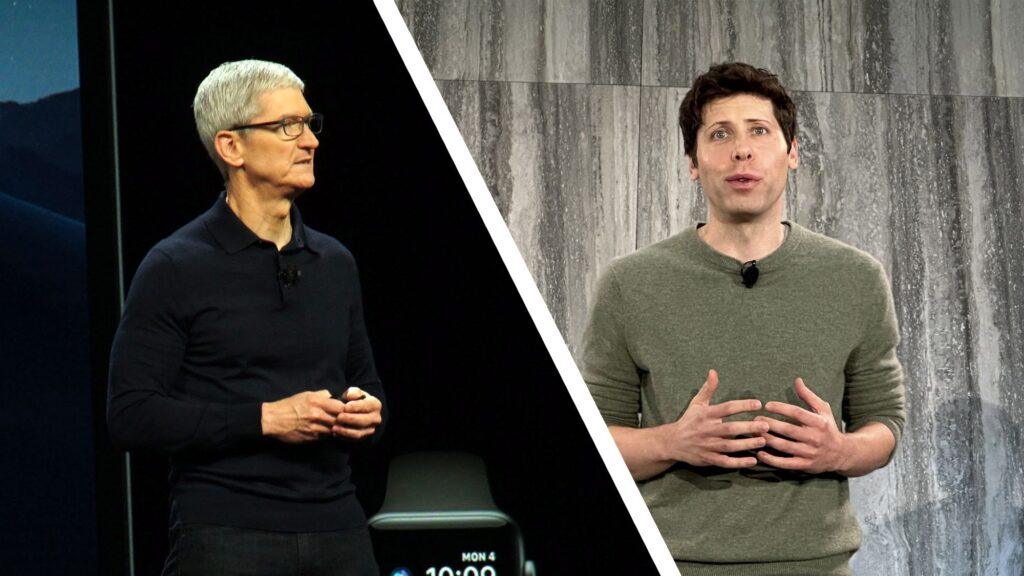
Having spent decades covering Apple, I understand and respect its efforts to maintain a cloak of secrecy over its product development. Reading this line in the blockbuster Apple vs OpenAI lawsuit, I can hear the voices of countless Apple executives and PR folks who, rightly or wrongly, feel deeply aggrieved by what they considered a trusted partner: “OpenAI’s nascent hardware business now rests on the shakiest of foundations, rotten to the core by its unlawful reliance on misappropriated trade secrets.”
Late last week, Apple filed a lawsuit against OpenAI and, more specifically, against a couple of key employees who, over the past two years, left Apple to join OpenAI’s hardware business. The massive filing, which demands a jury trial, accuses the pair of corporate espionage, essentially stealing a series of trade secrets to help bolster OpenAI’s yet-unrealized efforts to build AI hardware (it’s currently working with Jony Ive to build what could eventually become a wearable device).
I have spent some time Dig through the documents and, to be honest, the allegations are surprising and, if true, seem inexplicably brazen to people who spent years with the Cupertino tech giant.

From the inside out
Tang Yew Tan, who currently serves as OpenAI’s director of hardware, was at Apple for a quarter of a century and, according to his own LinkedIn profile, “He oversaw the design and development of the iPhone and Apple Watch product design, interconnect design, acoustics and materials technology centers.”
Chang Liu (whose LinkedIn handle is “changliu-apple”) spent nearly a decade as an iPhone electrical engineer.
The NDAs Apple gives to journalists like me are almost legendary (the first time I signed one, I swear my hands were shaking). I can only imagine the intensity of the intellectual property agreements (IPAs) that Apple says it asks employees to sign from time to time. The language is probably appropriately terrifying; It’s hard to conceive how Liu and Tan could ignore them, and yet, according to the lawsuit, that’s exactly what they did during their final days at Apple and after they joined OpenAI.
OpenAI’s only public response so far has been from its Director of Strategic Communications, Drew Pusateri, who said on X: “We have no interest in other companies’ trade secrets. We remain focused on creating innovative technology that empowers people everywhere.”
The company’s co-founder and CEO, Sam Altman, also indirectly referred to X when someone accused him of being afraid of Apple. He wrote: “I’m not afraid of Apple, but I have great respect for them. S-level company.” (“S-Tier” basically means “elite”).
I’m not afraid of Apple, but I have great respect for them. s level company.July 11, 2026
I will not ask you to read the entire document and instead will select the most striking accusations:
A potentially sneaky exit
When Liu left Apple, he allegedly took his work laptop with him. If you’ve ever worked in a corporate environment, you know this is a no-no. Most companies will chase you to the end of the world to recover that hardware and any corporate access and secrets it contains.
it gets worse
Apparently, Lui did not leave aside the old (we assume) MacBook. Instead, according to Apple, he exploited a network vulnerability and used the system to access Apple’s network folders. If true, this is an incredibly bold move. Surely Liu would have known how Apple’s internal forensics could discover what was accessed by whom and when.
Boasting
While allegedly downloading Apple’s proprietary files (details about unreleased products, presentations, technical data, specifications, and more), Liu may have sent a message to someone via the Apple-provided laptop, celebrating how he was fooling Apple with “LOL” and “very funny.” Once again, was Liu the most careless corporate spy of all time? Who would brag knowing that Apple would eventually stumble upon these details?
Training recruits
Apple claims that Liu was actually recruiting Apple employees and training them on how to collect data before leaving the company. You may have told them how to email files to each other before you left Apple.
I now understand how some of your personal data, for example, may end up intertwined with corporate data and you may want to retain some of it. On the other hand, if you didn’t maintain a firm line between personal and work files, that’s your fault.
a real betrayal
Tang Yew Tan spent 25 years at Apple, and what he is accused of has surely angered and disappointed Apple. “Mr. Tan has been methodically using Apple’s confidential information to benefit OpenAI,” Apple says.
Like Lui and other Apple recruits, Tan may have sent himself Apple’s proprietary information via email.
Using Apple codenames
Apple claims that Tan is asking Apple recruits about upcoming projects using code names that only Apple employees would know.
We have your approval
This is something amazing. Apple alleges that OpenAI has used Apple’s information to get a partner to apply a “specific commercially secret metal finishing technique,” because they convinced the Apple partner to agree to them doing so.
Carry out
This last one might be the boldest move of all. Apple alleges that OpenAI instructed potential Apple recruits to bring everything from CAD files to prototypes to actual parts to OpenAI interviews.
That is a particularly surprising accusation and, again, seems very reckless. What kind of corporate spies operate with this level of impunity?
Naturally, OpenAI will, at some point, respond appropriately to this demand, perhaps with one of its own. Apple could also settle this lawsuit out of court. They have done it before with similar cases, although I don’t think they have reached this level.
Can they come back from this?
Whatever happens with this case, it’s hard to imagine the Apple/OpenAI relationship, which is already somewhat tense, he survives.
For now, you can explicitly choose to use ChatGPT to handle requests in the new Siri in iOS 27 dev beta, and it’s a key part of Image Playground and Visual Intelligence. Apple could take advantage of those options and lean more heavily on its model partnership with the Google Gemini Foundation as this case moves through the courts.
I don’t think that will materially affect your iPhone experience, but losing direct access to those hundreds of millions of iPhone customers could hurt OpenAI, a company that, as Apple acknowledges, is trying to build its own hardware business.
Additionally, if OpenAI loses, much of the internal hardware innovation potentially linked to Apple’s work could be prevented from reaching the hands of consumers.
And, obviously, it will be difficult for society to recover from this passage of demand:
“Apple lacks visibility into what has been happening behind closed doors at OpenAI, where such misconduct is normalized and exemplified by leadership. However, this much is clear: at every level, from members of its technical staff to its director of hardware, and in coordination with business partners, OpenAI has been stealing trade secrets and confidential information from Apple.”
Follow TechRadar on Google News and add us as a preferred source to receive news, reviews and opinions from our experts in your feeds.


