
A coalition of public health groups sued the Food and Drug Administration on Tuesday, seeking to block a new policy that could allow a wave of new flavored e-cigarettes and nicotine pouches to enter the market without completing required scientific review.
The lawsuit asks a judge to set aside a policy that was announced in May and ended just days after executives from the companies behind it dined with President Trump at his golf club in Florida. Two days before the lunch, Reynolds American, which sent top officials to the meeting, donated $5 million to a super PAC backed by the president, campaign finance records show.
The new policy says the FDA will not use its enforcement authority against manufacturers of products that have made significant progress toward an agency approval decision. In practice, the policy is expected to allow major tobacco companies to start selling a variety of new flavored tobacco pouches and e-cigarettes within months.
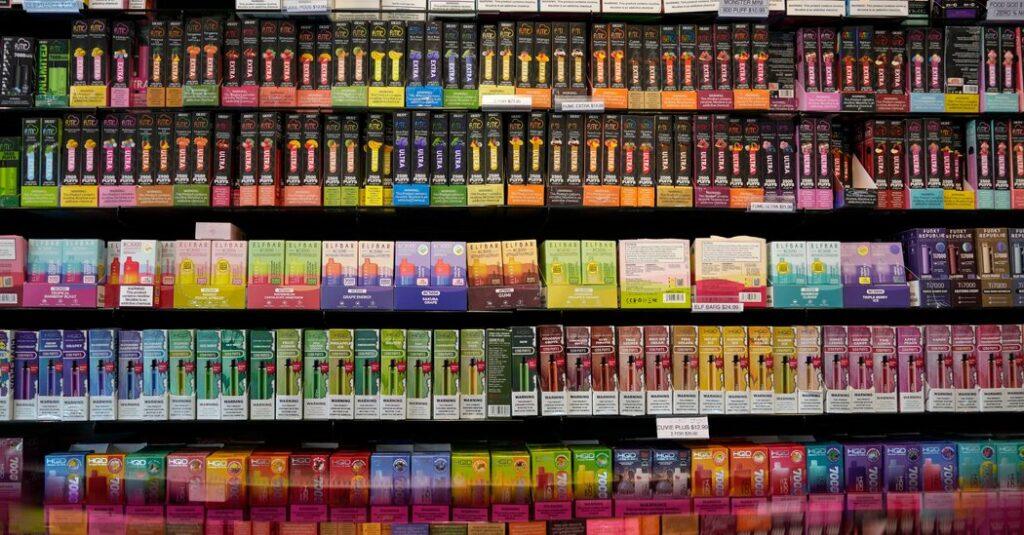
Until May, the FDA had authorized companies to sell vaporizers only with menthol or natural tobacco flavors, which are believed to be less attractive to young people. But unauthorized products with high levels of nicotine in flavors such as strawberry slushie have arrived from China and are sold illegally throughout the United States.
Led by the Campaign for Tobacco-Free Kids, plaintiffs in the lawsuit include the American Lung Association, the American Heart Association, the American Cancer Society Cancer Action Network and the American Academy of Pediatrics.
The groups said the new policy violates the Tobacco Control Act, enacted during the Obama administration, which required each e-cigarette and pouch of tobacco to undergo extensive review by the FDA before obtaining a “granted marketing order,” which is similar to an approval. Oversight focuses on whether each product is “appropriate for the protection of public health,” often measured by a company’s studies of its effect on helping adults quit smoking cigarettes without attracting young tobacco users.
“By illegally allowing the sale of unauthorized e-cigarettes and nicotine pouches, including products with proven youth appeal, this guidance helps the tobacco industry target children and threatens the hard-won progress our nation has made in reducing youth tobacco use,” a statement from the plaintiff groups said.
An FDA spokeswoman declined to comment on the litigation.
The lawsuit against the FDA and its parent agency, the Department of Health and Human Services, was filed in the U.S. District Court for the District of Maryland by legal teams from the Campaign for Tobacco-Free Kids and Democracy Forward, a left-wing group that has challenged a number of Trump administration policies.
The groups are asking the judge to declare the policy invalid and block its implementation, including a provision for the FDA to create a list of new products that can be sold.
The new policy also states that the FDA will step up its efforts to stem the flow of unauthorized vaporizers entering the United States, a bipartisan goal shared by public health groups and tobacco executives.
Tadeu Marroco, chief executive of British American Tobacco, which owns Reynolds American, said during a call with investors last month that illicit products account for nearly 70 percent of the roughly $9 billion vaporizer market in the United States. He said the company was talking to the FDA and preparing new tobacco pouches and e-cigarette products.
“We have long advocated for increased law enforcement and a return to a regulated market that is not overrun by illicit products,” Marroco said during the call, adding, “So this is all very positive and the size of the prize, as I said, is very high.”
David Sutton, a spokesman for Altria, which makes Marlboro cigarettes and was represented at the lunch with Trump, called the new policy “an important step in addressing the illicit market by combining law enforcement with the expansion of a legal, regulated market for smoke-free products.”
The company said it was working on its product strategy and “will continue to advocate for predictable and permanent regulatory reform.”


