
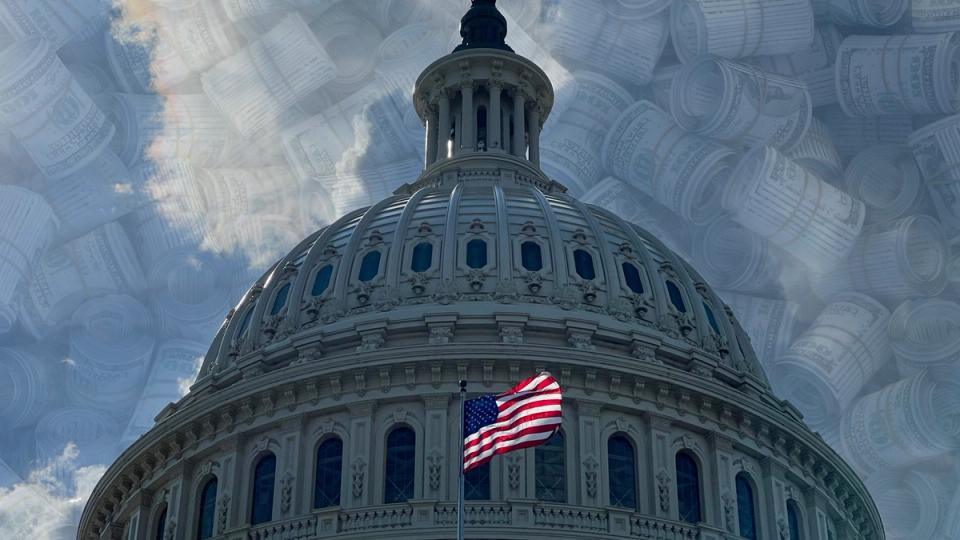
The cryptocurrency industry demonstrated in the last US election that $100 million spent on congressional campaigns could influence policy outcomes for the sector, so when an emerging crypto political action committee anonymously pledged to bring that amount to the table in 2026, it suggested an important new (unnamed) voice in digital asset policy.
But the Fellowship PAC never came.
A September press release received widespread attention last year as a big jump in the industry’s already considerable campaign spending by the most established leading super PAC, Fairshake. Among its backers, the new group was reported to include Tether, the global leader in stablecoins with its USDT and its most recent push into the US with a separate subsidiary and the USAT token, although company representatives declined to confirm any connection.
“Unlike previous political efforts, the Fellowship PAC’s mission is defined by transparency and trust, ensuring that political action directly supports the broader ecosystem rather than narrow or individual interests,” the PAC’s original statement from September read, appearing to suggest it would chart a different course than Fairshake. The statement did not identify any key officials, donors or employees, nor did the PAC’s website.
The Fellowship announcement credited President Donald Trump for a regulatory framework “that puts the United States on the path to becoming the global crypto capital.”
When asked about the involvement of Tether, which established its US division around the same time as Fellowship’s inauguration, a company spokesperson said this week that global Tether has no say in the PAC, but was silent on whether the US operations had any involvement in Fellowship.
“Tether International has no affiliation or oversight with Fellowship, so any questions can be directed to the Fellowship website and associated email,” the spokesperson said in an email.
Repeated attempts to contact Fellowship yielded no response, although it established the website and an account on social media site It also registered as a super PAC with the Federal Election Commission, and its treasurer is Mitchell Nobel, who heads digital asset strategy at Cantor Fitzgerald, where Trump’s Commerce Secretary Howard Lutnick was CEO. That firm has also managed Tether’s assets in recent years.
What Fellowship did not do, according to FEC records, was receive money to operate. Their current filings show zero funds available.
Under US election law, a PAC cannot be funded by a non-US entity. The influence of foreign money on American politics has long been a concern, and has come under renewed scrutiny during the Trump administration, including from those who suggest that PACs supporting Trump may have improper ties to foreign donors. Tether’s political involvement (if it had arisen) could have attracted greater scrutiny, even if limited to its US operations, because such a subsidiary would have to represent that its money was generated domestically and that its political decisions were not guided by foreign nationals.
Meanwhile, the industry’s main super PAC, Fairshake, has said it has $193 million and that the PAC and its affiliates have begun focusing on their early campaigns, seeking to ensure that pro-crypto candidates eventually join Congress. In the 2024 cycle, Fairshake, primarily funded by Coinbase, a16z, and Ripple, supported more than 50 bipartisan candidates now in the Senate and House of Representatives.
Some of the first 2026 primaries are approaching quickly, meaning any new entrants to political spending could be late to the party. It is unclear whether the midterm congressional elections will still see Fellowship’s “$100 million commitment to support pro-innovation, pro-crypto candidates who will safeguard the United States’ role as a global leader in digital assets and entrepreneurship.”


