
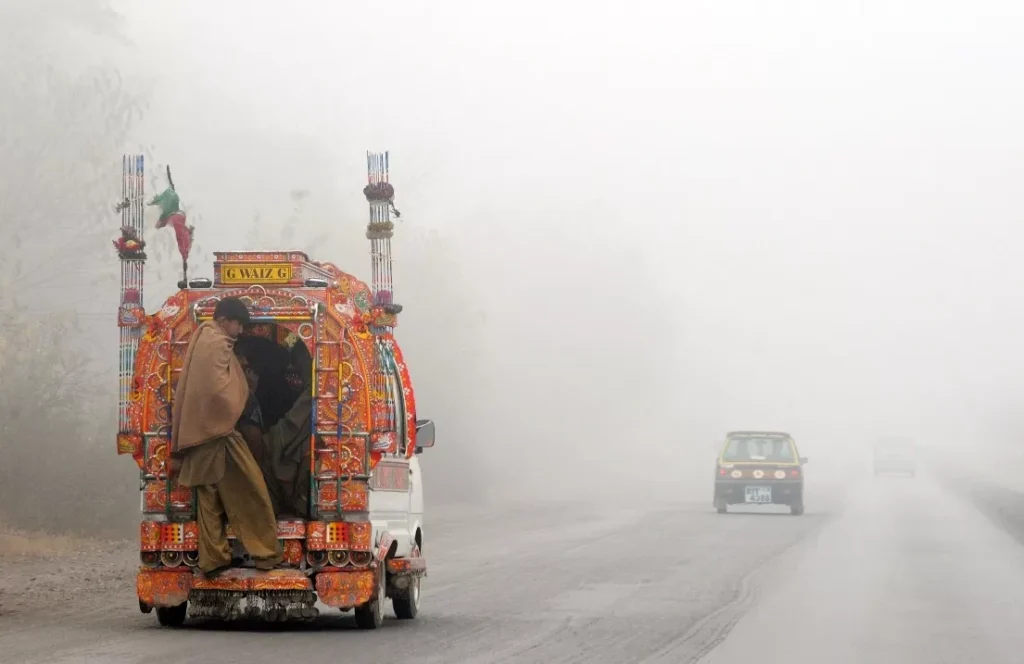
After many years, Rawalpindi was shrouded in dense fog, reviving memories of the city’s traditional bitter winter and severely reducing visibility in residential neighborhoods, markets and main roads. From 6:30 a.m. to 10:00 a.m., thick fog covered streets, streets, shopping centers, and all roads into and out of the city. Residents were forced to travel with vehicle headlights on, while even the streets and bazaars of the city center remained shrouded in fog well into the morning. The areas surrounding the Anti-Terrorism Court (ATC) and district courts had particularly low visibility, with objects barely discernible until 9am. The weather didn’t improve until 10 a.m., when the sun fully rose. Cloud cover accompanied the fog, further intensifying the cold wave. The fog and clouds revived memories of Rawalpindi’s historic freezing winters. Early morning dew covered rooftops, markets, vehicles, trees and flower pots, with condensation drops visible throughout the city. Due to weather conditions, lawyers, judges and litigants arrived late at the district courts, causing court proceedings to begin at 10 a.m. instead of the usual 9 a.m. Local elders, including Haji Chaudhry Imran and Hafiz Sajid Khan, said the fog witnessed on Tuesday was reminiscent of conditions 20 to 30 years ago. "Fog occurs every year, but its intensity has decreased over time. The fog seen on Tuesday really brought back the cold of previous decades," they said. Meteorology expert Professor Naveed Khan clarified the distinction between smog and fog, stating that fog is a natural weather phenomenon that forms when moisture in the air cools near the ground and condenses into small water droplets, creating a dense white or gray layer that reduces visibility.
"Fog is essentially a cloud at ground level," he explained, adding that unlike smog, fog does not contain dust, smoke or chemical pollutants. Fog appears whitish, while smog is darker and contaminated with airborne particles.


