
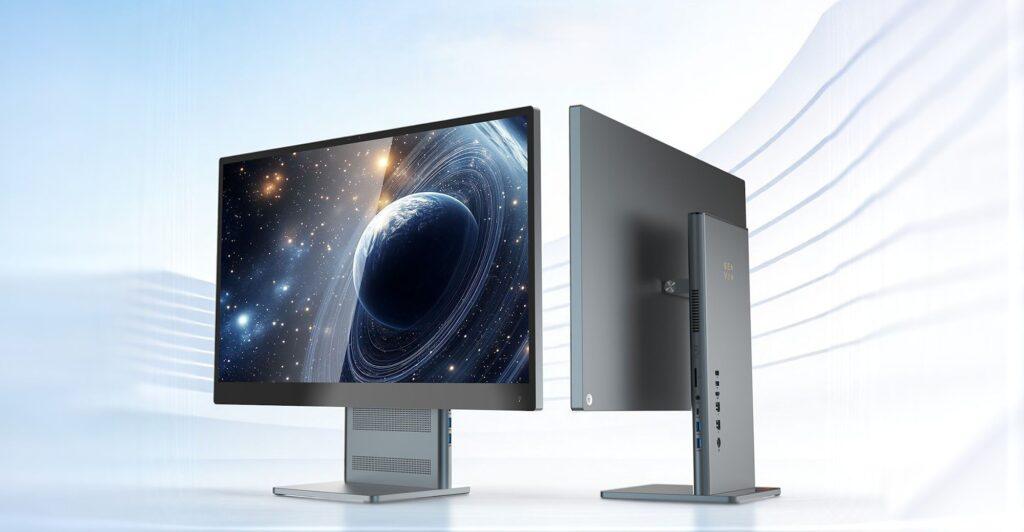
- Chinese manufacturer Seaviv has presented a new all-in-one PC
- The AideaOne R27 is a premium-looking all-in-one like Apple’s iMac, but with one big difference
- It’s built around AMD’s powerful Ryzen AI Max+ 395 processor, backed by a surprising amount of RAM.
AMD’s flagship Strix Halo chip is the powerful engine of a new all-in-one PC launched in Asia.
As reported by VideoCardz, Chinese manufacturer Seaviv has unveiled the AideaOne R27 all-in-one PC, which is built around a 27-inch 4K display and AMD’s Ryzen AI Max+ 395 processor (which has found a home in many mini PCs and portable devices).
The hardware components are on the monitor stand, a different way of placing them behind the screen than with a typical all-in-one device.
The AideaOne R27 is a premium-looking PC and costs 21,999 yuan in China, which is equivalent to about $3,170 in the United States. It’s a big step up from the Apple iMac M4 starting at $1,299 / £1,299 / AU$1,999, but the R27 packs some really powerful components that justify the price.
Seaviv’s all-in-one PC not only has that beefy 16-core Ryzen chip, which features an integrated Radeon 8060S GPU, but it also features 128GB of RAM, which itself costs a small fortune these days, as well as a 2TB SSD.
The RAM crisis has caused an unprecedented increase in memory kit prices, so overall the $3,000 price tag isn’t that surprising. After all, this is an all-in-one PC that can tackle demanding gaming and productivity tasks with performance results similar to an Nvidia RTX 4060 GPU.
However, it’s a niche product, obviously, and the average consumer won’t be able to stomach its price, certainly not compared to Apple’s iMac.
Analysis: the OLED factor
There is one notable weak point with the AideaOne R27, and it’s not just the availability of the device outside of Asia (which we don’t have any information on). This disadvantage is that the all-in-one PC has a rather vulgar display in the form of a regular 60Hz IPS monitor.
This may seem like a discrepancy given the rest of the high-power specs, but it’s likely a reflection of the intended use, i.e. productivity and those working with AI locally (given the massive amount of RAM inside).
It’s for gaming and will make creative work easier, sure, but an OLED screen, which is gradually becoming more affordable and common for PC monitors, would be much better for that type of use.
OLED offers much better contrast and color accuracy than a regular LED, of course, while also delivering a more impactful and immersive image. There’s also no backlight loss with OLED, as the technology relies on individual self-illuminated pixels (allowing for a truly deep black level).
Perhaps in the future we’ll see an all-in-one built around the powerful Ryzen AI Max+ 395 with an OLED display to give Apple something to really think about. Price, of course, would remain a question mark on such an all-in-one, which definitely wouldn’t be cheap.
I admire niche products, like this AideaOne R27 PC, that try to do something different, with their dynamic hardware and approach of building components into the stand, rather than inside the screen.
The best computers for all budgets
Follow TechRadar on Google News and add us as a preferred source to receive news, reviews and opinions from our experts in your feeds. Be sure to click the Follow button!
And of course, you can also follow TechRadar on YouTube and tiktok for news, reviews, unboxings in video form and receive regular updates from us on WhatsApp also.


