
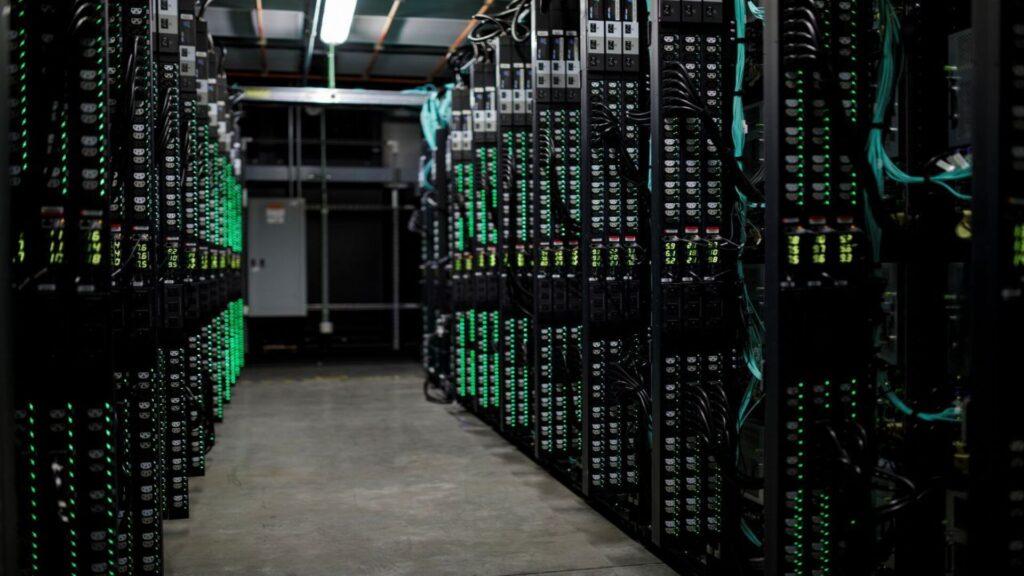
- AI data centers are producing extreme heat islands that extend miles beyond facilities
- More than 340 million people experience high temperatures due to hyperscale AI installations
- Extreme temperature spikes of up to 16.4°F have been recorded near data centers
Experts have warned that the expansion of AI-powered data centers is having a more immediate environmental impact than previously thought.
A research team led by Andrea Marinoni of the University of Cambridge says that these facilities, which often span more than a million square feet, not only consume massive amounts of energy but also generate extreme local warming effects, known as heat islands.
Marinoni states that “there are still large gaps in our understanding of the impacts of data centers,” and emphasizes that these effects have been largely overlooked.
Article continues below.
Measuring the impact of heat in global AI data centers
The team analyzed temperature data from more than 6,000 hyperscale facilities over the past two decades, carefully taking into account global warming trends, seasonal changes and other local influences.
The study found that surface temperatures near data centers rose on average 3.6°F after operations began, with extreme cases seeing increases to 16.4°F.
These heat surges extend far beyond the immediate facilities, sometimes affecting areas up to 6.2 miles away.
When affected areas were mapped with population data, more than 340 million people in North America, Europe and Asia were affected and experienced elevated local temperatures.
Observations in the Bajío region of Mexico and Aragon, Spain, revealed temperature increases that were inconsistent with those in surrounding provinces.
This suggests that the heat effects were directly attributable to the data centers themselves and not other environmental factors.
“The planned expansion of data centers could have dramatic impacts on society,” Marinoni said.
Experts express concern about the rapid pace of AI infrastructure development, which may be outpacing sustainable planning.
“The ‘AI gold rush’ appears to be taking precedence over good practice and systems thinking… and is developing much faster than any broader, more sustainable system,” said Deborah Andrews, professor emeritus at London South Bank University.
However, experts maintain that more research is needed to confirm these findings, particularly given the unusually high local temperature spikes reported.
The long-term consequences of energy-intensive AI operations deserve greater attention, as climate debates have historically focused on emissions rather than the direct effects of heat.
Rethinking the design and operational strategies of data centers could enable continued expansion of AI while minimizing additional thermal stress on neighboring communities and ecosystems.
In a world already experiencing intensified extreme weather events, the rapid proliferation of ultra-hot data centers can amplify local and regional environmental challenges.
Energy emissions remain a primary concern, but localized warming caused by hyperscale facilities adds a new dimension of environmental risk that needs evaluation.
Via CNN
Follow TechRadar on Google News and add us as a preferred source to receive news, reviews and opinions from our experts in your feeds. Be sure to click the Follow button!
And of course you can also follow TechRadar on TikTok for news, reviews, unboxings in video form and receive regular updates from us on WhatsApp also.


