
PESHAWAR:
The Pakistan-Afghanistan Aman Jirga on Tuesday called for an immediate ceasefire between the two countries and urged both nations to resolve their conflict through dialogue and diplomacy.
Pakistan launched Operation Ghazab Lil Haq after Afghan Taliban forces fired at multiple locations, prompting swift military retaliation by Pakistan. However, a brief ceasefire was observed at the request of Saudi Arabia, Qatar and Turkiye in view of the Eidul Fitr holiday, which concluded at midnight between March 23 and 24.
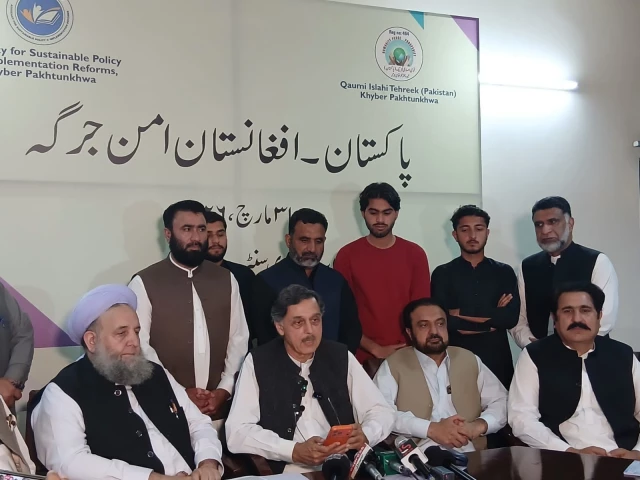
Aspire Khyber-Pakhtunkhwa and the National Reform Movement organized the jirga today and emphasized the need for both countries to ensure that their territories are not used against each other.
The jirga was organized by former chief secretary Arbab Shehzad Khan, and was attended by representatives of various political parties, religious scholars, the business community and media professionals.
During a press conference after the jirga, former governor Shaukatullah Khan said Pakistan and Afghanistan shared deep-rooted cultural, religious and social ties.
“The jirga’s call for peace is based on the belief that war is not a solution to the problems between the two nations,” he added.
The jirga leaders demanded an immediate ceasefire and asked both countries to ensure that their lands are not used against each other.
They stressed the importance of resolving all differences through negotiations and diplomatic means, as only mutual respect and understanding can ensure lasting peace.
Furthermore, they proposed the establishment of a continuous communication platform to facilitate continuous dialogue, allowing both nations to better understand each other’s perspectives, challenges and limitations.
The jirga participants expressed hope that through determined diplomacy and citizen participation, Pakistan and Afghanistan could make significant progress towards peace, stressing that mutual understanding and sustained efforts were essential to achieve this critical goal.
The latest round of hostilities began in late February, following a series of deadly attacks across Pakistan by Tehreek-e-Taliban Pakistan (TTP) terrorists, for which Islamabad accused Afghanistan of harboring them and failing to take action against them. Kabul denies the accusations.
It came after airstrikes by the Pakistani army against suspected TTP hideouts inside Afghanistan.
According to Kabul, the airstrikes killed dozens of civilians, while Islamabad claimed that more than 500 TTP militants were killed in the attacks.


