
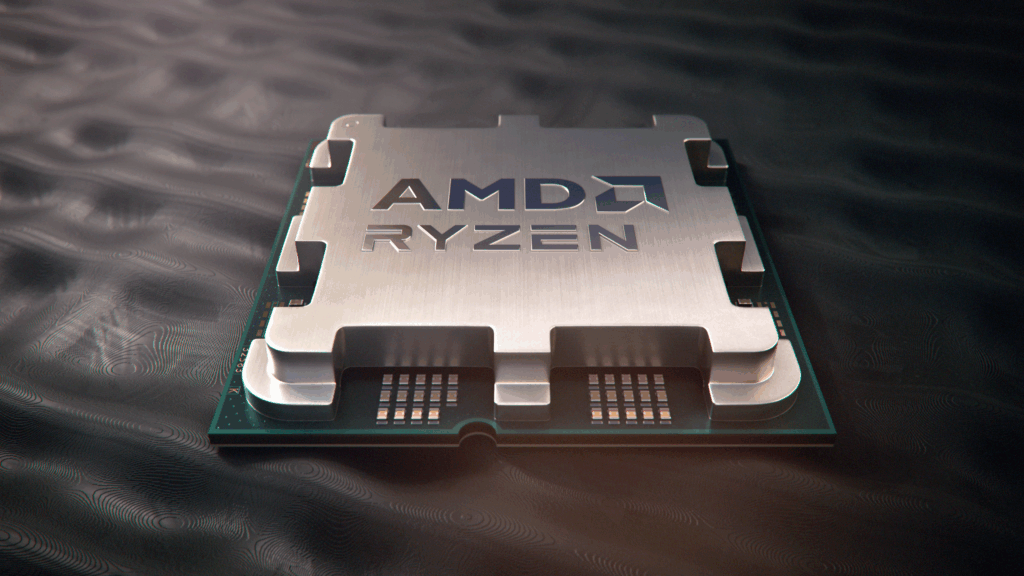
- AMD reveals its Ryzen AI 400 series at MWC 2026 as successor to the Ryzen 8000G range
- These chips have been reoriented towards AI, with an NPU that reaches 50 TOPS
- It means a desktop PC will qualify for Windows 11 Copilot+ features
At MWC 2026, AMD revealed new Ryzen AI processors designed to bring powerful NPU (and Copilot+ (AI) features) to desktop PCs.
As noted by TechSpot, the Ryzen AI 400 series (which comes alongside the enterprise Pro variants) is built with Zen 5 CPU cores (as with the Ryzen 9000), along with an integrated RDNA 3.5 GPU and an XDNA 2-powered NPU to accelerate AI tasks on the device.
The idea is to provide a relatively inexpensive all-in-one processor for cheaper PCs that don’t have a discrete graphics card, providing the ability to use AI features with a 50 TOPS rated NPU. That’s fast enough to qualify as a Copilot+ PC and to access Windows 11’s AI features, such as Windows Studio Effects to enhance video chats.
The flagship model is the Ryzen AI 7 450G, which offers eight cores (16 threads), 24 MB cache, and boosts up to 5.1 GHz, with Radeon 860M graphics. The latter is RDNA 3.5 and has eight Compute Units (CUs).
There are also Ryzen AI 5 chips, the 440G and 435G, which have six cores (12 threads) and boost up to 4.8GHz and 4.5GHz respectively (with 22MB and 14MB cache). They move to an integrated Radeon 840M GPU with four CUs, but all chips have the full NPU with (up to) 50 TOPS.
The TDP of these processors is 65W, but they also come in low-power versions (GE models) that only use 35W.
According to TechSpot, AMD (and other sources) have said that these Ryzen AI 400 desktop models will not be sold as standalone boxed products, at least not initially; instead, they will be for PC manufacturers (OEM).
In other words, you’ll likely only be able to buy pre-built machines with these CPUs, and those PCs are expected to debut in the second quarter of 2026. Down the line, however, these chips should be available directly on retailers’ shelves.
Analysis: it’s all about that AI
As mentioned, these processors are intended for budget versions without GPU, mini PCs or even office computers (there are Ryzen AI Pro 400 versions, as mentioned). If you’re wondering where they fit into AMD’s silicon lineup, they’re replacements for the older Ryzen 8000G offerings.
So in theory they could be Ryzen 9000G chips, but due to the new AI bias, and that much more powerful NPU for the desktop, AMD has changed the name to reflect this.
These chips are primarily designed to provide efficiency (particularly the power-hungry GE variants) and the ability to run AI tasks quickly, or even run (modest) LLMs (large language models) locally.
However, that’s not an exciting prospect for many people, and a good portion of the early online comments largely reflect that. The flagship Ryzen AI 7 450G will make a pretty decent effort in casual gaming, but there has been some disappointment around the chip’s performance levels in that regard as well. Mainly because the integrated GPU has fewer CUs than its flagship Ryzen 8000G predecessor, so it’s not a big step forward. (It’s more architecturally advanced, of course, since it’s built on RDNA 3.5, which means an updated RDNA 3.)
Would you rather the extra chip space be put into a powerful NPU so you could have the Copilot+ offerings on Windows, or would you rather the effort be put into a juicier integrated GPU for a machine that could handle a bit more gaming and office work?
We’ll have to see how prices move with pre-built PCs showing up with Ryzen AI 400 processors inside, but obviously companies like Lenovo, HP and Dell are going to have a hard time controlling price tags as the RAM crisis continues to make life miserable for anyone thinking about buying (or upgrading) a computer.
TechRadar is on the show floor this year MWC (Mobile World Congress) in Barcelona, Spain, and we’ll cover the latest news from some of the biggest names in mobile, computing, fitness, and more.
The best laptops for all budgets
Follow TechRadar on Google News and add us as a preferred source to receive news, reviews and opinions from our experts in your feeds. Be sure to click the Follow button!
And of course, you can also follow TechRadar on YouTube and tiktok for news, reviews, unboxings in video form and receive regular updates from us on WhatsApp also.


