
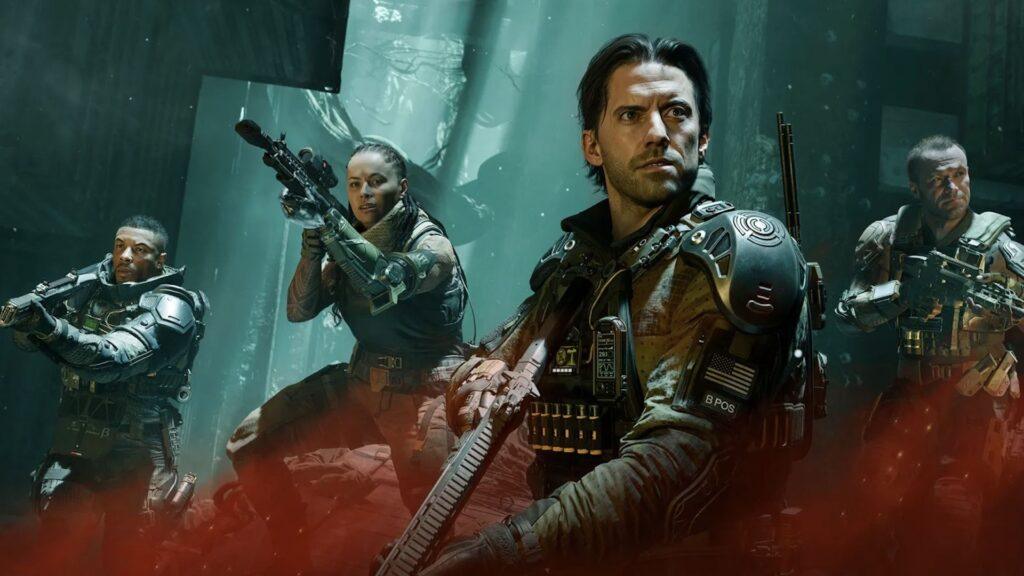
- FSR Redstone launches today via new AMD GPU driver
- It features new generation of FSR frames, ray regeneration, Radiance caching and enhancement technology.
- Regeneration Ray is available in Call of Duty: Black Ops 7 and will come to other games later
Nvidia is very focused on AI these days, having distanced itself from gaming and recently told us that it is no longer (primarily) a gaming graphics card company, and now, with AMD’s FSR Redstone launch finally taking place, Team Green has a reason to worry about losing its dominance in the GeForce GPU market.
AMD’s FSR Redstone update is now available via the latest AMD Adrenalin 25.12.1 driver and includes the next generation of FSR frames, ray regeneration and Radiance caching, along with FSR Upscaling (previously known as FSR 4). All of this is exclusive to RDNA 4 hardware, namely the Radeon RX 9060 XT and Radeon RX 9070 XT (and RX 9070) GPUs.
While Nvidia’s DLSS 4 upscaling technology, bolstered by its impressive frame rate, super-resolution (via the new transformer model), and ray reconstruction capabilities, has been available throughout 2025, AMD’s FSR Redstone aims to close the gap with an improved level of quality.
Part of this new recipe will be AMD’s FSR Ray Regeneration, the equivalent of Nvidia’s Ray Reconstruction, which promises to deliver improved, realistic ray tracing and path tracing effects via a neural network-based denoiser. This is one I’m looking forward to trying and it’s now available at Call of Duty: Black Ops 7although it is planned to reach more games in the future.
Image 1 of 2
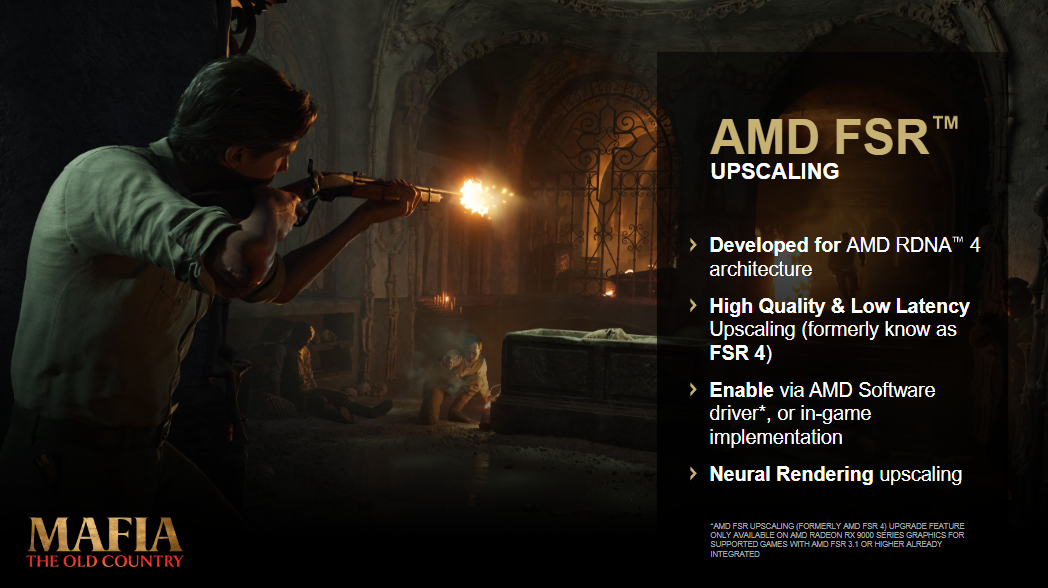
But that’s not all. AMD is obviously interested in moving forward with FSR Upscaling to improve image quality levels and get closer to native rendering when upscaling from a lower resolution. Team Red provided some comparison screenshots of the Redstone versus FSR 3.1 upgrade, and it’s a big jump in quality, but it’s unclear how much difference there is to FSR 4 as it existed before this Redstone update.
In 2026, FSR Radiance Caching will be available in several titles, and this will benefit ray tracing in games, improving performance around lighting effects. This and the FSR Redstone SDK are available on GPUOpen, making implementing FSR for gaming much easier through simple upgradeable DLLs.
Analysis: FSR Redstone should make Nvidia sweat, but lack of backwards compatibility remains an issue
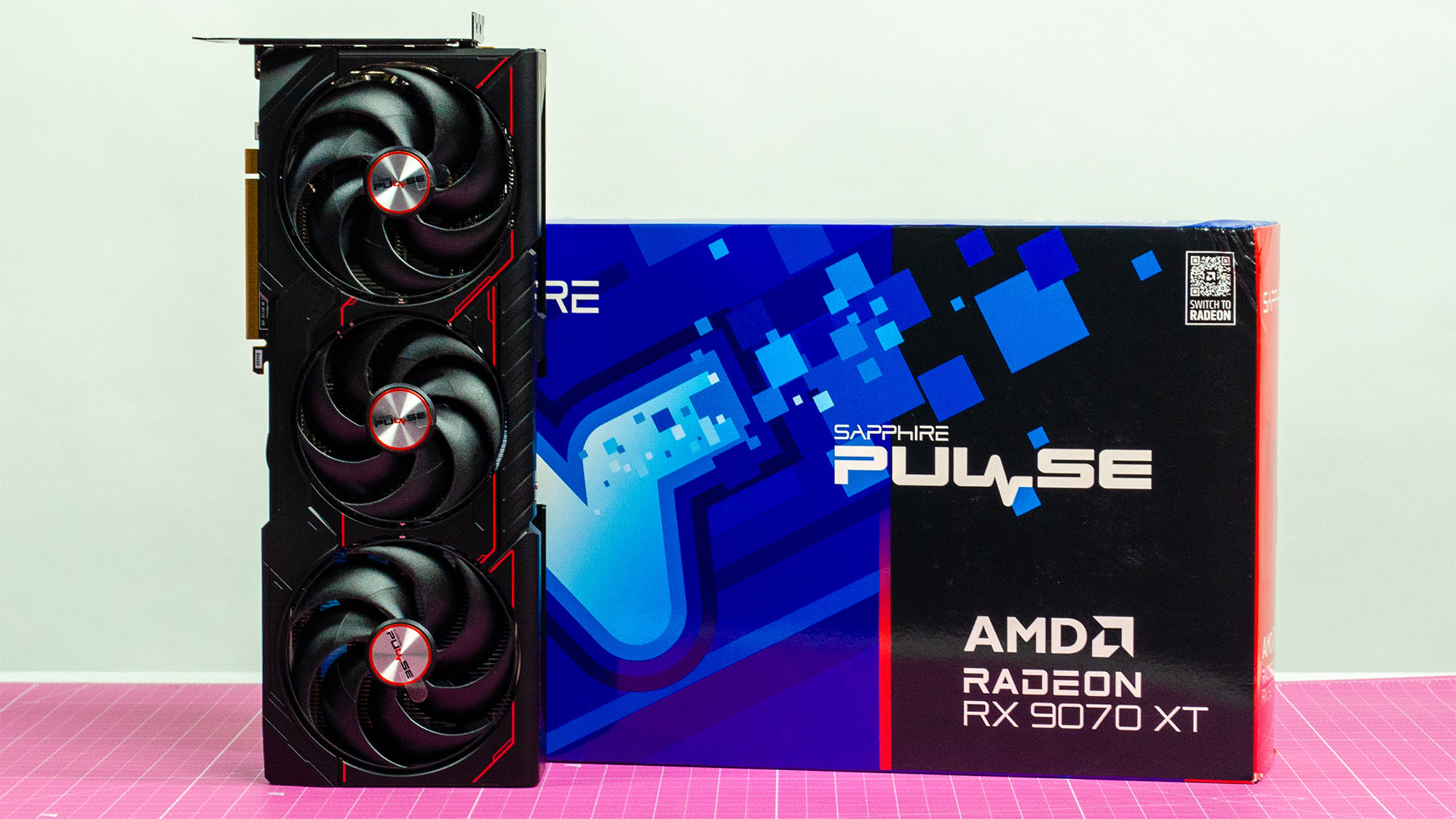
It’s debatable how much Nvidia might be concerned about the prospect of losing its crown as a leading force in desktop graphics cards, given its heavy focus on AI these days, but I’m sure Team Green won’t want to give up this dominance quickly.
But there’s certainly a threat here from AMD FSR Redstone, which should be a big boost to closing the quality gap in frame rate and upscaling technologies with Team Green’s DLSS 4.
The main concern I have is that Redstone won’t be available on non-RDNA 4 GPUs and whether older graphics cards will be further neglected as AMD moves down this new improvement path. Especially considering that Nvidia’s DLSS 4 is compatible with all RTX cards (although not with all features).
If Team Green doesn’t have anything up its sleeve in the near future, more specifically at CES 2026, you could see the spotlight start to shift towards AMD for PC gamers; It just depends on how well FSR Redstone is done and how well it is received by RDNA 4 GPU owners.
The best graphics cards for all budgets
Follow TechRadar on Google News and add us as a preferred source to receive news, reviews and opinions from our experts in your feeds. Be sure to click the Follow button!
And of course you can also follow TechRadar on TikTok for news, reviews, unboxings in video form and receive regular updates from us on WhatsApp also.


