
Special prosecutor defends decision not to include name of PTI leaders in supplementary challan
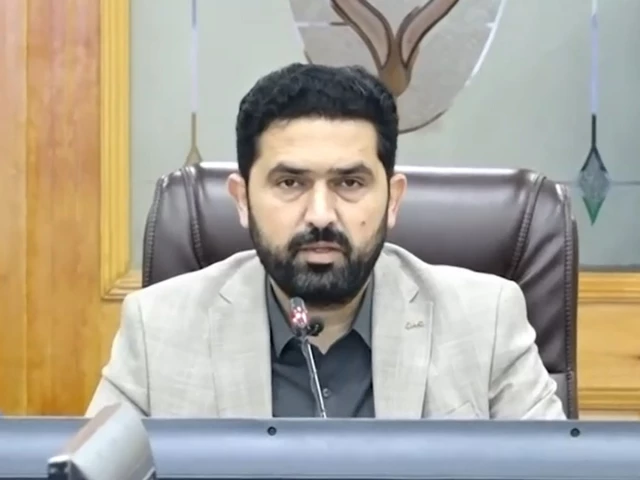
KP CM Sohail Afridi. Photo: screenshot
PESHAWAR:
A law enforcement officer on Tuesday told an anti-terrorism court (ATC) that there was insufficient evidence to include the name of Khyber-Pakhtunkhwa (KP) Chief Minister Sohail Afridi as an accused in the supplementary challan of a case related to an attack on Radio Pakistan Peshawar on May 9, 2023.
Appearing before the ATC headed by Justice Wali Muhammad, special public prosecutor Naumanul Haq Kakakhel said the video evidence relied on to implicate “certain individuals” was not sufficient to sustain the case.
“The images do not conclusively prove that they represent the attack on Radio Pakistan. The videos only show resemblance and do not definitively prove that they are related to the attack,” he added.
According to Kakakhel, such material could not be treated as solid evidence to designate persons as accused. This, he said, is a crucial point that prevents further progress in the case.
In the last hearing of the case on March 11, Radio Pakistan lawyer Shabbir Hussain Gigyani and IO inspector Khushhal Khan sought contempt of court proceedings against the district attorney and senior CTD prosecutor for not submitting the challan to the court.
He had told the court that the IO intended to file a supplementary challan, including the names of CM Afridi, former ministers Taimur Saleem Jhagra and Kamran Bangash, PTI Peshawar president Irfan Saleem and worker Amir Chamkani, but the DA was delaying the case.
Regarding the complaint, the special prosecutor said that a forensic report had been received that he intended to present along with his opinion. He asked the court to examine the report and allow the author’s lawyer to raise objections, if any, during the next hearing.
Radio Pakistan’s lawyer Shabbir Hussain Gigyani reiterated that the prosecution’s refusal to file the supplementary challan amounted to obstruction.
Opposing the contempt plea, the special prosecutor maintained that the contempt petition was not maintainable and highlighted that under the law, the government had the authority to appoint a special prosecutor for such cases. He cited provisions of the 1997 Anti-Terrorism Law stating that his role was legally valid.
During the hearing, Advocate General Shah Faisal also appeared and clarified that the government appointed the special prosecutor for the case in accordance with legal provisions.
Radio Pakistan’s lawyer argued that investigative powers rested with the district attorney, while the special prosecutor’s role was limited to directing the trial.
However, the special prosecutor responded that his appointment entitled him to act in the case and that the court had not specifically ordered the filing of a challan but had only asked for a report, which had already been filed.
The ATC judge also subpoenaed the district attorney, who informed the court that following the appointment of a special prosecutor, his office’s role in the matter had effectively ceased.
After hearing arguments from all parties, the court ordered that any objection to the contempt petition be raised through appropriate applications and adjourned the hearing.


