
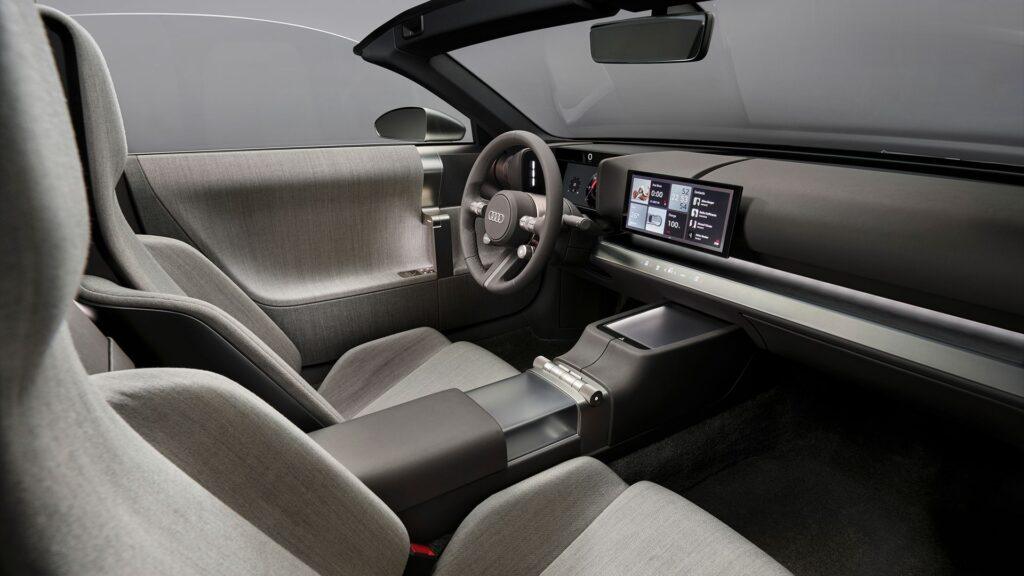
- Audi design chief highlights the importance of tactility
- He denounced giant screens in a recent interview with Top Gear
- Concept C shows beautifully analog interior
The man behind the successful Land Rover Defender and more recent versions of the Range Rover left the UK to join Audi in the summer of 2024 and has since been busy working to set the German brand in a new design direction – one that’s not afraid to ruffle a few feathers, it seems.
Fresh from designing Audi’s new F1 car, as well as launching the tantalizing Concept C, which previews an upcoming two-seat electric sports car, Frascella has been speaking to Top Gear UK about the German brand’s future design direction.
During the discussions, the creative leader threw out some truths, including the fact that he believes electric cars don’t have to look like electric cars. “A car should be electric and efficient, but it should have a premium look in the execution of proportions,” he said.
Additionally, Frascella reiterated what he believes is the importance of “tactility,” stating that “large screens are not the best experience” and that the huge touchscreens that now span the width of the dashboards of many modern cars are “technology for technology’s sake.”
“For us, the technology is there when you need it, not when you don’t need it. This combination of digital and analogue, the tactility, the perception of quality that is so important for Audi, the precision, the metal parts… we talk about the Audi click. This made Audi what Audi is,” he told Top Gear.
This approach is perfectly captured in the interior of the Audi Concept C, which merges physical controls, made of anodized aluminum, with a tiny 10.4-inch folding central screen that disappears when not in use.
Not everyone is a fan
Audi’s “shy tech” approach can be seen as a reaction against the current trend of an increasing amount of screen space inside cars. The interiors now, in most cases, lack physical buttons.
Mercedes-Benz has been pushing further into this territory with its latest electric vehicles, featuring ‘Hyper’ and ‘Superscreen’ powered interiors, and a chat between Mercedes design boss Gorden Wagener and Top Gear last year revealed exactly what he thinks about Audi’s approach.
He said the Concept C’s interior looked “like it was designed in 1995” at the time, and that there was “very little technology” inside. Despite being a fan of all things analog, Wagener said that “going back to all the switches won’t work.”
However, this opinion is in direct contradiction to what large sections of the internet and the car-buying public are calling for, which is a return to physical switches and buttons, especially when it comes to controlling key car functions.
In fact, Europe’s leading car safety testing programme, EuroNCAP, has said it will make its tests more difficult, rewarding manufacturers for the “placement, clarity and ease of use” of key car functions and penalizing those who devote everything to a complicated and distracting touchscreen.
Follow TechRadar on Google News and add us as a preferred source to receive news, reviews and opinions from our experts in your feeds. Be sure to click the Follow button!
And of course, you can also follow TechRadar on YouTube and tiktok for news, reviews, unboxings in video form and receive regular updates from us on WhatsApp also.


