- The interim government announces mourning and special prayers throughout the country.
- The police launch a manhunt and offer a reward for the arrest of the suspects.
- Muhammad Yunus says the attack is aimed at derailing the upcoming elections.
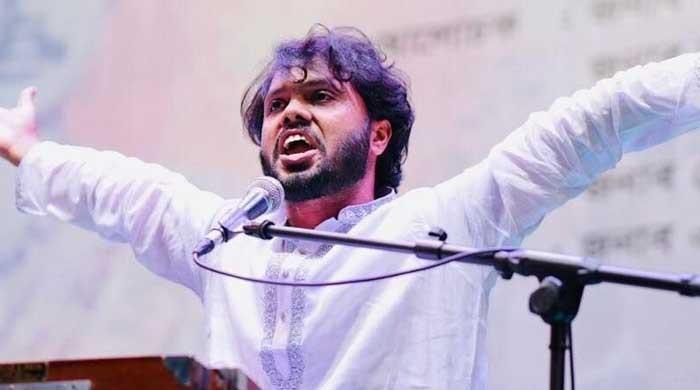
A leader of Bangladesh’s 2024 uprising who was wounded in an assassination attempt and flown to Singapore for treatment has died in the city-state, officials said Friday.
Masked assailants shot the spokesman for the student protest group Inqilab Moncho, Sharif Osman Hadi, 32, a week ago as he left a mosque in Dhaka, the capital of Bangladesh, wounding him in the ear.
“Despite the best efforts of doctors…, Mr Hadi succumbed to his injuries,” Singapore’s Foreign Ministry said in a statement, adding that it was helping Bangladeshi authorities repatriate his body.
Inqilab Moncho first announced Hadi’s death in a Facebook post, stating: “In the fight against Indian hegemony, Allah has accepted the great revolutionary Osman Hadi as a martyr.”
Hadi was a candidate in the February 2026 election, the first parliamentary election since a student-led uprising toppled former Prime Minister Sheikh Hasina’s autocratic government last year.
He was flown to Singapore on Monday for treatment.
In Dhaka, the interim government led by Nobel laureate Muhammad Yunus confirmed Hadi’s death.
“I express my deepest condolences. His death is an irreparable loss for the nation,” Yunus said.
“The country’s march toward democracy cannot be stopped by fear, terror or bloodshed,” he said in a televised speech.
The government also announced special prayers in mosques after Friday prayers and a half-day of mourning on Saturday.
Hadi was a senior leader of the student protest group Inqilab Mancha and has been an outspoken critic of Hasina’s former ally India, where the ousted prime minister remains in self-imposed exile.
Gunfighter Hunt
Bangladesh police have launched a manhunt for the attackers who shot Hadi, releasing photographs of two key suspects and offering a reward of five million taka (about $42,000) for information leading to their arrest.
Yunus, 85, a Nobel Peace Prize winner who led Bangladesh until the February 12 elections, claimed last Saturday that the shooting was a premeditated attack carried out by a powerful network, without giving his name.
He said that “the conspirators’ goal is to derail the elections,” adding that the attack was “symbolic, intended to demonstrate their strength and sabotage the entire electoral process.”
Bangladesh, a Muslim-majority nation of 170 million people, will vote directly for 300 lawmakers into its parliament, with another 50 to be selected from a list of women.
A referendum on a historic package of democratic reforms will be held on the same day.
Tensions are high as parties prepare for elections and the country remains volatile.
Hasina, convicted in absentia last month and sentenced to death, refused to return to attend her trial. She remains hidden in India, despite Dhaka’s repeated requests to New Delhi to hand her over.
The last elections, held in January 2024, gave Hasina a fourth consecutive term and her Awami League 222 seats, but were denounced by opposition parties as a sham.
The Bangladesh Nationalist Party (BNP), led by three-time former Prime Minister Khaleda Zia, has a good chance of winning the upcoming elections.
Zia is in intensive care in Dhaka, and his son and political heir, Tarique Rahman, will return from exile in Britain after 17 years on December 25.