
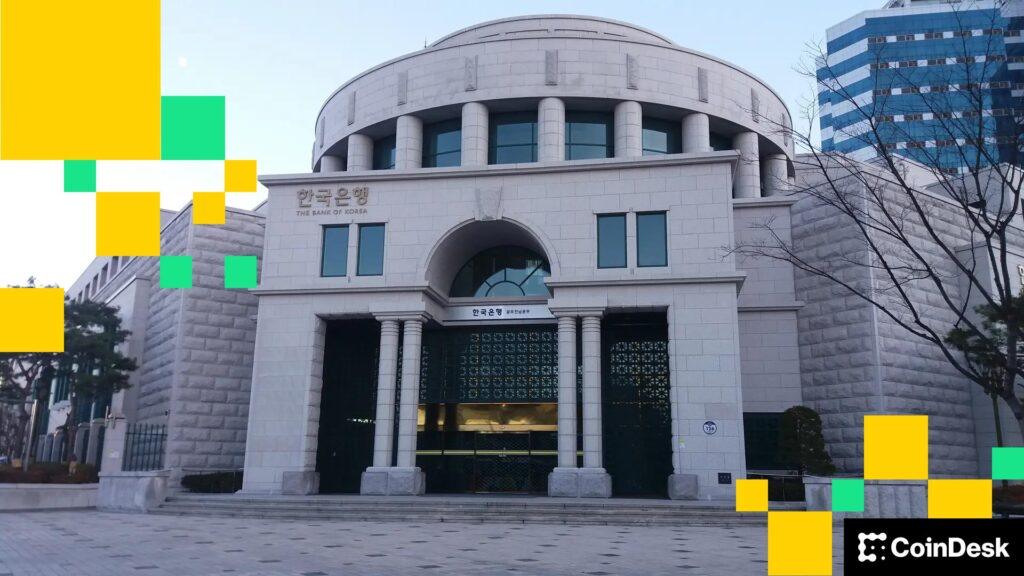
The Bank of Korea and nine commercial lenders have begun phase two of a digital won pilot, testing bank-issued deposit tokens backed by the central bank’s infrastructure to determine whether the system can support government subsidy payments and consume transfers and payments across the country.
The second phase of Project Hangang adds two banks, Kyongnam Bank and iM Bank, to the program’s original seven. Institutions will now begin large-scale testing of won-pegged deposit tokens built on a wholesale central bank digital currency (CBDC) layer, several local media outlets reported.
“Participating banks are actively securing various use cases, such as large enterprises and small merchants with high public relevance and significant payment fee burdens, focusing on the potential for drastically reduced fees when using digital currency for payments,” said Kim Dong-sub, who heads the Bank of Korea’s digital currency planning team, according to news outlet Chosun.
A key objective is to reduce the cost of transactions. By using deposit tokens, the BOK hopes to offer a lower-cost payment alternative for both large and small businesses that are currently burdened by credit card processing fees, according to the bank.
The start of Phase 2 comes as South Korea’s Digital Asset Basic Law (DABA), a broad framework intended to regulate the trading and issuance of cryptocurrencies in one of Asia’s most active digital asset markets, is delayed due to disagreements between regulators over the issuance of stablecoins. The thorniest issue centers on who should have the legal authority to issue KRW-pegged stablecoins.
In the new tests, peer-to-peer transfers, which were a challenge in Phase 1, will be possible.
Kim also said that “the government intends to start disbursing digital currency subsidies during the first half of this year,” with subsidies for electric vehicle charging infrastructure expected to be among the first use cases.
The Bank of Korea also mentioned plans to enable digital currency as a payment method for ‘AI agents’, which are artificial intelligence systems that search for and purchase goods and services.


