
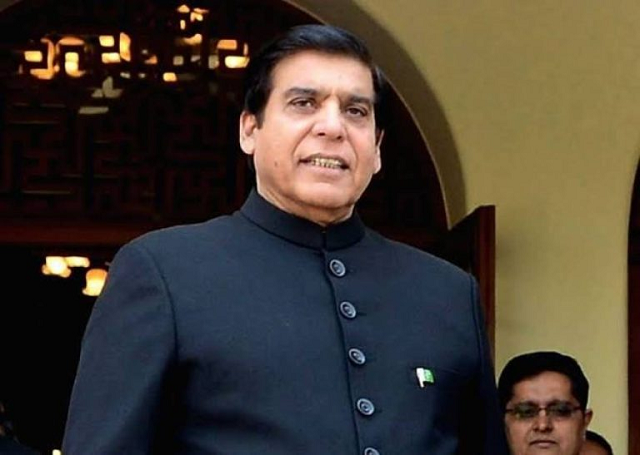
The Speaker of the National Assembly, Raja Pervez Ashraf. PHOTO: APP/FILE-
LAHORE:
As its footprint in Punjab continues to fade, the Pakistan People’s Party (PPP) is turning to new local leadership and street mobilization in a bid to reclaim political space, even as its central leadership sends mixed signals about its alliance with the PML-N, a stance seen as confusing and politically unconvincing.
With newly appointed officials in Lahore, the party is preparing for a rally on Sunday aimed at revitalizing workers and projecting a presence on the streets.
However, even as it prepares for the spectacle, the party has sought to rhetorically distance itself from its partners in the ruling coalition, apparently attempting to capitalize on what it perceives as political space in the province.
Central Punjab PPP president Raja Pervez Ashraf has repeatedly maintained that the alliance with the PML-N was formed “in the interest of the state” and not for political gains.
A day earlier, he had claimed that the PPP was driven out of Punjab’s power politics through a conspiracy. However, Ashraf has simultaneously urged unity and cooperation within the ruling coalition, a stance that critics consider politically ambivalent and that has so far failed to resonate with the province’s voters.
Ashraf was speaking to reporters after a meeting organized in connection with the ‘Kashmir Banega Pakistan’ party rally. According to party sources, the rally also aims to push for the inclusion of Indian-occupied Kashmir on the agenda of an upcoming international peace forum.
However, organizational errors exposed internal tensions within the party. Lahore President Faisal Mir’s announced time for workers to gather at Nasir Bagh clashed with a separate press call at PPP leader Hasan Murtaza’s residence, where former Prime Minister Yousaf Raza Gillani was expected to offer condolences over the death of Murtaza’s father.
The scheduling conflict raised questions over coordination and hinted at divisions within the party, before the Lahore chapter intervened to resolve the overlap.
Party insiders say the march is effectively a test of the PPP’s street strength in Punjab, where the party has struggled to maintain its political relevance. The newly installed local leadership hopes the mobilization will help regain momentum and reestablish its connection with workers.
A senior party leader, who requested anonymity, admitted that without adopting a clear political position, the PPP would find it difficult to make headway in the province.
“Ambiguity may work within assemblies, but it doesn’t work in street politics,” he said, adding that the leadership would have to give provincial leaders more space if the party hoped to compete seriously in the next election cycle.
During the press conference, Ashraf also highlighted the concerns of farmers and urged the Punjab government to address the mounting agricultural losses. He said farmers were stranded and the delay in aid could affect future crops, and expressed hope that the prime minister would intervene promptly.


