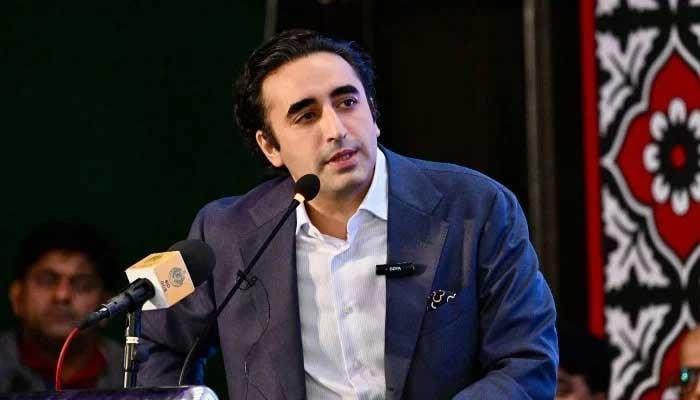
- Conflict causing loss of life and damaging global economy: Bilawal.
- He says Pakistan hopes that the gap in confidence-building can be bridged.
- Pakistan hosts talks between US and Iran after negotiating two-week ceasefire.
ISLAMABAD: Pakistan People’s Party Chairman Bilawal Bhutto Zardari termed the success of US-Iran negotiations as essential for the international community, stressing that there is no room for a “Plan B” and that “Plan A” (peace) must succeed.
In an interview with a British media outlet, Bilawal said a ceasefire had been agreed upon after a month of efforts, adding that the consequences of this war could be devastating for the entire world.
The US-Iran negotiations, hosted by Pakistan, follow a two-week ceasefire announced by US President Donald Trump after six weeks of conflict, halting US and Israeli airstrikes on Iran.
The former Foreign Minister stated that the recent conflict is causing loss of human life and is also affecting the global economy.
Bilawal said Iran’s 10-point formula has become the basis for negotiations, although there are still differences of opinion on some of Iran’s points.
He said shelling in Iran and retaliatory actions in the region have ceased and Pakistan hopes that the confidence-building gap can be filled.
Responding to questions and rumors about the Nobel Peace Prize nomination, Bilawal said the first priority is not the prize but the establishment of lasting peace in the region.
The Middle East conflict began on February 28 after the United States and Israel launched coordinated attacks that killed Supreme Leader Ali Khamenei and attacked Iran’s military and nuclear infrastructure.
In response, Tehran escalated its operations throughout the region, effectively disrupting shipping through the Strait of Hormuz and carrying out attacks on Israeli territory as well as US military bases throughout the Gulf.
The six-week conflict caused more than 2,000 deaths.
The standoff between Washington and Tehran finally came to an end on April 8, when Prime Minister Shehbaz announced a two-week ceasefire agreement.
Washington’s proposed 15-point framework for peace talks focuses on Iran’s enriched uranium, ballistic missiles, sanctions relief and reopening the Strait of Hormuz.
Meanwhile, Tehran has put forward a 10-point counterproposal calling for greater control over the strategic waterway, the introduction of transit tolls, an end to regional military operations and a comprehensive lifting of sanctions.
Pakistan’s role in facilitating the ceasefire has been widely welcomed by the international community, with several countries expressing support for Islamabad’s diplomatic efforts to de-escalate the conflict and advance peace negotiations.