
He says the international community does not have a plan B, so plan A must achieve a peaceful resolution.
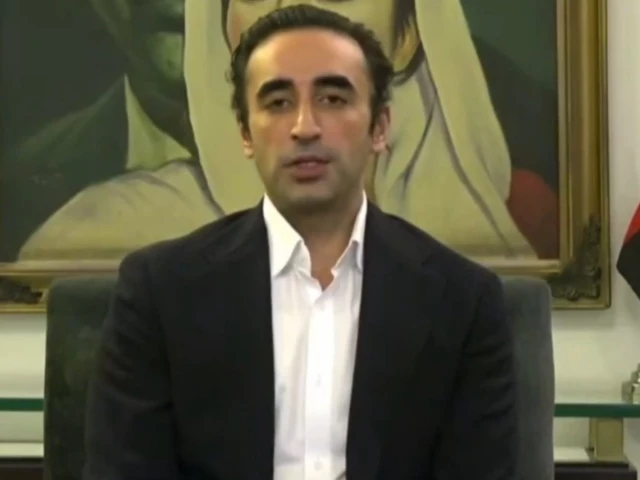
The president of the Pakistan People’s Party (PPP), Bilawal Bhutto Zardari. SCREEN CAPTURE
Pakistan People’s Party (PPP) Chairman Bilawal Bhutto-Zardari said on Friday that the international community “does not have a plan B,” warning of catastrophic human and economic consequences if talks between the United States and Iran fail to produce results.
Pakistan will host what could prove to be one of the most consequential diplomatic engagements in recent history, when top leaders from the United States and Iran arrive in Islamabad for high-stakes negotiations after a devastating six-week war that has left thousands dead and pushed the global economy to the brink of recession.
The US delegation will be led by Vice President JD Vance, accompanied by President Donald Trump’s key Middle East envoys, Steve Witkoff and Jared Kushner. On the Iranian side, Parliament Speaker Mohammad Bagher Ghalibaf is expected to lead the delegation, along with Foreign Minister Abbas Araghchi and other senior officials.
Speaking in an interview with News from heavenBilawal said “all eyes” were on the visiting delegations, adding that the conflict had affected people in Pakistan, London, New York, the Middle East and Asia.
Asked if there was a “Plan B” if talks did not lead to a formal agreement during the ceasefire period, Bilawal said: “I think the international community does not have a plan B. Our Plan A needs to achieve a peaceful resolution of this conflict and a more permanent peace.”
I believe that the international community does not have a Plan B. Our Plan A must be to achieve a peaceful resolution of this conflict and a more permanent peace. I think the way this conflict has unfolded has shown that a war of this nature, a war of this scale is not an option… pic.twitter.com/6fJQBC4wWT
-PPP (@MediaCellPPP) April 10, 2026
“We can measure the cost of this conflict not only in the loss of human life but also in the economic cost borne by the people of my country and yours, so we all have hope,” he said.
He said that the current ceasefire space must be taken advantage of to move towards “a more lasting and permanent peace for the benefit of the international community.”
Read: JD Vance hopeful of ‘positive’ outcome as he leaves for US-Iran talks in Islamabad
Responding to a question on Pakistan’s diplomatic role and associated challenges, Bilawal said Islamabad’s commitment was a significant achievement, adding that efforts had been made over the past month to bring the US and Iran to a ceasefire and define the outlines for continued dialogue.
However, he acknowledged that challenges remain, particularly the trust deficit between the two sides.
“But as with diplomatic engagements and negotiations, there will be confidence-building measures that both sides will take to increase space for dialogue and diplomacy in the pursuit of peace,” he said.
The PPP president said the magnitude of the conflict had shown that “a war of this nature, a war of this scale, is not an option.”
“The catastrophic consequences in terms of human life, in terms of the economic consequences, are there for everyone to see, and it is up to us, it is up to the parties to the dispute, it is up to all the countries that would like this issue to be resolved peacefully, to pressure all the parties to accept that peace so that we are not dragged into a potentially broader conflict than what we have seen over the course of the last month,” he added.
Commenting on questions about speculation over a Nobel Peace Prize nomination for Pakistan’s leadership and criticism over the focus on international image, Bilawal said: “The first time I heard about the Nobel Peace Prize for Pakistan was from you, and this criticism about focusing on image as well.”
Read also: From critic to negotiator: JD Vance to lead US efforts in Iran ceasefire talks
He said Pakistan, as a neighbor of Iran and Afghanistan, had already endured decades of consequences of the conflict and continued to face tensions in the region.
“We are in perpetual conflict with India. We absolutely do not want the conflict in Iran to be exacerbated,” he said.
“The people of Pakistan cannot afford it. I would say that people around the world cannot afford it. That is Pakistan’s motivation, for all parties to achieve peace,” he added.
Bilawal further said the situation was “particularly complicated” economically for Pakistan, highlighting global concerns about possible economic shocks.
“So as far as the peace prize is concerned, I think Pakistan and everyone would settle for peace,” the former foreign minister concluded.


