
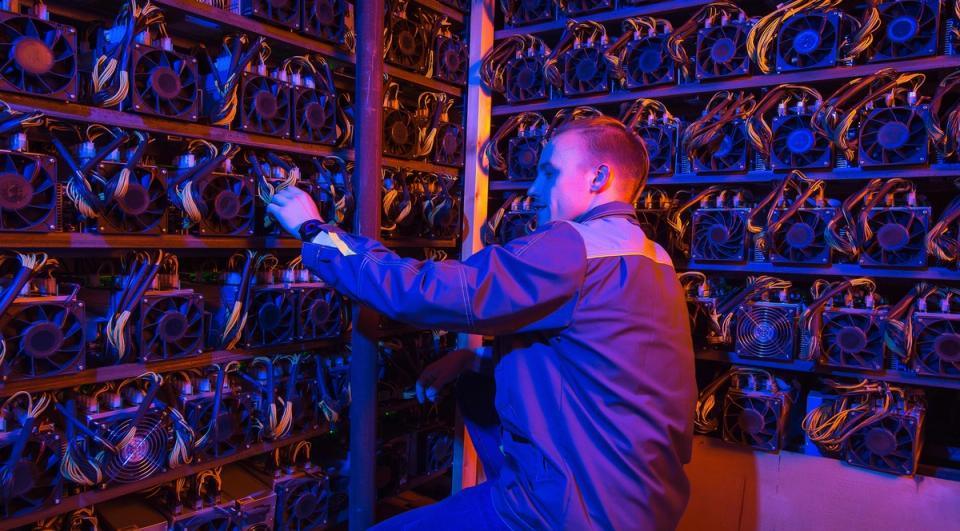
For the first time in six years, bitcoin The hashrate, the total computing power that secures the network, fell during the first quarter. It is currently down around 4% year to date, hovering around 1 zettahash per second (ZH/s).
Over the past five years, the rate has increased from about 100 exahashes per second (EH/s), a 10-fold increase, according to Glassnode data. Each year, the metric increased during the first quarter and ended with strong annual growth of over 10%. In 2022, the figure almost doubled.
The AI Pivot
The change in 2026 reflects economic changes throughout the bitcoin mining sector. With production costs close to $90,000 per bitcoin and the spot price closest to $67,000, margins are negative. In response, many publicly traded miners are shifting to artificial intelligence and high-performance computing infrastructure, where returns are higher and more predictable.
This transition is financed by issuing debt and selling bitcoins, reducing reinvestment in bitcoin mining. As a result, hashrate growth is becoming more sensitive to the price of the cryptocurrency, and weaker prices are likely to lead to further declines as smaller operators pull out.
While a hashrate drop may raise concerns about network security, decentralization may matter more than absolute size. Publicly traded US miners account for more than 40% of the global hash rate, and a reduction in their influence could lead to a more geographically distributed network. In that sense, the current change may ultimately support decentralization.
Despite the slowdown, CoinShares still forecasts hash rate growth to around 1.8 ZH/s by the end of 2026, conditional on Bitcoin recovering towards $100,000.
Read more: End of bitcoin ‘HODL’: Public miners bet on AI, signaling more BTC sales


