
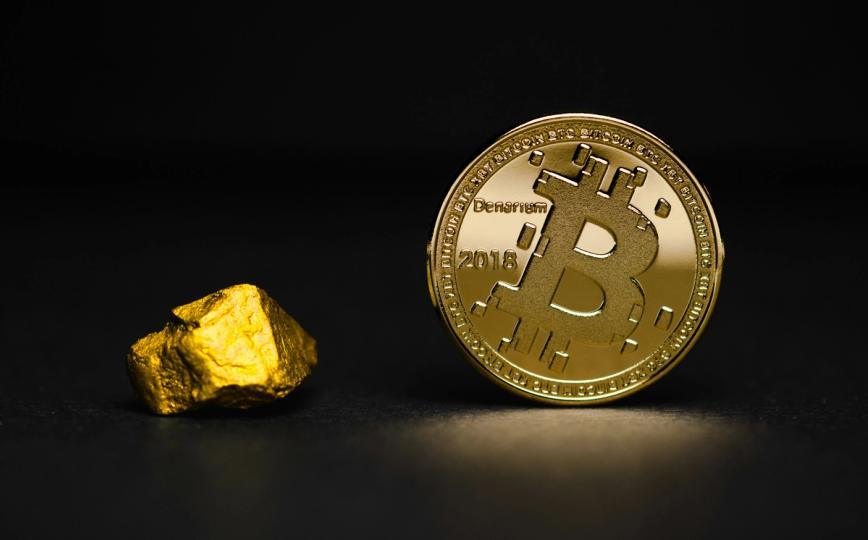
bitcoin is proving more resilient than traditional safe haven assets as gold and silver come under pressure from capital outflows, deteriorating positioning and deteriorating liquidity, according to Wall Street investment bank JPMorgan.
“The deterioration of gold liquidity conditions has seen its market breadth
below the current bitcoin,” analysts led by Nikolaos Panigirtzoglou wrote in Wednesday’s report.
Bitcoin has shown relative resilience in recent weeks following the outbreak of war in Iran, even after a sharp correction from its October all-time highs.
The cryptocurrency initially fell sharply alongside broader risk assets, briefly falling to the low $60,000 range and sparking huge selloffs as investors rushed to de-risk amid geopolitical uncertainty.
But the liquidation was short-lived. Since then, prices have stabilized between $60,000 and $70,000, even as tensions persist and oil prices rise above $100 a barrel.
The price action suggests that Bitcoin is behaving less like a pure safe haven in the immediate shock phase and more like a high-beta macro asset, selling off initially and then finding support as flows return and longer-term holders step in once the panic subsides.
Gold has fallen about 15% so far this month, reversing a massive rally that took prices to all-time highs near $5,500 in January. Silver, which peaked near $120, has followed a similar downward path. JPMorgan analysts attributed the sell-off to rising interest rates, a stronger U.S. dollar and broad profit-taking by retail and institutional investors.
Flow data reinforces the change. Gold ETFs saw nearly $11 billion in outflows in the first three weeks of March, while silver ETF inflows created since last summer have unwound, the report said. By contrast, bitcoin funds have continued to attract net inflows over the same period.
Positioning data tells a similar story. JPMorgan’s gauge for institutional activity, based on Chicago Mercantile Exchange (CME) futures open interest, shows a sharp rise in exposure to gold and silver from late 2025 to early 2026, followed by a sharp decline since January as investors trimmed positions. In comparison, Bitcoin futures positioning has remained relatively stable in recent weeks.
Momentum signals are also diverging. The bank noted that trend-following investors such as commodity trading advisors (CTAs) have aggressively reduced exposure to gold and silver, with indicators swinging from overbought levels to below-neutral levels. That change in positioning is likely to have amplified the recent price declines. Meanwhile, Bitcoin momentum is recovering from oversold conditions toward neutrality, suggesting that selling pressure may be easing.
Liquidity conditions further highlight the divergence. The breadth of the gold market has deteriorated to the point that it now lags behind bitcoin, a reversal of the typical relationship. Silver liquidity has weakened further, and reduced market depth has exacerbated recent price movements, the report added.
The world’s largest cryptocurrency was trading around $69,000 at the time of this publication. Gold was trading at around $4,450 per ounce and silver at $69 per ounce.
Read more: Wall Street trader Bernstein calls bitcoin bottom and maintains target of $150,000 by year-end


