
- Broadcom launches new Wi-Fi 8 chips for enterprise switches and access points
- Access point chips combine processing, networking and wireless functions in a single device
- Wi-Fi 8 radio chips handle wireless transmission in enterprise environments efficiently
Broadcom has announced a new set of enterprise Wi-Fi 8 chipsets covering access points and campus switching hardware.
The launch builds on the company’s previous disclosure about Wi-Fi 8 radios and extends to the entire wired and wireless infrastructure.
Broadcom is not limiting this update to radio components only. It has launched new chips for both wireless access points and the Ethernet switches that connect them.
New access point chips combine computing and wireless functions
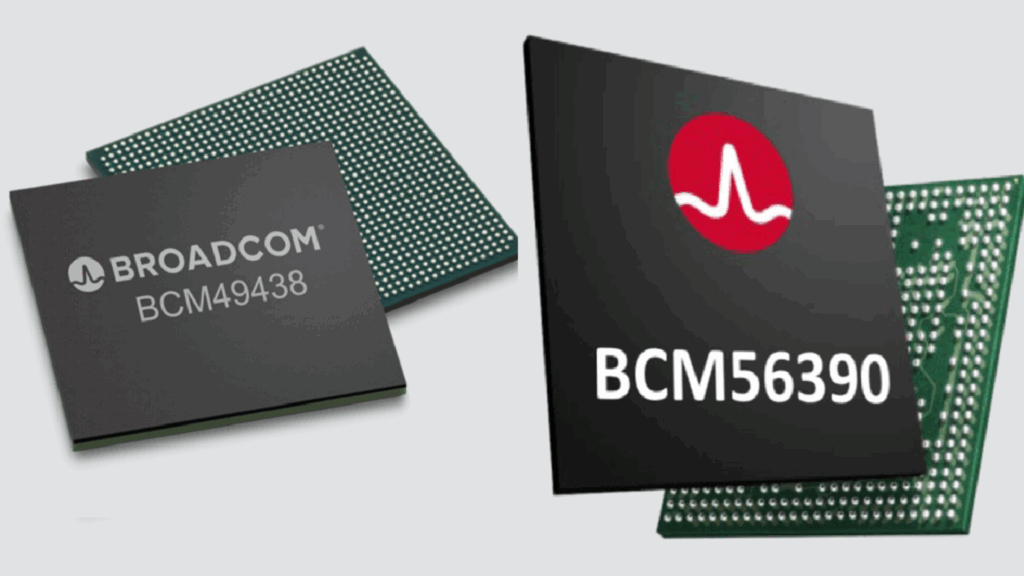
For access points, Broadcom has launched the BCM49438, a new processor chip designed specifically for enterprise Wi-Fi hardware.
The chip handles system control, networking tasks and on-device processing that would otherwise require multiple components.
In addition, Broadcom also launched three Wi-Fi 8 radio chips, BCM43840, BCM43844 and BCM43820, which handle wireless transmission.
These newly released chips are intended to be used together within future enterprise access points.
Broadcom also introduced the Trident X3+ BCM56390 as a new Ethernet switch chip for enterprise networks.
The chip supports up to 48 multi-gigabit ports, allowing switches to connect a large number of high-performance access points.
Security features such as MACsec, post-quantum cryptography support, secure boot, and hardware root of trust are built directly into the chip.
Broadcom has combined it with recently released multi-gigabit PHY chips, including BCM84918, BCM54908 and BCM54908E, to handle physical network connections and power delivery.
Broadcom says the new access point and switch chips use a unified design approach that allows network data to be collected across wired and wireless segments in real time.
The chips also support time-sensitive wireless networking using the IEEE 1588 precision timing protocol, which aims to reduce latency variation.
The company has confirmed that it is now testing the new hotspot chips, Wi-Fi 8 radio chips and the Trident X3+ switch chip with its first customers.
“As businesses increasingly rely on AI for critical operations and security, the demand for robust, intelligent and secure network infrastructure has never been greater,” said Mark Gonikberg, senior vice president and general manager of Broadcom’s Wireless and Broadband Communications Division.
“Our new end-to-end solution for Wi-Fi and enterprise switching, incorporating Wi-Fi 8, multi-gigabit Ethernet, and edge AI capabilities, provides the essential foundation for organizations to overcome risks and thrive in the age of AI.”
Broadcom’s latest release doesn’t mention anything about the speed of these chips, and for those hoping Wi-Fi 8 will offer faster top speeds, that’s unlikely.
Qualcomm has since revealed that Wi-Fi 8 doesn’t promise faster speeds, but rather focuses on better stability, latency, and performance with more connected devices.
Similarly, MediaTek, a key Nvidia partner, which is already working on the Wi-Fi 8 ecosystem, is keeping expectations modest based on early internal results.
Via TechPowerUp
Follow TechRadar on Google News and add us as a preferred source to receive news, reviews and opinions from our experts in your feeds. Be sure to click the Follow button!
And of course you can also follow TechRadar on TikTok for news, reviews, unboxings in video form and receive regular updates from us on WhatsApp also.


