
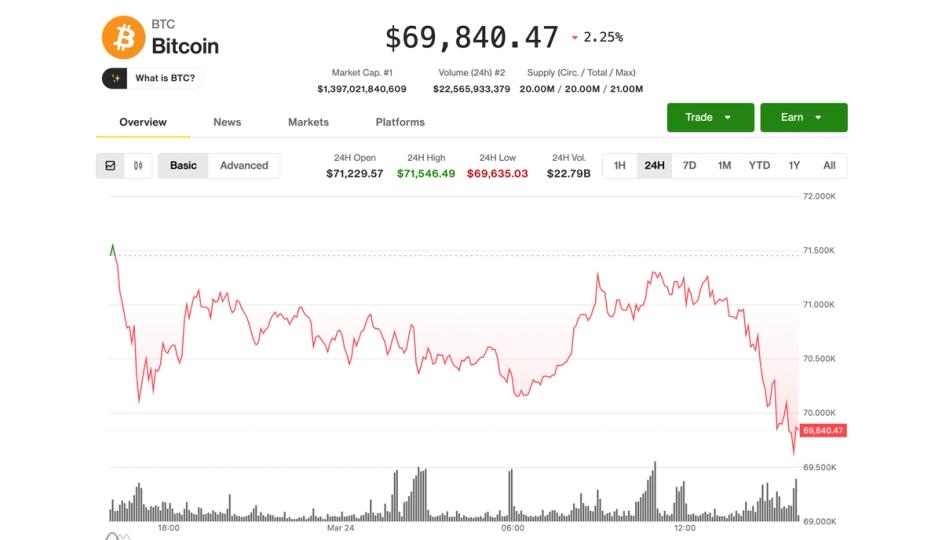
bitcoin fell again to $69,000 on Tuesday morning as a broader pullback in stocks spread to crypto markets.
After trading near $71,000 early in the session, BTC fell to around $69,600 in the early US hours, following a broader reversal in risk assets. Ether (ETH), Solana (SOL), and XRP (XRP) also fell by 2% to 3% in the last 24 hours.
Bitcoin appears to continue following a familiar trend over the past three months. It typically rises just over 1% on Mondays and then falls slightly below 1% on Tuesdays, according to Velo data.
The move also came as software stocks plunged, with the iShares Expanded Tech-Software Sector ETF (IGV) falling about 4%. Cryptocurrency prices have moved closely in line with the sector in recent months, with both trending lower since October. That relationship came into view again, and digital assets weakened along with that particular area of technology.
The S&P 500 and Nasdaq stock indexes fell 0.5% and 0.8%, giving up much of their gains on Monday on news of US-Iran talks. Global yields continue to rise, the DXY remains firm above 99 and oil is up 2% in the last 24 hours, reinforcing the broader tone of risk aversion.
Cryptocurrency-linked stocks also came under pressure. Circle (CRCL), issuer of the USDC stablecoin, led the declines, falling 16% in a sharp setback after its recent rally that saw the stock rise more than 100% in a month. Cryptocurrency exchange Coinbase (COIN) fell 8%. The moves came as CoinDesk reported late Monday that the latest version of the Clarity Act will not allow rewards on balances, limiting stablecoin returns. “That weakens a key part of the bullish case by making it harder for USDC to evolve from a payments utility to a true store-of-value product,” Shay Boloor, chief market strategist at Futurum Equities, said in an X post.
USDT issuer Tether, Circle’s key rival, also announced that it hired a “Big Four” accounting firm for a full audit, seen as an important step in improving confidence in USDT reserve assets.
Change in interest rate expectations
In one of the most notable U-turns in recent years, market participants have gone, in a matter of weeks, from debating how many central bank interest rate cuts there would be in 2026 to pricing in imminent rate hikes.
According to CME FedWatch, there is now zero chance of a rate cut at the Federal Reserve policy meetings in April or June, and instead there is about a 15% chance of a rate hike. The June Fed meeting would likely be chaired by Kevin Warsh, whom President Trump has nominated to replace Jerome Powell as head of the US central bank with the alleged intention of reducing borrowing costs.


