
For years, Ethereum Layer 2 networks have been marketed as extensions of Ethereum itself. “Arbitrum is Ethereum,” Offchain Labs co-founder Steven Goldfeder wrote on
But following recent comments from Ethereum co-founder Vitalik Buterin questioning whether Ethereum still needs a dedicated Layer 2 roadmap, many of those same teams are now emphasizing something different: that rollups aren’t Ethereum at all.
Goldfeder, for his part, took a noticeably different tone after Buterin’s post, instead writing on X: “Arbitrum is not Ethereum.”
“It is a central part of the ecosystem, a close-knit ally and has enjoyed a symbiotic relationship over the last half decade. But it is not Ethereum,” he added in the post.
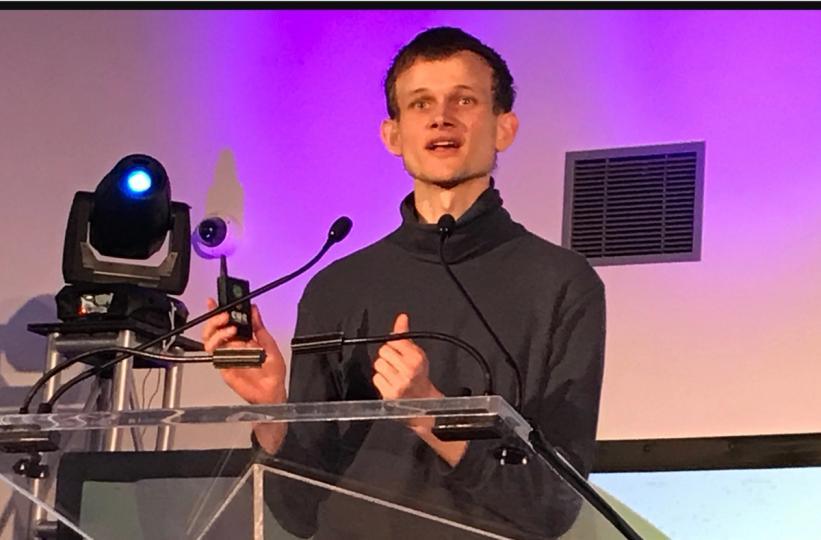
Buterin’s comments, which suggested that as Ethereum becomes faster and cheaper, the original logic for Layer 2 may be changing, reignited debate over whether rollups will be less necessary as the base layer improves.
Layer 2 networks were previously built into Ethereum’s roadmap to scale the network by processing transactions off the main blockchain and back into Ethereum, helping to reduce congestion and fees.
The debate is not abstract. Several layer 2 networks now secure billions of dollars in user funds, making them some of the largest platforms in crypto. Base, backed by Coinbase, has approximately $4 billion in total value locked, while Arbitrum secures more than $2 billion, according to data from DefiLlama.
‘Less relevant’
But Layer 2 ecosystem leaders say this moment is being misunderstood.
Rather than signaling an existential threat, they argue, Ethereum’s progress is forcing rollups to clarify their purpose and stand on their own two feet.
Ben Fisch of the Espresso Foundation said Buterin’s comments reflect a logical evolution in how Ethereum’s scaling strategy is being formulated.
“I think Vitalik’s post is very consistent with that idea now that he says, ‘The purpose of Layer 2 in the first place was to scale Ethereum. Well, now we’re making Ethereum faster, so they’re becoming less relevant,” Fisch told CoinDesk in an interview.
Still, Fisch rejected the idea that this makes the summaries obsolete.
“I think it’s the beginning of Layer 2 blossoming and becoming independent from Ethereum,” he said.
“A layer 2 can use Ethereum as a service, but it is in no way beholden to Ethereum or what Ethereum leaders think.”
That perspective is increasingly echoed among layer 2 leaders themselves.
Base, Coinbase’s layer 2 network, welcomed the improvements to the base layer, with Jesse Pollak, head of Base, calling Ethereum’s scaling “a win for the entire ecosystem,” while emphasizing that rollups will need to offer more than lower fees.
“In the future, L2s can’t just be ‘Ethereum but cheaper,'” Pollak said.
Polygon CEO Marc Boiron made a similar argument. Polygon recently said it would shift its efforts to focus primarily on payments, and Boiron said Buterin’s comments were less about abandoning rollups than raising expectations for them.
“Vitalik’s point was not that rollups are a mistake, but that scaling alone is insufficient,” Boiron told CoinDesk. “The real challenge is building a single blockchain that works for real-world use cases, like payments, where cost, reliability and consistency are important.”
Others have gone further, arguing that rollups should be understood as independent platforms and not extensions of Ethereum itself. Jing Wang, co-founder of Optimism Foundation and CEO of OP Labs, compared Layer 2 to standalone web services.
“L2s are websites. Each company will have its own, tailored to its needs. Ethereum is an open settlement standard,” Wang told CoinDesk. “It’s important for Ethereum to stay true to those base layer values to give L2s the flexibility to customize.”
Taken together, the reactions suggest that while Buterin’s post has raised questions about the role of Layer 2s, leaders across the ecosystem see it less as a threat than a transition, one that is forcing rollups to reconcile the way they have branded themselves with who they are now trying to become.
Read more: ‘You’re not scaling Ethereum’: Vitalik Buterin throws a tough reality check to the largest crypto networks


