
For the first time, a regulated, transparent and compliant path opens for exchanges, says Bilal Bin Saqib
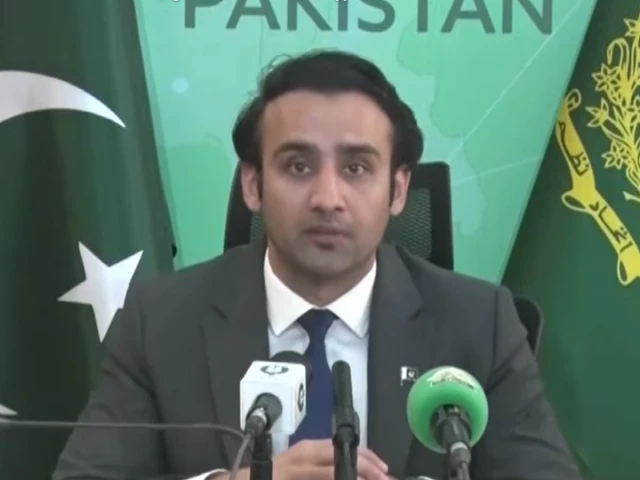
Pakistan Virtual Asset Regulatory Authority Chairman Bilal Bin Saqib addresses a press conference in Islamabad on Sunday, December 14, 2025. Screen recording
Pakistan Virtual Asset Regulatory Authority (PVRA) Chairman Bilal Bin Saqib on Sunday clarified that the issuance of No Objection Certificates (NOCs) for global crypto exchanges Binance and HTX should not be seen as a blanket approval, but rather as the first step in a closely monitored and risk-mitigated market entry framework.
In a press conference, Saqib said the event marked a historic moment for the country. “We must congratulate the nation, since for the first time in history a regulated, transparent path that complies with international standards for global exchanges has been opened,” he said.
He noted that the move reflects a change in thinking and institutional reform, adding that the issuance of NOCs to Binance and HTX in Islamabad represents a practical step towards this new regulatory approach. Under the framework, effective monitoring of the fight against money laundering and terrorist financing would be possible.
Read: Partnership with Binance brings regulated digital assets and tokenizes up to $2 billion in state bonds
Clarifying the scope of the decision, Saqib emphasized that NOCs were neither a shortcut nor an unconditional approval. “It is the initial step in a risk-mitigated, gradual and closely monitored market entry framework,” he said, adding that the approach, which is being implemented for the first time in Pakistan, is in line with internationally recognized regulatory practices.
Addressing the youth, the PVRA president said that the issuance of NOC “is not our destiny. It is the basis of a building that has to be built.” He added that Pakistan’s future should not be imported but built locally, so that the country can become a global case study in digital asset regulation, “from Morocco to Malaysia”, where emerging markets can see how Pakistan regulates digital assets.
Saqib explained that the regulatory framework focuses on three key areas. The first involves safeguards against money laundering and terrorist financing. The second ensures transparency of ownership and control, allowing regulators to identify beneficial owners, controlling parties and those ultimately responsible. The third relates to suitability and ownership assessments, under which no entity is allowed to enter the market without full disclosure and verification.
He further said that the framework establishes a clear and enforceable licensing schedule, ensuring that only companies and entities that comply with Pakistan’s laws and regulatory requirements can proceed. “Such entities will be provided with a defined and measurable path, after which the formal licensing process will begin,” he added.
Read also: Government-backed group consolidates control over PBC
Emphasizing that Pakistan has not adopted an unusual model, Saqib said major financial centers around the world follow similar gradual approaches. He noted that Pakistan is already among the top three countries in the world in terms of cryptocurrency adoption.
According to him, 30 to 40 million Pakistanis currently use digital assets. He said Pakistan must make timely and accurate decisions aligned with the global financial system, as the $100 trillion global bond market moves towards digital rails.
The PVRA Chairman said that Pakistan has immense potential in digital assets, but without a legal and regulated path, this potential cannot be tapped. He added that the framework would benefit not only trade but also a range of broader industries.
Concluding his remarks, Saqib said that over the next ten years Pakistan will strengthen its sovereignty through technology, urging the youth to prepare for the future.


