
At least 31 martyred and 169 injured as Pakistan faces fresh militant threats
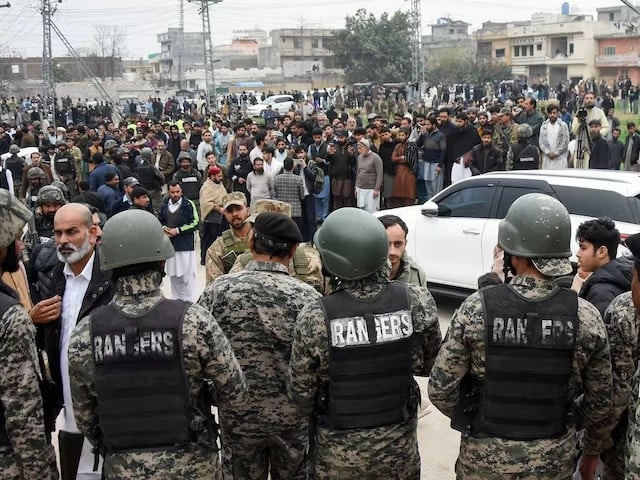
Paramilitary soldiers stand guard at the scene after a deadly explosion at an imambargah on the outskirts of Islamabad on February 6, 2026. PHOTO: REUTERS
ISLAMABAD:
A suicide blast claimed by the Islamic State group (Daesh) at a Shiite mosque in Islamabad killed at least 31 people on Friday, February 6, and wounded 169 more in the deadliest attack in Pakistan’s capital since the 2008 Marriott hotel bombing.
City authorities said 31 people were killed in the explosion at the Imam Bargah Qasr-e-Khadijatul Kubra mosque in the Tarlai area on the outskirts of the city, and dozens more were treated for their injuries. The death toll was expected to rise further.
The explosion occurred during Friday prayers, when mosques across the country are packed with worshipers. Daesh claimed that one of its militants had attacked the congregation, detonating an explosive vest and “causing a large number of deaths and injuries,” according to the SITE Intelligence Group, which monitors jihadist communications.
Prime Minister Shehbaz Sharif promised that those responsible for the explosion would be found and brought to justice. The attack was the deadliest in the Pakistani capital since September 2008, when 60 people were killed in a suicide truck bomb explosion that destroyed part of the five-star Marriott hotel.
AFP Journalists at the Pakistan Institute of Medical Sciences hospital saw several people, including children, being carried on stretchers or by their arms and legs. Medics and bystanders helped unload victims in blood-soaked clothes from the backs of ambulances and vehicles. At least one victim arrived in the trunk of a car.
Deputy Prime Minister Ishaq Dar called the attack “a heinous crime against humanity and a flagrant violation of Islamic principles.” “Pakistan is united against terrorism in all its forms,” he said in a post on X.
UN Secretary General Antonio Guterres stated that “attacks against civilians and places of worship are unacceptable,” according to his spokesman.
The attack comes as Pakistani security forces fight intensifying insurgencies in the southern and northern provinces bordering Afghanistan.
Islamabad has said that terrorist groups in southern Balochistan, and the Pakistani Taliban and other terrorists in the northern province of Khyber Pakhtunkhwa, near Islamabad, have used Afghan territory as a safe haven from which to launch attacks.
Afghanistan’s Taliban government has repeatedly denied Pakistan’s allegations. Bilateral relations have plummeted and forces from both sides periodically clash along the border.
In Balochistan, attacks claimed by Indian-backed terrorists last week killed 36 civilians and 22 security personnel, triggering a wave of counter-operations in which authorities said security forces killed nearly 200 terrorists.


