
- Supercapacitors turn charging time from hours to seconds
- Fast charging exposes the real limits of lithium-ion battery chemistry
- Supercapacitor technology lacks sufficient energy capacity for practical electric vehicles
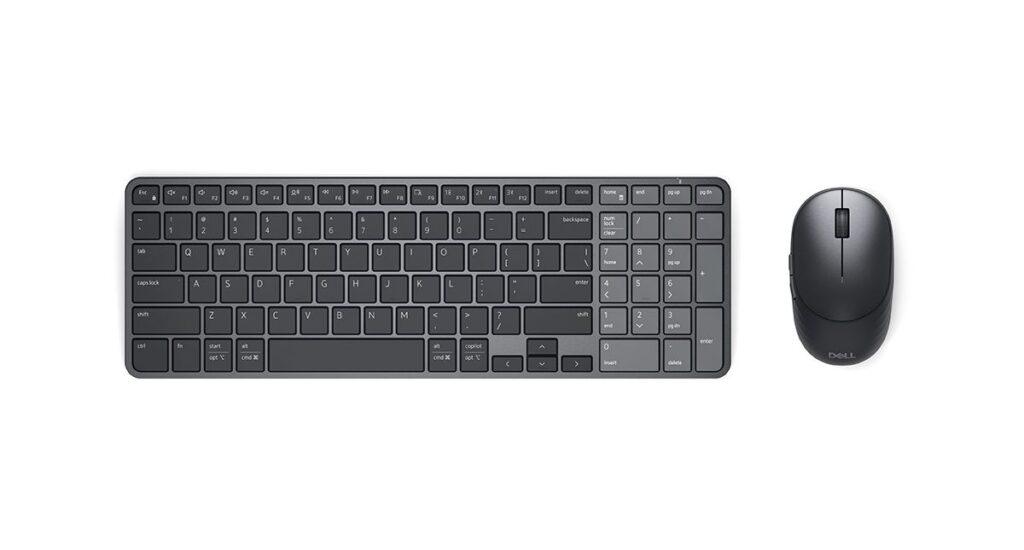
Dell has introduced a keyboard and mouse combo that charges in five seconds and offers a full day of use.
The new Dell Pro 7 compact rechargeable keyboard and mouse is based on supercapacitor technology instead of traditional lithium-ion batteries.
This system offers unprecedented charging speeds, with a full recharge in less than 5 minutes, powering the keyboard for up to 3 months and the mouse for 1.5 months.
Article continues below.
How supercapacitors change the charging equation
Supercapacitors are fundamentally different from conventional batteries in the way they store and release energy.
Unlike lithium-ion cells that rely on chemical reactions to store energy, a process that inherently limits charging speed, supercapacitors store energy electrostatically.
By combining high-speed charging with moderate power storage, Dell enables a system where devices are ready to use almost immediately.
Dell’s implementation of this technology in Pro 7 peripherals eliminates the need to leave devices plugged in overnight or carry spare batteries for critical moments.
The company also claims that the mouse is the world’s lightest rechargeable pointing device that does not use a lithium-ion battery.
The compact design makes the devices ideal for mobile professionals, consultants, or anyone moving between hot desks, conference rooms, or home offices.
The keyboard offers silent keys for minimal interruption, while the mouse offers precise tracking without the need for heavy batteries.
This technology could reshape the electric vehicle (EV) industry in the coming years.
Electric vehicles rely almost entirely on lithium-ion battery packs that store energy through chemical reactions, and in a typical electric vehicle, a full charge takes about 30 minutes with fast chargers or several hours with home setups.
That process typically offers a driving range of between 300 and 500 km, depending on the vehicle, but the limitation involves not only the speed of the charger but also the underlying battery chemistry that governs energy storage.
Introducing power too quickly into lithium-ion cells generates heat, accelerates degradation, and reduces long-term performance reliability.
In theory, an electric vehicle powered by supercapacitors could be recharged in minutes instead of hours with current systems.
These systems can also handle quick bursts of power more efficiently, improving acceleration and regenerative braking performance.
However, there is a trade-off because supercapacitors currently store much less energy than lithium-ion batteries.
This limitation means that vehicles would experience reduced driving range if supercapacitors were used alone.
Supercapacitors also tend to discharge stored energy more quickly over time, especially when the vehicle sits idle.
A more practical solution is to combine lithium-ion batteries with supercapacitors in a hybrid energy storage system.
This approach could improve charging speed, extend battery life, and improve performance without sacrificing overall driving range.
The same principle seen in Dell accessories suggests that future EV systems could better balance charging speed and endurance.
Follow TechRadar on Google News and add us as a preferred source to receive news, reviews and opinions from our experts in your feeds. Be sure to click the Follow button!
And of course you can also follow TechRadar on TikTok for news, reviews, unboxings in video form and receive regular updates from us on WhatsApp also.


