
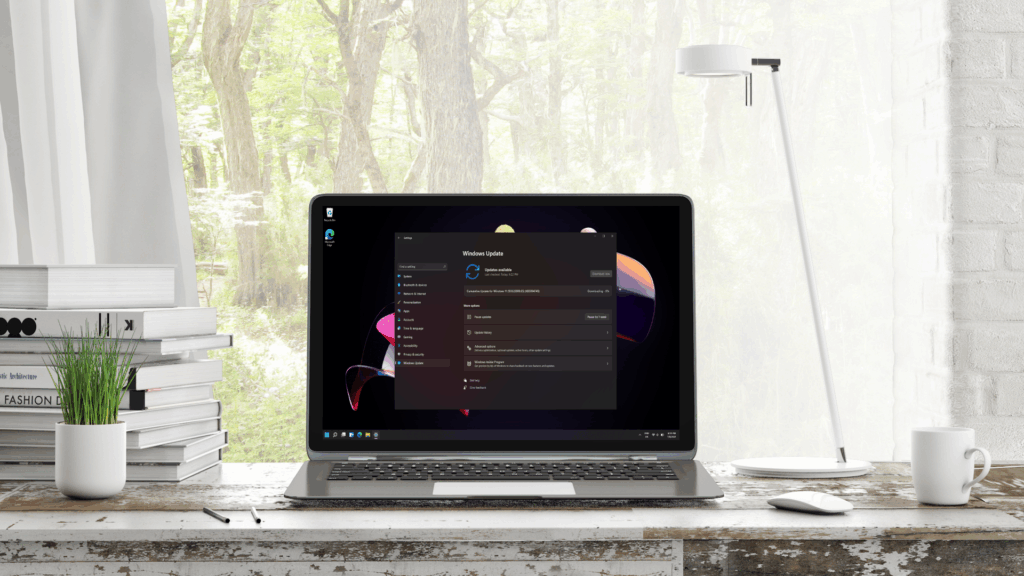
- Microsoft previously promised that it would give users the option to pause Windows 11 updates for as long as necessary.
- The first work to this end has been discovered hidden in a preliminary version.
- It’s still early, but it’s a hopeful sign that this will be put to the test soon.
As part of its campaign to fix Windows 11, one of Microsoft’s biggest promises to me was to give users more control over Windows updates, and it’s now clear that this functionality is coming sooner rather than later.
Neowin discovered that regular Windows 11 leaker PhantomOfEarth posted on
There is now a button that displays a calendar view, allowing you to specify a date until which updates will stop. When that day comes, updates will resume again, although as PhantomOfEarth points out, the currently limited date availability should be ignored as this work is still in the early stages.
Article continues below.
The feature isn’t even officially available for testing yet and is hidden in the most recent preview that hit the Dev channel (although it’s probably also in the Beta channel, the leaker notes).
What this does show, however, is that the measure is rolling out and we can expect to see the ability to pause updates in testing for Windows 11, perhaps this month or May.
Analysis: Here’s why this skill is so valuable
Pavan Davuluril, who leads the Windows and Devices group at Microsoft, previously promised that he will be able to pause Windows 11 updates for as long as needed in the future.
So this seems to be the first step towards that goal, as presumably the calendar allows you to select any date you want and the length of time you want to pause updates. Well, unless ‘for as long as you need’ has some sort of time limit. (And I bet it will, but presumably it will be a long period of about a year, or at least six months; you can’t and shouldn’t postpone upgrading to Windows 11 forever, of course.)
If you’re thinking: why would you want to put off applying an update? Well, it’s true that Windows 11 monthly updates have security fixes that, in an ideal world, should be applied quickly (since any patched vulnerabilities are at that point public knowledge and more likely to be exploited). However, these cumulative updates are also buggy, as we’ve seen all too often in the past with Windows 11.
One scenario could be that, say, owners of a certain GPU, or perhaps a processor, have serious problems with an update and the problems are reported on social media. Imagine if some of those reports included PCs not booting after the update. Now, in this case, you probably don’t want to risk your system completely crashing in a nasty way like this, so you’ll want to hold off on upgrading.
Currently, you can pause updates in Windows 11 Home, but only for five weeks. It may last longer with Windows 11 Pro (although doing so is a bit complicated, via the Group Policy Editor), and you may want to do it on the home version of the operating system as well, if an issue is still persistently reported. Microsoft will bring that ability to those of us using Windows 11 Home, and it will do it easily, and rightly so, because if you’re nervous about an update for any reason, you should be able to pause for as long as you want.
Of course, as noted, there is still a balance to be struck between pausing a worrying update and not continuing. also a long time without major security fixes, but that is a choice the user must make based on their assessment of the perceived risks. We shouldn’t be forced to install an update after a month of postponing it, just because Microsoft says so.

The best laptops for all budgets
Follow TechRadar on Google News and add us as a preferred source to receive news, reviews and opinions from our experts in your feeds. Be sure to click the Follow button!
And of course, you can also follow TechRadar on YouTube and tiktok for news, reviews, unboxings in video form and receive regular updates from us on WhatsApp also.


