Pakistan has quietly crossed an important threshold. After laying the legal foundation for a regulated digital asset ecosystem through the Pakistan Digital Nation Act and the Virtual Assets Regulatory Ordinance earlier this year, the Pakistan Virtual Assets Regulatory Authority (PVARA) began accepting license applications for crypto exchanges on December 2.
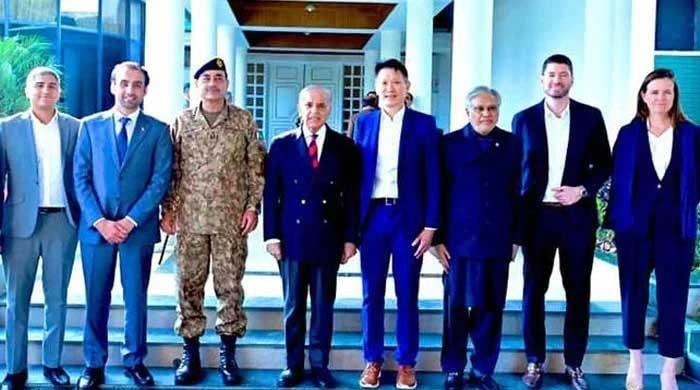
That shift was underlined at the highest levels of the state on December 6, when Binance Global CEO Richard Teng met senior policymakers in Islamabad, along with Prime Minister Muhammad Shehbaz Sharif and COAS-CDF Field Marshal Syed Asim Munir.
The commitment reflected not market curiosity but institutional intent: a recognition that issues of money, payments and digital value now sit alongside national economic and security priorities.
In practical terms, this means that, in due time, purchasing bitcoins through regulated local payment gateways will become easier, cleaner and more compliant.
This is a remarkable development, which hits a familiar scary moment. Bitcoin prices have dropped again. The reviews are loud. The headlines talk about exhaustion, excess and the end of the cycle. Withdrawals are accelerating. Confidence is shaken. Fear, once again, dominates the conversation.
But history offers perspective. Similar periods of pessimism marked the final phases of bitcoin’s previous four-year cycles: from 2014 to 2017, and again from 2018 to 2021. Viewed through that lens, the monetary cycle that began in 2022 is not collapsing; It is maturing.
Focusing solely on price action obscures the deeper problem. The real risk is not the volatility of bitcoin. It is the financial system for which bitcoin was created. Nowhere is the failure of that system more visible than in Pakistan. In essence, that failure manifests itself through inflation: a process widely misunderstood and usually poorly described. Inflation is often explained as an increase in prices.
That description is convenient and incomplete. Prices are not the cause of inflation; They are its effect. Inflation begins with the continued expansion of the money supply. When currency is created year after year, the purchasing power of each unit decreases. Savers lose silently. Salaries are lagging. Living standards are eroding.
In Pakistan, the consequences are everywhere. Food, fuel, rent, and education cost more every year: not because they have become intrinsically more valuable, but because the currency that measures them buys less. The result is a population trapped in short-term thinking: working harder, saving less, and feeling perpetually behind.
Fundamentally, this erosion occurs without transparency or consent. A small group controls the monetary system. Everyone else must ask permission to use their own money through banks and intermediaries. Profits are privatized. Losses are socialized. Asset bubbles form, followed by crises, and wealth becomes even more concentrated at the top.
No matter how hard most people work, the value of their earnings continues to erode unless they gain access to assets before inflation or become part of the system itself. Pakistan’s recurring economic crises are not isolated national failures; They are local expressions of a global monetary order that rewards access to effort. This is the silent failure of money.
Which brings us to the alternative. Bitcoin enters this scenario not as an investment proposal, but as a monetary alternative. It is decentralized and returns agency to individuals. It functions as an equalizer in societies increasingly fractured by economic stress and resentment. Its properties are simple.
Bitcoin has a fixed supply of 21 million coins, permanently limited. No central authority can extend it. No political emergency can dilute it. Its rules are enforced by codes rather than discretion, and its security is based on power and mathematics, not faith in institutions.
While bitcoin is often dismissed as volatile, that volatility has developed within a clear long-term upward trajectory, while its underlying fundamentals have remained unchanged. Over longer horizons, it has been the best performing asset of the last decade. More telling, however, is what happens when prices of goods are set in bitcoins instead of local currency.
Housing, technology, and productive assets often become cheaper over time: not because their value disappears, but because the money that measures them improves.
In 2012, a modest house in Islamabad priced at a few million rupees would have required thousands of bitcoins. Today, that same property may cost tens of millions of rupees, but only a single-digit amount in bitcoins. The house did not change. The coin did it.
For Pakistan, a country where money not only underperforms but systematically collapses as a store of value, and where degradation is felt long before it is formally recognized, this distinction is important. Regulation does not validate the price of bitcoin or eliminate risk.
What it does is legitimize access. As regulatory frameworks take shape and local railways develop, bitcoin is increasingly seen not as a speculative instrument but as a savings technology, competing directly with a currency that has struggled to preserve purchasing power.
This is most important for a younger generation that has been left without real estate, excluded from traditional asset classes and increasingly skeptical of institutions that promise stability but generate erosion. Bitcoin requires no ownership titles, brokerage accounts, or political proximity. It just requires time, discipline and a long-term horizon.
Bitcoin offers no guarantees. It carries a real risk. But it restores something that modern money has quietly taken away: the option to opt out of a system designed to be diluted by default. In a world where money has quietly failed in its most basic functions, that choice may be the most powerful characteristic of all.
Disclaimer: The views expressed in this article are those of the writer and do not necessarily reflect the editorial policy of PakGazette.tv.
The author is an Islamabad-based lawyer and strategic legal advisor to HP | FKM. She can be contacted at: [email protected]
Originally published in The News