
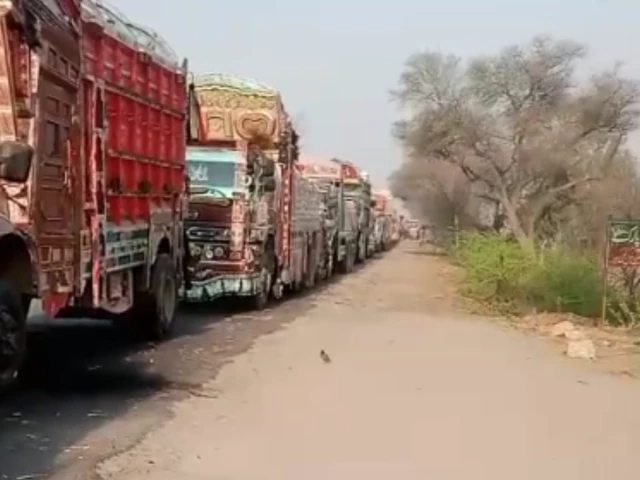
The Dera Darya Khan Bridge, which connects Punjab with Khyber Pakhtunkhwa, remains closed after a suicide attack at the nearby Dajal check post on Tuesday, causing serious disruption to traffic and transportation of essential goods PHOTO: EXPRESS
LAHORE:
The Punjab government has implemented free public transport across the province as a relief measure following recent increases in oil prices, prompting a sharp rise in commuter participation and renewed debate over the sustainability of such subsidies.
The initiative, introduced on the directives of Chief Minister Maryam Nawaz Sharif, allows passengers to travel fare-free on major public transport systems, including the Orange Line Metro, Metro Bus services, Speedo buses and electric bus fleets. Officials said the move is aimed at cushioning the financial impact of rising fuel costs on daily commuters, particularly in low- and middle-income groups.
The policy went into effect immediately, drawing large crowds to transit stations, especially along Lahore’s Orange Line, where passenger volume increased within hours of its implementation. Authorities responded by deploying additional staff for crowd control and security, while facilitating a smoother flow of passengers.
According to estimates by the Punjab Mass Transport Authority, around 900,000 passengers are expected to benefit from the free shuttle service daily. This includes more than 300,000 Orange Line riders, around 140,000 Metro Bus riders, and hundreds of thousands who rely on electric and feeder bus services in multiple districts.
However, the announcement comes against the backdrop of rising intercity transport fares, which have continued to rise despite assurances of relief from the government. Passengers reported significant increases on key routes, with fares from Lahore to Islamabad rising from Rs 2,200 to Rs 2,600, and from Lahore to Faisalabad from Rs 1,050 to Rs 1,400.
Travelers expressed frustration over what they described as inconsistent implementation of relief measures. “There is no uniformity. Public buses are free, but private operators charge whatever they want,” said one commuter, Ali Usman, at a bus terminal.
Meanwhile, transport operators cited declining passenger affordability and rising operating costs. Some warned they could be forced to reduce routes if current trends persist.
In addition to free transit, the provincial government has introduced a fuel subsidy program aimed at motorcycle owners, a segment considered among those most affected by fuel price volatility. Under the plan, eligible users will receive up to 20 liters of gasoline per month at a subsidized rate.
Officials said registration for the program would be facilitated through a dedicated helpline, mobile app and web portal, with verification mechanisms linked to government databases.
In a parallel move, the government has eliminated motorcycle registration and transfer fees, aiming to ease financial pressure on small vehicle owners.
Officials also confirmed plans to expand public transport capacity by leasing additional buses. An initial rollout of 1,000 non-air-conditioned buses is being considered to address demand gaps. The estimated daily operating cost per bus is over Rs 61,000, putting the fleet’s total daily expenditure at over Rs 61 million, with monthly costs expected to be close to Rs 1,850 million.
While provincial authorities framed the initiative as a necessary intervention during an ongoing fuel crisis linked to global market disruptions, questions remain about fiscal sustainability and long-term policy direction.
For now, the government maintains that the measure will remain in place as long as economic pressures persist, urging citizens to opt for public transport as a more affordable and energy-efficient alternative.
Chief Minister Maryam Nawaz also announced a relief package for farmers, particularly those growing wheat. Under the initiative, financial assistance will be provided to farmers owning up to 25 acres of land, with a subsidy of Rs 150 per liter for 10 liters of diesel per acre.


