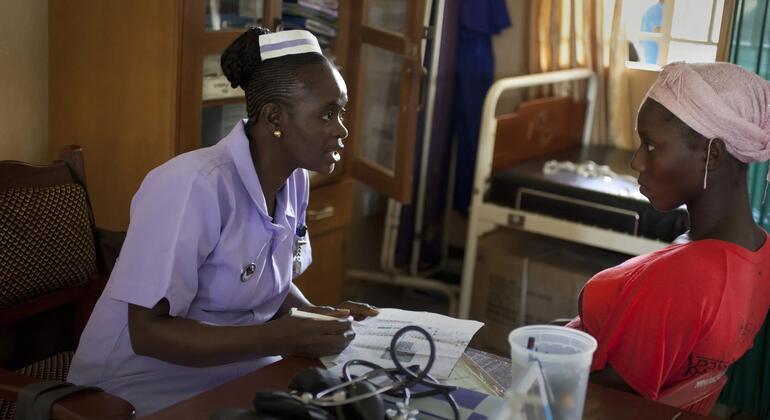
Around the world, UN data shows, women are even less likely to be taken seriously, accurately diagnosed or adequately treated. From misdiagnoses to entrenched medical biases, gaps in health systems continue to impact women’s health, safety, and quality of life.
Although healthcare is a fundamental human right, it is still not guaranteed for everyone and inequality persists in one of the most critical areas of daily life.
Women are more likely to have their pain ignored, their symptoms misinterpreted, and their conditions diagnosed too late. According to gender equality agency UN Women, this reflects a “medical system historically designed without women in mind.”
From the tools used in screenings to the data that shape diagnosis and treatment, these gaps are embedded in health systems, with real consequences.
What the data shows
There has been measurable progress, says UN Women. Between 2000 and 2023, maternal mortality decreased by 40 percent, from 328 to 197 deaths per 100,000 live births.
Teenager Fertility rates fell from 66.3 to 38.3 births per 1,000 girls aged 15 to 19 between 2000 and 2024.. Skilled attendance at childbirth increased from 60.9 to 86.6 percent, and the proportion of women using modern family planning methods increased from 73.7 to 77.1 percent.
However, these advances are uneven. In less developed countries, teenage births increased from 4.7 million in 2000 to 5.6 million in 2024.
Women also live longer than men (3.8 years versus 68.4), but spend more years in poor health. In 2021, women spent an average of 10.9 years in poor health, compared to 8.0 years for men.
This includes chronic diseases such as musculoskeletal disorders, gynecological diseases, migraines and depression.
From misdiagnoses to medical bias, women are even less likely to be taken seriously, diagnosed, or treated.
Six uncomfortable truths
1. Obsolete tools are still being used
The speculum, widely used in pelvic exams, has changed little since its design in the 19th century. Despite advances in medicine, Many diagnostic tools have not evolved to prioritize women’s comfort, dignity, and safety..
Efforts to redesign such tools are emerging, particularly through women-led innovation, but their adoption in public health systems remains limited.
2. Longer lives, worse health
Although women live longer, they spend a greater proportion of their lives in poor health; about 25 percent more than men.
This often means prolonged experiences of chronic pain, fatigue, and untreated conditions, along with higher rates of misdiagnosis.
3. Research and funding gaps persist
Conditions that affect women are often under-researched and poorly funded. Premenstrual syndrome (PMS), which affects most women and girls, receives comparatively less attention than conditions like erectile dysfunction.
For decades, this imbalance has shaped how women’s pain is understood, misinterpreted, dismissed, and, all too often, normalized and left unaddressed.
Policy changes are emerging. In 2023, Spain introduced paid menstrual leave, joining several countries, including Japan, Indonesia and Zambia. However, stigma and limited awareness continue to affect its acceptance.
4. Late diagnosis is common
Endometriosis affects approximately 1 in 10 women and girls worldwide (approximately 190 million people). However, diagnosis can take between four and 12 years.
The delays reflect a Broader pattern in which women’s pain is normalized or dismissed.resulting in prolonged suffering and delayed treatment.
5. Historical exclusion of research
Until 1993, women were largely excluded from clinical trials.. As a result, many treatments based on male biology were developed.
This has had lasting effects. Women are more likely to experience adverse reactions to medications and symptoms may be misinterpreted. Diseases that primarily affect women, including autoimmune diseases, remain under-researched.
Gaps persist today, even in emerging technologies like artificial intelligence, where data sets may still underrepresent women.
Recent research has highlighted the importance of integrating sex and gender into clinical trials (including during the COVID-19 response) to ensure treatments are safe and effective for everyone.
Another issue is that Women are underrepresented in healthcare leadership.. This is important because women doctors and leaders often prioritize patient-centered care, evidence-based practices, and policies that improve women’s health outcomes.
6. Symptoms that do not match the model.
Heart disease is the leading cause of death among women. However, The widely recognized symptoms are largely based on male patterns..
Women may experience different warning signs, such as fatigue, nausea, shortness of breath, and jaw or back pain. These differences can cause delays in diagnosis and treatment, increasing the risk of death.
Because the signs are less recognized, in some cases women are sent home rather than receiving treatment.
The way forward
Addressing these disparities requires Health systems that reflect the realities of women.. This includes more inclusive research, better data, better diagnostic tools, and greater recognition of women’s symptoms and experiences.
It is also essential to strengthen women’s leadership. Evidence shows that greater inclusion can improve patient outcomes and reduce mortality rates.