
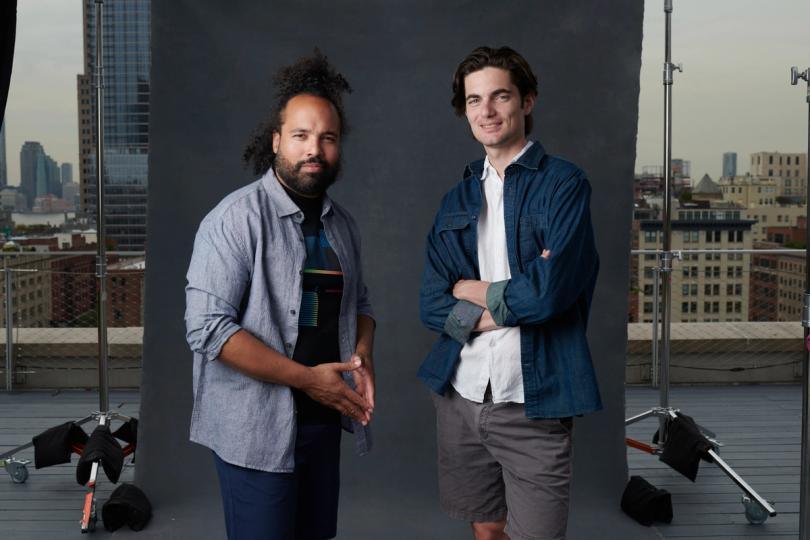
The CEO of cryptocurrency’s largest Decentralized Autonomous Organization (DAO) governance platform says the Biden administration was better for his industry than its successor, and he’s shutting down his company to prove it.
Tally, which powered on-chain governance for Arbitrum, Uniswap, ENS and more than 500 other DAOs, will close operations after six years, CEO Dennison Bertram announced in a blog post today.
Crypto protocols are not governed by executives or boards of directors, but by decentralized autonomous organizations, or DAOs, where token holders vote on everything from fee structures to software updates.
In practice, turnout is often low and decision-making slow, leaving a small group of active voters in control of multibillion-dollar systems. Tally built the infrastructure that made crypto democracy possible, providing voting lanes, delegation tools, and dashboards used by major DAOs like Uniswap and Arbitrum to run their governance processes.
In an interview with CoinDesk, Bertram said that the twin forces supporting demand for governance tools – the regulatory threat and a growing ecosystem of decentralized applications – have disappeared.
Across Protocol recently proposed dissolving its DAO entirely and converting it to a US C-corp, arguing that the token structure was actively preventing institutional partnerships. Its ACX token rose 80% following the news.
Last year, Solana-based exchange Jupiter and NFT conglomerate Yuga Labs abandoned their DAO structures, with Yuga CEO Greg Solano calling their project’s governance “a slow, noisy, and often unserious governance theater.”
“There is a natural tension between building a collaborative, decentralized system and then founding it on top of the crypto economy,” Bertram said. “Cryptoeconomics implies that we may encounter some kind of stagnation because everyone is going to pursue their own self-interest, which is a kind of zero-sum, profit-maximizing mentality.
Gensler forced decentralization. Your absence is undoing it
Under the SEC’s Gary Gensler-era interpretation of securities law, a token was at risk of being classified as a security if a clearly identifiable group was making management decisions that drove its value, one of the key aspects of the Howey test.
The industry’s response was to push decision-making outward through the DAO, distributing control across thousands of wallets so that no single entity could be said to manage the network. Governance systems and tools like Tally were not just features: they were part of a legal strategy.
Bertram sees this as the end of his company: if teams no longer believe they will be penalized for operating like traditional companies, decentralization stops being a requirement and becomes optional, many teams choose not to pay for it.
“He [Trump] The administration is loudly signaling that it’s not in trouble, go ahead and do what you want,” Bertrain said. “That gives enormous leeway to existing organizations. In reality, it is not clear whether decentralization is needed or what decentralization looks like.”
The garden is not infinite.
The regulatory change alone did not kill Tally. The company’s business model was built on a second bet: that the Ethereum ecosystem would produce a vast, infinite garden of protocols and applications, each of which would need a governance infrastructure.
“For Tally and organizations like Tally to exist, it is not enough to have one Uniswap, one Aave, one or two L2s, and that’s it,” Bertram said. “That’s a very different type of business consulting business.”
That infinite garden thesis was central to Tally’s $8 million fundraising last year.
“A big part of our thesis in our last round was, look, there will be thousands of L2s, which was an idea that no one rejected,” he said. “There won’t be, in the short term, thousands of L2s. And there may never be.”
Instead, the industry consolidated around a handful of dominant protocols.
Cryptocurrencies found a product-market fit in payments and speculation, such as prediction markets, Bertram said, but the rich consumer application layer that would have underpinned a governance infrastructure business was never developed.
“There is no venture-backed business in governance tools for decentralized protocols,” he wrote in a blog post announcing the closure. “At least not yet.”
Retail doesn’t care about cryptocurrencies
Beyond the governance crisis, Bertram sees a more existential problem for the industry.
“AI has really become the new narrative of the future, and its narrative is actually much broader and more encompassing than cryptography,” he said. “What that does is absorb the best and the brightest. The most exciting opportunity is not here, so we don’t get the most interesting founders, we don’t get the most interesting builders.”
Bertram said he still believes in the industry, but he no longer accepts the argument that it’s early.
“People always say it’s still early,” he said. “I’ve been at this since 2011. I don’t know. I don’t feel it early.”


