
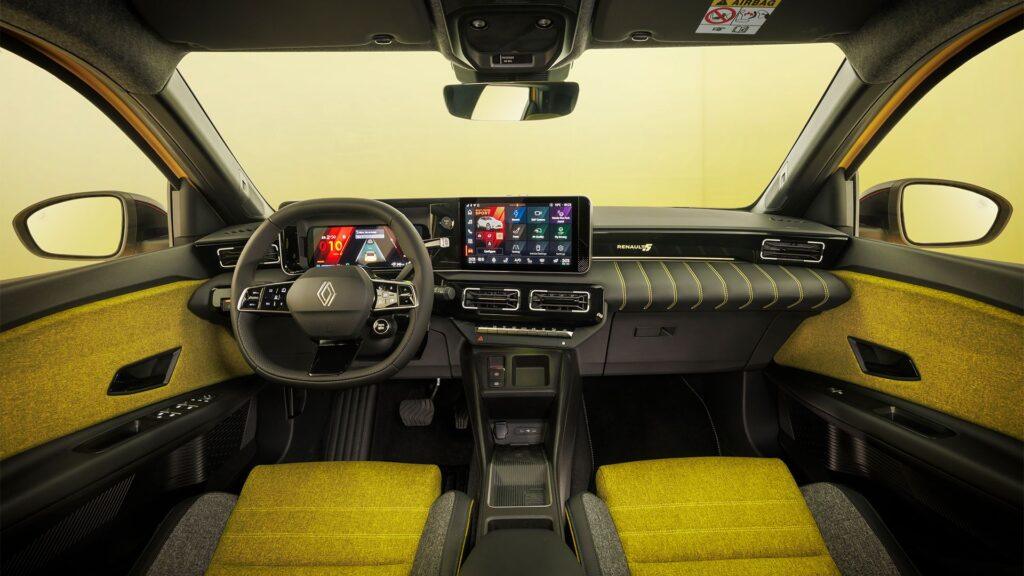
- Google announces an updated version of the Android Automotive operating system
- The tech giant hopes the software can take care of key car functions
- Cars could eventually require more than 300GB of RAM, says Micron
Google just announced an updated version of its open source Android Automotive operating system for vehicles, which it hopes will see the software take care of the “non-safety-related” parts of software-defined vehicles (SDVs) today and in the future.
In recent years, both passenger cars and commercial vehicles have become increasingly complex. With the advent of electric vehicles and their simplified powertrain architecture, automakers have turned to computing power to control the vehicle and deliver cutting-edge infotainment systems.
Often described as software-defined vehicles, the phrase is loosely applied to anything that can be updated, improved, diagnosed and repaired remotely, using a data connection inside the car to connect to the cloud.
Article continues below.
In a blog post written by Google Group Chief Product Officer Matt Crowley, he explains that modern cars are quickly becoming “computers on wheels.”
“From preheating the car in the morning to using your smartphone as a car key, many of today’s vehicle functions are controlled by software,” he writes.
But modern automakers also face a number of obstacles, mainly because most of them have limited coding and software experience, so they have had to create entire divisions dedicated to rapidly emerging technologies.
Second, Crowley says most automakers are integrating software modules from dozens of different vendors.
“This fragmented approach means automakers have to spend more time building infrastructure than what really differentiates them in a rapidly evolving market,” he says.
As you’ve probably already predicted, Google and Android want to simplify this by launching the Android Automotive Operating System for Software Defined Vehicles (AAOS SDV), which it claims provides an open infrastructure for the “non-secure” parts of a vehicle.
This will include things like next-generation AI voice assistants, climate and cabin environment control, steering adjustments, and infotainment services.
Like Apple with its Apple CarPlay Ultra system, Google and Android want more drivers to take advantage of Android Automotive for the in-car digital experience, while convincing automakers that letting the software giant handle the hard parts will streamline their development processes.
But like Apple CarPlay Ultra, Google could also encounter a backlash from both customers and automakers who aren’t interested in Google handling the inevitable amounts of driver data flowing through its systems.
Analysis: The disadvantages of “computers on wheels”
Like it or not, the software-defined vehicle revolution is in full swing, and as automakers look for software to unlock new revenue streams, the vehicles of the future will become increasingly complex.
In a recent report by The Register, Micron CEO Sanjay Mehrotra said cars will eventually need more than 300GB of RAM to run, as automakers continue to move toward higher levels of self-driving functionality.
Currently, a modern Tesla has between 8 and 16 GB of RAM, depending on its age, about the same or twice as much as the current Apple iPhone.
To achieve a level of autonomy that allows drivers to safely and legally take their hands off the wheel and eyes off the road, Mehrotra believes automakers will need to introduce nearly 20 times that amount, bringing a vehicle more in line with a high-end consumer desktop.
Not only could this massively increase the price of tomorrow’s vehicles, it could also lead to a shortage of memory chips, as the industry struggles to cope with demand from competing automakers, all competing to bring the latest self-driving technology to market.
Follow TechRadar on Google News and add us as a preferred source to receive news, reviews and opinions from our experts in your feeds. Be sure to click the Follow button!
And of course, you can also follow TechRadar on YouTube and tiktok for news, reviews, unboxings in video form and receive regular updates from us on WhatsApp also.


