
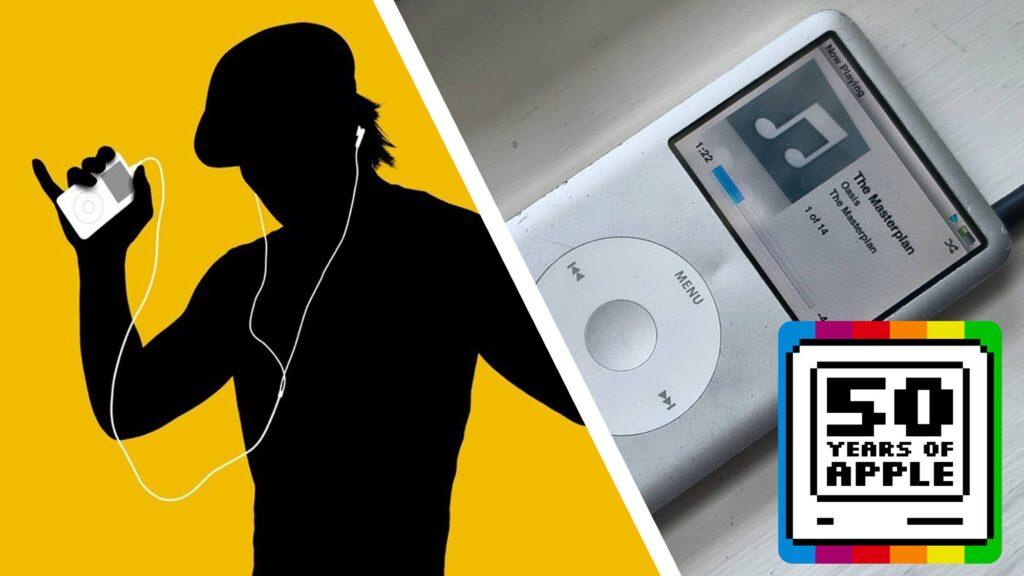
50 years of Apple
We celebrate Apple’s 50th birthday with a week of content about the tech giant. It covers everything from our writers’ personal memories to the best (and worst) Apple devices voted by you, and you can read it all on our 50 Years of Apple page.
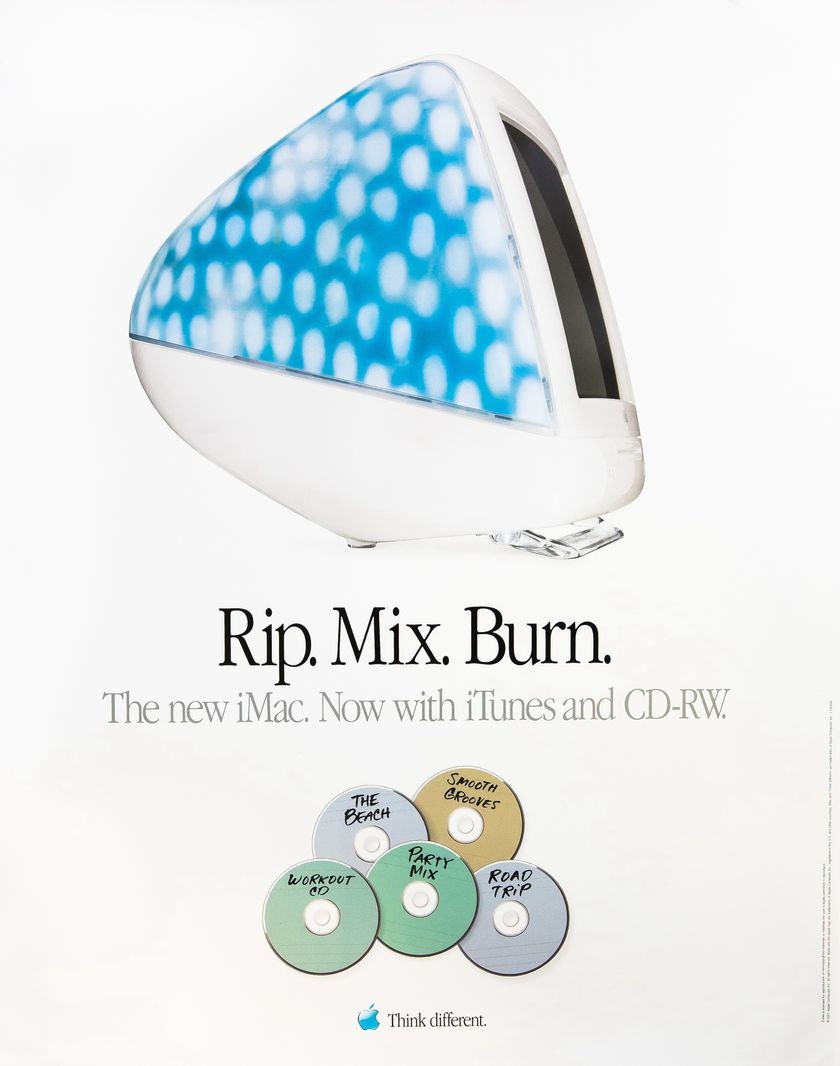
In 2001, Apple completely changed music with three products: Mac with built-in SuperDrive CD burner; the iTunes music app; and the iPod. We didn’t know it at the time, but those three products lit a fuse that would burn down the record business.
Apple didn’t invent the CD drive for computers; That was Philips. He didn’t invent iTunes; bought the SoundJam MP app, simplified it and renamed it. And he didn’t invent the digital music player; that was Kane Kramer’s IXI two decades earlier.
But what Apple did was what Apple does so well. He learned from other people’s mistakes and then marketed his own products to perfection.
1,000 songs in your pocket.
It’s your music: record it on a Mac.
Rip. Mix. Burn.
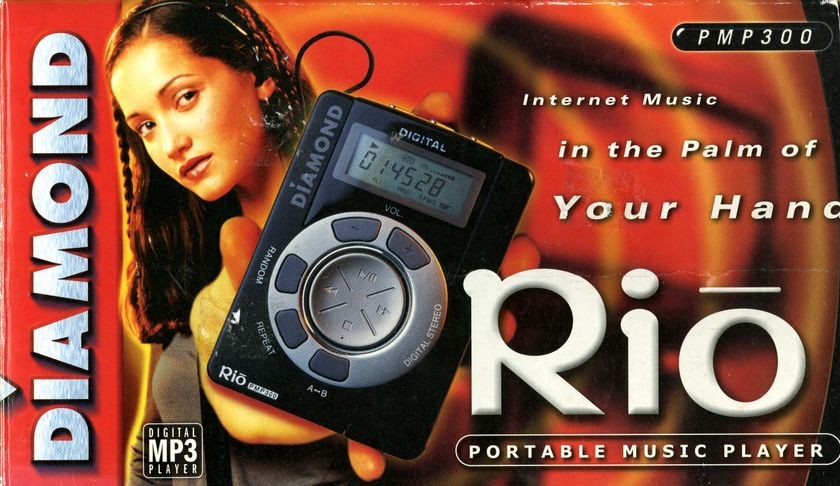
His name is Rio and he plays music slowly.
Before Apple launched its trio in 2001, you could rip CDs to digital format, burn digital files to CD-R, and rip digital files to MP3 players. But as someone who was doing all of those things at the time on PC, I promise you: it was a huge pain. CD burning was unstable, the apps were horrible, and the MP3 player interfaces were generally horrendous.
Apple solved all of those things, making it easy to rip CDs, burn new compilations, and transfer songs to your iPod. And they timed it perfectly.
I miss those magical Apple music machines…what replaced them doesn’t always feel like an upgrade.
The music business is not a big fan of machines that can make perfect copies of music without payment or permission, which is why very few of us in the 1980s bought a DAT (Digital Audio Tape) recorder. The Recording Industry Association of America tried to ban consumer DAT machines, and although it failed, it succeeded in getting mandatory copy protection and a tax on digital recorders that made DATs too limited and expensive for most of us.
But there were no such restrictions or taxes on CD drives, and when the RIAA tried to ban the popular Diamond Rio range of MP3 players in 1999, a US district court said no. Sales of the Rio skyrocketed and Steve Jobs saw an Apple-like opportunity to come in and take over what was clearly going to be a huge market.
How Apple named the melody
The Rio was the first commercially successful MP3 player, but like other players of the time, it was very limited.
The first model, the PMP300, was poorly built and could only store about half an hour of low-quality 128kbps MP3 music transferred over an extremely slow USB 1.0 connection. Rival devices like the Creative and Archos were better, but I reviewed quite a few players at the time and none of them were as impressive and easy to use as the first-generation iPod was. Even the normally reliable Sony failed to push for its own ATRAC format instead of the much more popular MP3.
The music business is not a big fan of machines that can make perfect copies of music without payment or permission.
One of the things that set the iPod apart was that it had “1,000 songs in your pocket” at a time when having a dozen decent-sounding tracks on a device was considered a victory. This was made possible by Toshiba, which had just invented a tiny 5GB hard drive that made the capabilities of solid-state MP3 players and memory cards look pathetic. Apple, being Apple, signed an exclusive deal for the units that meant no one else could buy them.
There was another key player in Apple’s success, albeit unofficially: Napster. Launched in 1999, the file-sharing network made global music piracy ridiculously easy and incredibly popular, peaking in 2001 with 26.4 million users. Many of those users downloaded music that others had copied to mix and record on Macs or listen to on iPods.
setting up shop
The record business initially saw Apple as a threat, and “Rip. Mix. Burn” was not amused. But while Apple certainly benefited from people downloading music unreliably, it soon decided to offer an alternative. That would make him an ally of the industry and also give him a lot of money.
The iTunes Store of 2003 brought the convenience of iTunes to music purchasing, and while there was some industry opposition against Apple’s price of $0.99 per song (and a significant cut from each sale), pragmatism soon prevailed as executives realized it was better to get something from Apple than nothing from Napster.
Pragmatism soon prevailed as executives realized it was better to get something from Apple than nothing from Napster.
The music business had tried its own digital music services, but because labels did not collaborate with each other to create a one-stop shop, it ended up creating a half-assed offering of competitive and incomplete catalogues. Universal and Sony joined forces to create one service, Pressplay, and Warners, BMG and EMI created another, Musicnet. Pressplay went with Microsoft technology and Musicnet went with Real Networks and we all went to iTunes. Or Napster and its numerous imitators.
What brought law-abiding people back to Apple wasn’t style or simplicity. It was that the big labels wanted to rent you music – including music you may already have on CD – rather than sell it, and they wanted to do it in an overly complex and greedy way.
Like Billboard Magazine noted Musicnet charged $9.95 per month for 100 temporary downloads and 100 on-demand streams. Downloads had to be registered with Musicnet every month to continue working, tracks could not be moved to other devices, and content was limited to the catalogs of WMG, BMG, EMI and Zomba. Meanwhile, at Pressplay, you’d also pay $9.95 but this time you’d get a third of the downloads and three times the on-demand streaming with CD burning as an expensive added extra.
It’s not “Rip. Mix. Burn.” And in 2003, the iTunes Store made them both redundant.
Hey! Hello! Let’s go (back)!
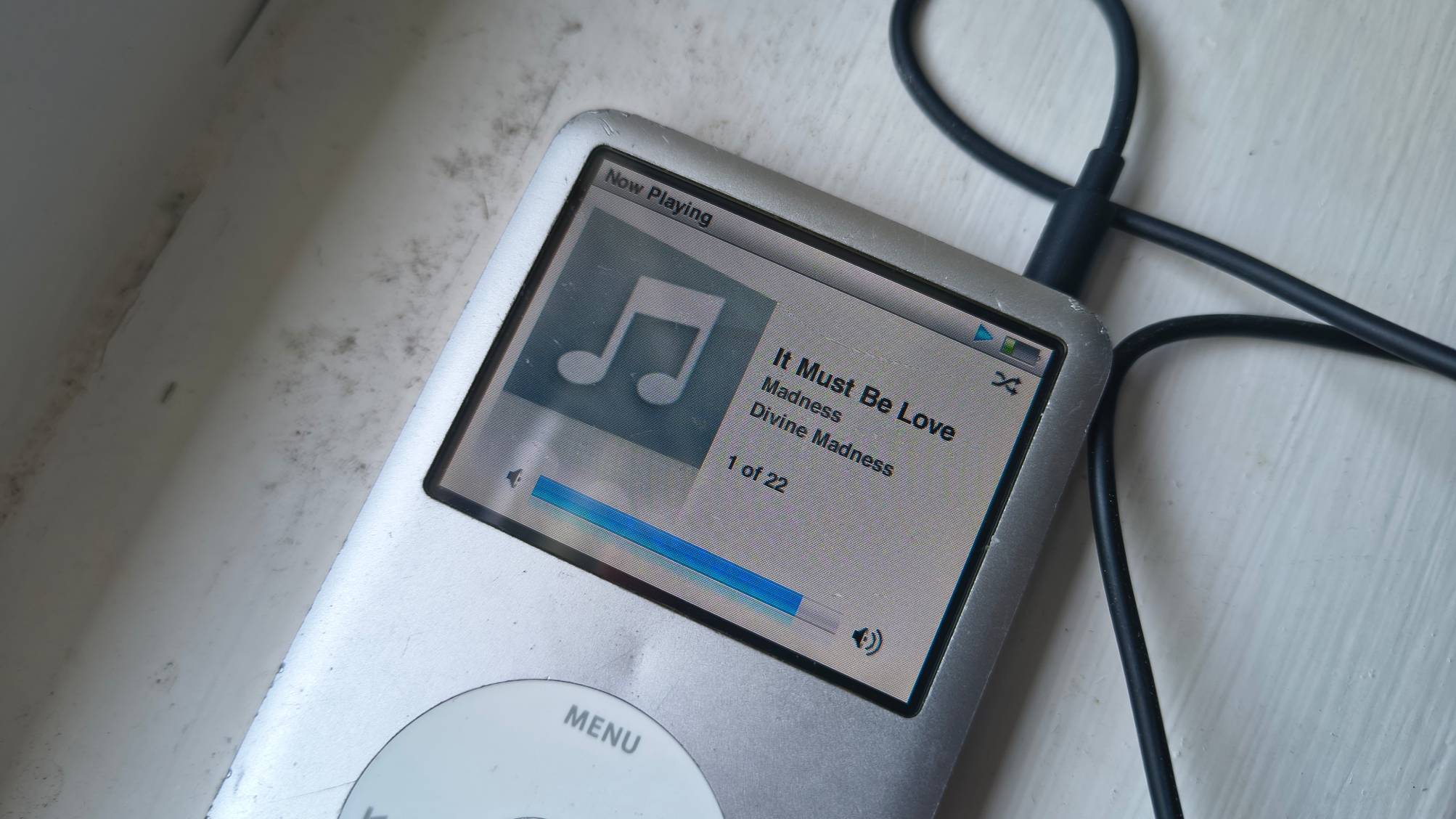
Apple dominated digital music during the 2000s in part because it made so many beautiful players.
Between my kids and I, I’ve owned almost all of them, including the iPod 3G, iPod 4G, iPod nano, iPod shuffle, iPod mini, Video iPod, iPod 80GB, iPod touch, iPod classic, iPod Product (RED)… even the latest iPod touch, which was a great way to keep the kids happy on long trips while my iPod Classic supplied the car soundtrack through an FM adapter.
Starting in 2007 it became clear that the iPod was about to disappear, soon to be devoured by the Very Hungry iPhone which also consumed my compact cameras, my PDAs, my Blackberry and my Walkman phone. And digital downloads purchased also began to decline, with Spotify (founded in 2006) and other streaming services doing to iTunes sales what the iPod did to the Diamond Rio and the Creative Nomad.
I miss those magical Apple music machines. Partly because they were brilliant, fun, enriching and just beautifully designed little treasures (with the exception of the third generation shuffle, which I like to pretend never happened) and partly because what replaced them doesn’t always feel like an improvement. No one cooked their brains with an iPod Classic or became a Nazi with an iPod nano, as so many people seem to be doing with smartphones.
And it turns out there were some unexpected consequences of the end of mass-market physical media, like our ability to afford vinyl record reissues and the terrifying cost of concert tickets today.
The shift from CD sales to streaming effectively wiped out a huge chunk of many artists’ incomes and they’ve changed tactics to compensate, which is partly why vinyl now costs $60, a tour hoodie costs $95, $25 to park outside the concert, and your ticket costs the same as sending two kids to college.
That’s what happens with lighting fuses. Sometimes fires spread.


