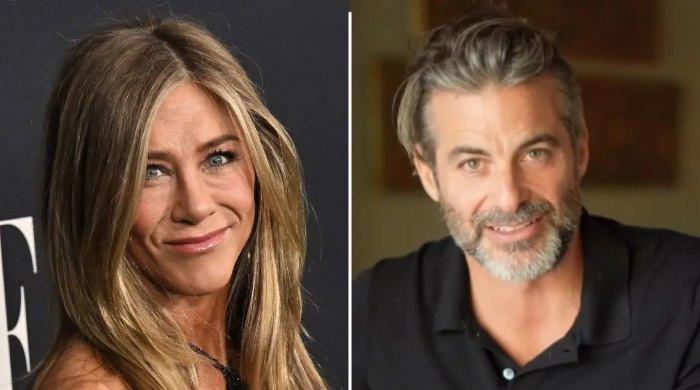
Jennifer Aniston and her boyfriend Jim Curtis have built what he describes as a calm and intentional approach to handling disagreements, choosing communication over conflict when tensions arise.
Talking about the Yield with intention In a podcast released on February 12, Curtis shared that spending a lot of time together naturally comes with occasional friction, but how you respond makes all the difference.
“I spend a lot of time with my girlfriend,” he said. “We spend a lot of time together at home. Sometimes we can have little things that blow up.”
Instead of letting those moments develop into lasting resentment, Curtis explained that they try to address issues directly and thoughtfully.
“We have the opportunity to be silent and get angry; or leave the house, or think about it and meditate on how to change it, or we can say, ‘Hey, this is what happened, I’m sorry,’ and make amends,” he said.
He added that fixing a problem once is not enough if the same problem appears again.
“Because once you make a repair and then it happens five more times, no one trusts it,” Curtis explained, emphasizing the importance of real change instead of empty apologies.
Curtis also talked about setting expectations early in a relationship, saying that couples benefit from what he called “pre-playing the rules,” particularly when it comes to communication styles.
He noted that without conscious effort, unresolved personal problems can easily affect a relationship.
“We’re all so screwed up that unless we start being really proactive and aware about it, we’re going to have all our internal stuff coming out everywhere and we won’t know how to experience it together,” she said.
The couple were first linked in July 2025 and publicly confirmed their relationship that same year.
Curtis previously shared on the today’s program that their romance began quietly through mutual friends.
“We were just introduced to some friends,” he said.
“That’s it. We found out we had mutual friends and started chatting.” He added that their connection grew slowly over time, saying, “It took a long time.”