
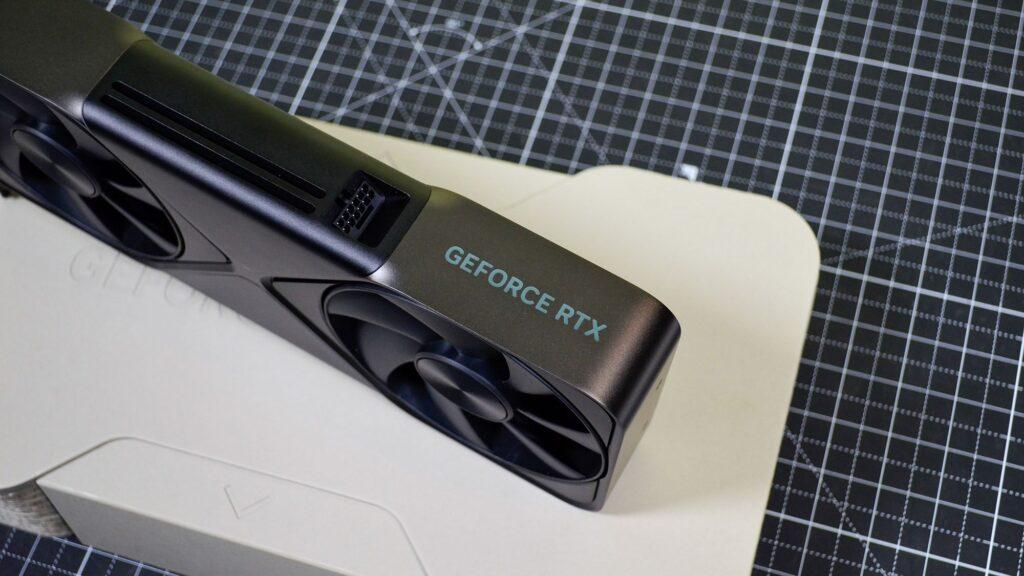
- Nvidia has announced DLSS 5 at GTC 2026
- This is a real-time “neural rendering model” (AI) to refresh lighting and improve graphics in PC games
- The reaction has been largely negative on social media, with many concerns about the direction Nvidia is taking.
Nvidia revealed DLSS 5 at GTC 2026, calling the next-generation technology the “most significant advance” for computer graphics since real-time ray tracing.
Nvidia announced in a press release that DLSS 5 incorporates a “real-time neural rendering model that infuses pixels with photorealistic lighting and materials,” comparing the end result to Hollywood visual effects.
So it’s essentially taking the graphics of a game and enhancing them with AI to improve the lighting and overall look to make them more realistic. It’s not about increasing or scaling the frame rate (as with DLSS 4.5), but polishing the images to be photorealistic: the same game assets are used, we’re told, just with very different AI-powered lighting.
Article continues below.
NVIDIA DLSS5 Neural Rendering looks pretty powerful #GTC pic.twitter.com/eLZtaiqEozMarch 16, 2026
The best way to understand what DLSS 5 actually does, of course, is to look at some of the first images Nvidia has shared that show the “before and after”: look at the image above posted by our own Lance Ulanoff on X (from GTC), or the following Resident Evil Requiem example shared by Nvidia (accompanying its DLSS 5 press release).
Jensen Huang, CEO of Nvidia, commented: “DLSS 5 is the GPT moment for graphics: combining handcrafted rendering with generative AI to deliver a quantum leap in visual realism while preserving the control artists need for creative expression.”
DLSS 5 will be released later this year, in “fall”, perhaps as early as September, and will be only for RTX 5000 graphics cards, as expected.
To say there’s been a groundswell of negative reaction to DLSS 5 would be an understatement, on Reddit and Bluesky in particular, so let’s dive into why that is.
Analysis: Accusations of AI failure
Now, DLSS 5 seems like a powerful technology, and Digital Foundry tested the feature in several games at GTC and was impressed. And in fact if you Check out that YouTube video, some of the images look pretty clever. I would highlight Oblivion remasteredwhere lighting gives new life to stone walls and buildings, although not everyone agrees on this.
The problem arises here with the preservation of artistic intention. Huang specifically mentions that this could be an AI overhauling a game’s graphics, but that Nvidia intends to preserve the “control that artists need for creative expression” – and remember, no game assets are altered here, just the lighting, Team Green assures us.
Still, the Resident Evil Requiem The screenshot in particular is causing a lot of controversy, most obviously because it’s radically changing Grace’s appearance in terms of adding lipstick, for example (and noticeably altering her hair color). It ends with a completely different (and unwanted) vibe for many.
The overall look of the game’s characters with a DLSS 5 makeover also looks quite unreal, in a weird, valley kind of way. Yes, everything is much sharper and looks more like a photo, but that’s not always a good thing if it seems overbearing in that sense or interferes with the mood and atmosphere of the original images. This goes for both background elements and foreground characters, and there’s a lot of hate for both on Reddit.
As one Redditor commented: “Surely this will result in a look that the artist/developer didn’t intend? It’s like putting an ugly AI filter over the artist’s work. This seems silly to me.”
I’m also worried that the lighting will look too harsh and overdone, and that the colors will be too saturated, a bit like when you take a photo with your phone and put a filter on it to liven things up, and it’s just too much.
Clearly, this has sparked a hornet’s nest of reactions, with some of the most common refrains being that “we don’t want an AI debris filter.” Players worry that this points in a dangerous direction for the future of gaming, one in which developers don’t have as much control over the artistic direction of their products.
There’s another concern that hasn’t been as widely addressed either, namely that the DLSS 5 tech demo actually runs on two RTX 5090 graphics cards, according to Nvidia’s FAQ. Yes, a single RTX 5090 isn’t enough to cope with the lighting effects reviewed here – Nvidia needed to use a pair of them, with one of the GPUs dedicated to running DLSS 5 (and the other actually rendering the game).
That clearly suggests that whatever DLSS 5 is doing behind the scenes is very labor intensive. Of course, this is still early, and DLSS 5 is still in “early preview” – when it’s finished, the technology will be optimized to run on a single GPU (so Team Green doesn’t usher in a return to SLI configurations).
Similarly, there will also be a lot of adjustments and other improvements made to DLSS 5 in terms of the image produced, so we must wait before making a final judgment here. This is unlikely to deter AI skeptics, who have already made up their minds.
Time will tell, but in the meantime, I hope comments I really like, like “your RAM died from this” (a comment from @canestrini808 on Digital Foundry’s YouTube video) or “I thought this video was an April Fool’s Day joke, but it’s still March” (from @lukas0999) will continue to dominate.
We reached out to Nvidia to see if the company had any comment on the negative reactions circulating and will update this article if we hear back.

The best graphics cards for all budgets
Follow TechRadar on Google News and add us as a preferred source to receive news, reviews and opinions from our experts in your feeds. Be sure to click the Follow button!
And of course, you can also follow TechRadar on YouTube and tiktok for news, reviews, unboxings in video form and receive regular updates from us on WhatsApp also.


