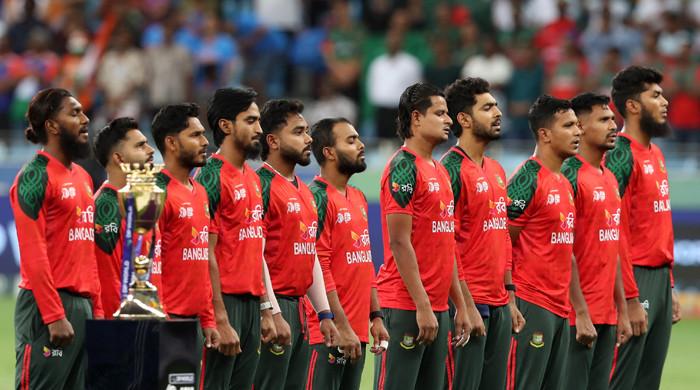
- Bangladesh has refused to play its matches in India.
- They cite security concerns after political relations deteriorated.
- The ICC says there is no credible security threat.
NEW DELHI: The International Cricket Council (ICC) has rejected Bangladesh’s demand to shift its matches in next month’s T20 World Cup away from India, the governing body said on Wednesday.
Bangladesh has refused to play its matches in India, citing security concerns following bitter political relations between the neighbours, and demanded to play them in Sri Lanka, which is co-hosting the tournament.
“The decision was made after considering all security assessments carried out, including independent reviews, all of which indicated that there was no threat to Bangladesh players, journalists, officials and fans at any of the tournament venues in India,” the ICC said in a statement after a board meeting.
“The ICC board noted that it was not feasible to make changes so close to the tournament and that altering the schedule under the circumstances, in the absence of any credible security threat, could set a precedent that would jeopardize the sanctity of future ICC events…”
The ICC said the board management also engaged in a series of “correspondences and meetings” with the Bangladesh Cricket Board in a bid to resolve the impasse, sharing detailed information about the event’s security plan, including support from federal and state law enforcement agencies.
An ICC spokesperson said: “Over the last few weeks, the ICC has engaged in sustained and constructive dialogue with the BCB, with the clear objective of enabling Bangladesh’s participation in the tournament.”
“During this period, the ICC has shared detailed inputs, including independent security assessments, comprehensive headquarters-level security plans and formal assurances from host authorities, all of which have consistently concluded that there is no credible or verifiable threat to the security of the Bangladesh team in India.”
“The ICC remains committed to acting in good faith, maintaining consistent standards and safeguarding the collective interests of the global game.”