NEWNow you can listen to Pak Gazette articles!
Attorneys general leading the legal case to “Save Women’s Sports” in the ongoing Supreme Court battle over trans athletes have optimistic expectations for the upcoming ruling.
Oral arguments Tuesday left most experts believing that a majority of the justices appear poised to rule in favor of Idaho and West Virginia’s right to uphold laws that keep men out of women’s sports.
Idaho AG Raul Labrador and West Virginia AG John McCuskey also hope for a victory, although on different terms. McCuskey boldly stated that he hopes the court will issue a unanimous 9-0 decision in favor of his state.
CLICK HERE FOR MORE SPORTS COVERAGE ON PakGazette.Com
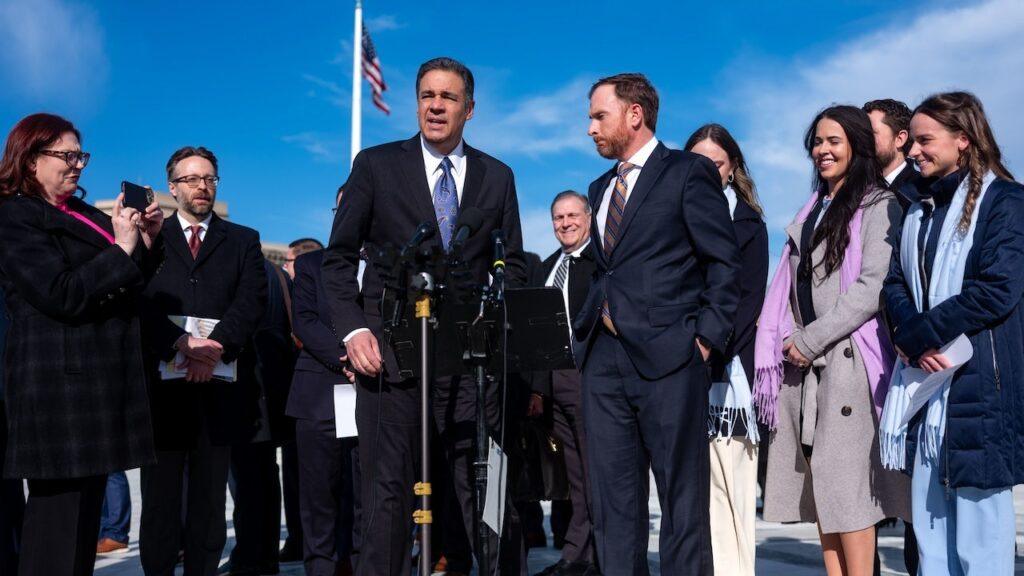
Athletes involved in the case speak in front of the U.S. Supreme Court after the justices heard arguments in challenges to state bans on transgender athletes in women’s sports on January 13, 2026, in Washington, DC. (Oliver Contreras/AFP)
“We all hope this is a 9-0 decision. We’re right on the facts. We’re right on the constitution. We’re right on public opinion, but most importantly we’re right on common sense. And these are the kinds of issues that even conservatives and liberals can agree on,” McCuskey said at a news conference Monday.
“I don’t go into any argument assuming I’m going to lose anyone. And so our mission and our goal is to make sure this case is decided in our favor. And we believe very, very strongly in our mission and our goal to make sure this case is decided in our favor. So we’re looking for a 9-0 decision and we feel very good about it.”
Labrador, however, is not so optimistic and suggests that some of the liberal justices will rule against his side, although they continue to predict a victory.
“We felt very optimistic about the decision. At times I even felt like we could get a 9-0 decision and I don’t think that’s going to happen,” Labrador told Pak Gazette Digital after Tuesday’s hearing. “But I just hope the judges will consider the common sense issues that were brought against the court today and rule in our favor.”
INSIDE THE SCOTUS HEARING WILL BE A INVISION POINT IN THE CULTURAL WAR OVER TRANS ATHLETES IN WOMEN’S SPORTS
Judges Kentaji Brown-Jackson and Sonia Sotomayor asked questions and statements during the hearing that could suggest they will rule in favor of the trans athlete plaintiffs.
During the hearing’s opening arguments, Brown-Jackson pressed Idaho Attorney General Alan Hurst on the state’s law aimed at protecting girls’ and women’s sports.
“I guess I have a hard time understanding how you can say that this law doesn’t classify based on transgender status,” Jackson told Hurst. “The law expressly aims to ensure that transgender women cannot play on women’s sports teams. So why isn’t it a classification based on transgender status?”
Justice Clarence Thomas was seen hunched in his seat with his hand covering his face during this Brown-Jackson question, as witnessed by Pak Gazette Digital in the courtroom. There were other moments during the hearing when Thomas was seen in the same pose.
Hurst responded to Jackson, arguing that Idaho’s Fairness in Women’s Sports Act depended on a student-athlete’s sex, not their transgender status.
Jackson continued to press Hurst, asking, “But you treat transgender women differently than cis women, don’t you?”
In a separate case, Jackson asked West Virginia Attorney General Michael Williams similar questions about his state’s Save Women’s Sports Act.
“You have a general classification: everyone has to play on the team that is the same sex they were at birth, but then you have a definition of gender identity that operates within that, which means a distinction, which means that for cisgender girls, they can play according to their gender identity. For transgender girls, they can’t,” Jackson said.
Meanwhile, Sotomayor cited approximately 2.8 million people in the United States who identify as transgender and said their rights must be respected even if they represent a small percentage of the population.
“What percentage is enough?” -Sotomayor asked. “There are 2.8 million transgender people in the United States. That’s a terrifyingly large number… What makes an underclass meaningful to you? Is it one percent? Five percent? Thirty percent? Fifteen percent?”
“Numbers do not speak about human beings.”
‘SAVE WOMEN’S SPORTS’ ACTIVISTS REACT TO THE SUPREME COURT HEARING OF TRANS ATHLETES
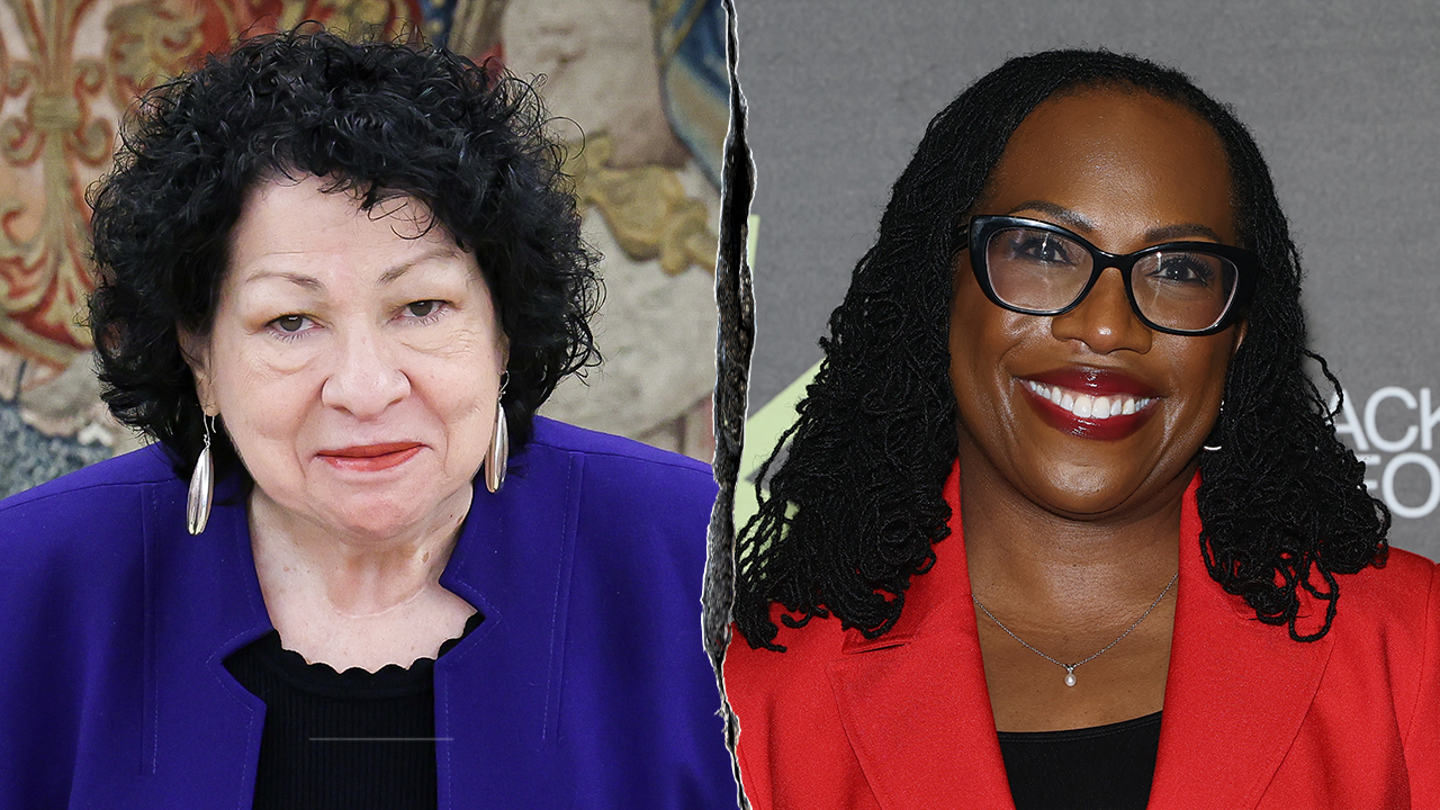
Sonia Sotomayor, Ketanji Brown Jackson (Getty Images)
Labrador told Pak Gazette Digital after the hearing that he was surprised by the liberal justices “struggling” with certain questions.
“I was actually surprised how the judges, who I assume are not going to be so friendly to our side, were really struggling with the questions that we brought before the court, and were trying to find a way to articulate the other side’s position, and even they were having a difficult time articulating the other side’s position.”
If recent decisions regarding trans rights are any indication, a 9-0 decision would be a tough sell, but a favorable rule for West Virginia and Idaho is still likely.
In United States v. Skrmetti, the Supreme Court, in a 6-3 decision on June 18, 2025, upheld Tennessee’s ban on certain gender-affirming health care for minors. All the justices voted against party lines: the six conservative justices voted to uphold the ban and the three liberal justices voted against it.
But in an August 2024 decision on whether former President Joe Biden’s administration should be granted an emergency request to enforce parts of a new rule that includes nondiscrimination protections for transgender students under Title IX, the court voted only 5-4 to strike down the request.
Conservative Justice Neil Gorsuch dissented and agreed with the three liberal justices and the Biden administration that the lower courts’ rulings were “overbroad.”
The request would have biological men allowed in women’s bathrooms, locker rooms and bedrooms in 10 states where there are state and local rules to prevent it.
CLICK HERE TO DOWNLOAD THE Pak Gazette APP
A decision in this case is expected no later than June.