
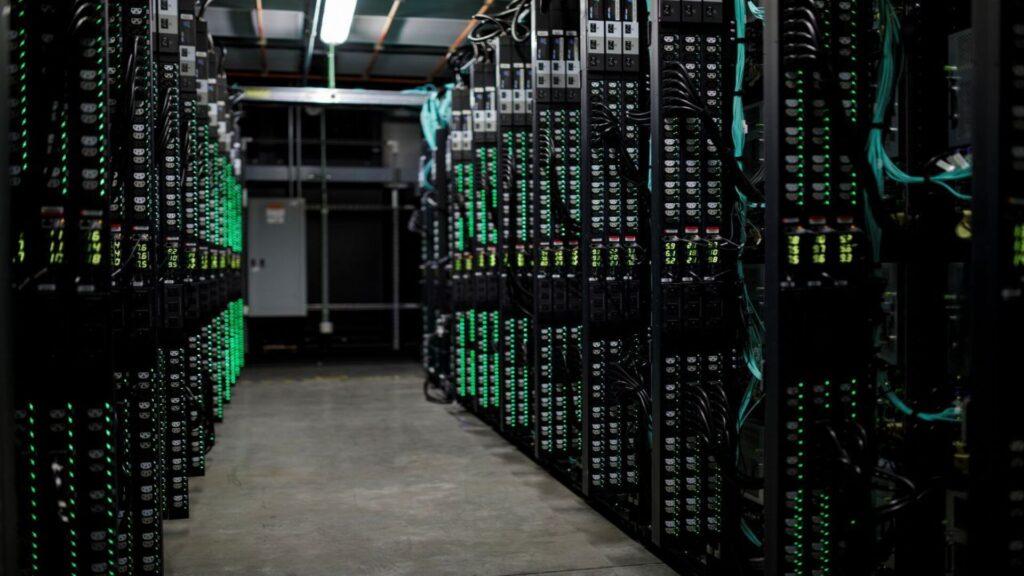
- One in two US data centers planned for 2026 could face delays or cancellations
- Global chip shortage continues to pressure supply, while demand soars
- Other challenges include power supply and local opposition.
Between one-third and one-half of all US data centers planned for 2026 are likely to be delayed or canceled entirely. Bloomberg reports, amid continued supply chain challenges and campus location concerns.
With a planned capacity estimated between 12 and 16 GW, only 5 GW is currently being built and many projects have still been announced, but still without physical progress.
Perhaps one of the most notable is OpenAI’s $500 billion Project Stargate, whose progress has reportedly stalled in Texas and data center construction has fallen behind the original schedule.
Article continues below.
Why are data centers canceled or delayed?
One of the main challenges facing data center operators, as well as consumers, is the global chip shortage. “AI data center construction is displacing memory and storage supply consumer categories, which have already seen cost increases of approximately five-fold and three-fold, respectively, since the first quarter of 2025,” wrote Omdia principal analyst Ben Yeh.
Data centers are also famous for their intensive energy consumption (something investors say they want more transparency about), and many face challenges in obtaining reliable electricity supplies for campuses that must be running 24/7. With grids already under pressure from the adoption of electric vehicles and other electrification strategies in heating and industry, some large-scale projects have even included plans to build their own power generators and finance grid connections.
All of this comes at a time when Western countries are looking to reduce their reliance on cheaper, more available Chinese technology, while alternative manufacturing in the United States struggles to scale quickly enough.
And finally, all this aside, even if data centers have everything they need to begin construction, local opposition has increased in recent months over environmental, noise and energy concerns.
All of this shows that the rise of AI is no longer limited to just chips: in the last two years, we have seen a shift from computing to being the main obstacle to powering local infrastructure and communities.
We can only watch these difficulties play out in the long term, but with space data centers a long way off, somewhere between a “pipe dream” and early-stage testing, terrestrial data centers are our only bet for now.
Follow TechRadar on Google News and add us as a preferred source to receive news, reviews and opinions from our experts in your feeds. Be sure to click the Follow button!
And of course you can also follow TechRadar on TikTok for news, reviews, unboxings in video form and receive regular updates from us on WhatsApp also.


