
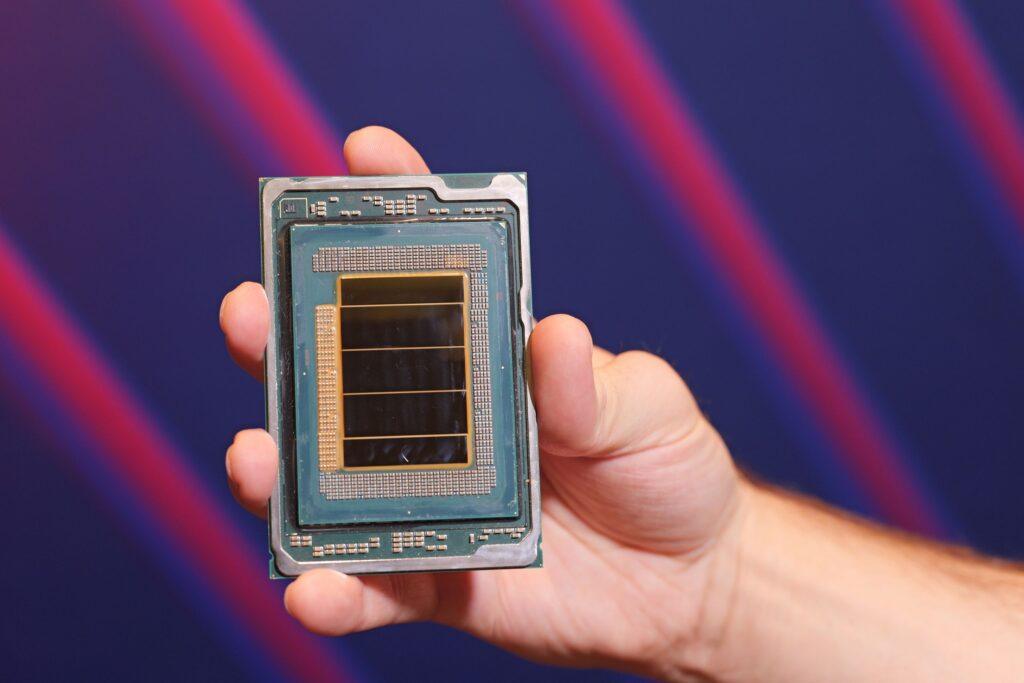
- Intel expands Xeon 6 roadmap with 18A-based processors aimed at AI in telecom networks
- 288-core Clearwater Forest reduces rack power and improves performance per watt
- Testing shows 38% less rack operating power compared to comparable Sierra Forest systems
At MWC 2026, Intel unveiled its upcoming Clearwater Forest Xeon 6+ processors, built on the 18A process and aimed at edge AI and early 6G infrastructure.
The update adds a higher density option to the Xeon 6 line for networking and data center deployments.
First unveiled in October 2025, Clearwater Forest follows the current generation Xeon 6 and is expected to arrive in 2027.
AI in networks is not “CPU versus GPU”
Intel is expanding Xeon 6 through radio access networks, or RANs, which connect devices like smartphones to the broader mobile network, as well as mobile core systems and edge sites.
The strategy keeps networking functions, security workloads, business services, and AI inference on standard server hardware.
Kevork Kechichian, executive vice president and general manager of Intel’s Data Center Group, said: “AI in networking is not ‘CPU versus GPU’, it’s computing that’s right for the workload.”
The idea is that not all AI tasks within a telecom network require a separate accelerator. In many cases, inference can be run directly on Xeon processors depending on performance and power limitations.
On the RAN, the Xeon 6 SoC integrates Advanced Matrix Extensions and vRAN Boost, allowing inference workloads to run on the same server that handles virtualized networking software. That can limit the need for additional hardware in certain implementations.
Rakuten Mobile is working with Intel to train and deploy AI models for low-latency RAN workloads using the Xeon 6 SoC. Vodafone has committed to adopting Xeon 6 SoCs for Open RAN and vRAN modernization projects across Europe.
Clearwater Forest, called simply Xeon 6+, increases core density and switches to Intel’s 18A process.
In testing by Ericsson, a single 288-core Xeon 6990E+ Clearwater Forest processor reduced runtime rack power by 38 percent, delivered more than 60 percent better performance per watt, and improved overall performance by 30 percent compared to a dual-socket 288-core Xeon 6780E Sierra Forest system.
Higher core counts and lower power consumption are at the center of Intel’s pitch as AI workloads expand within telecom infrastructure and networks move closer to initial 6G development.
Follow TechRadar on Google News and add us as a preferred source to receive news, reviews and opinions from our experts in your feeds. Be sure to click the Follow button!
And of course you can also follow TechRadar on TikTok for news, reviews, unboxings in video form and receive regular updates from us on WhatsApp also.


