
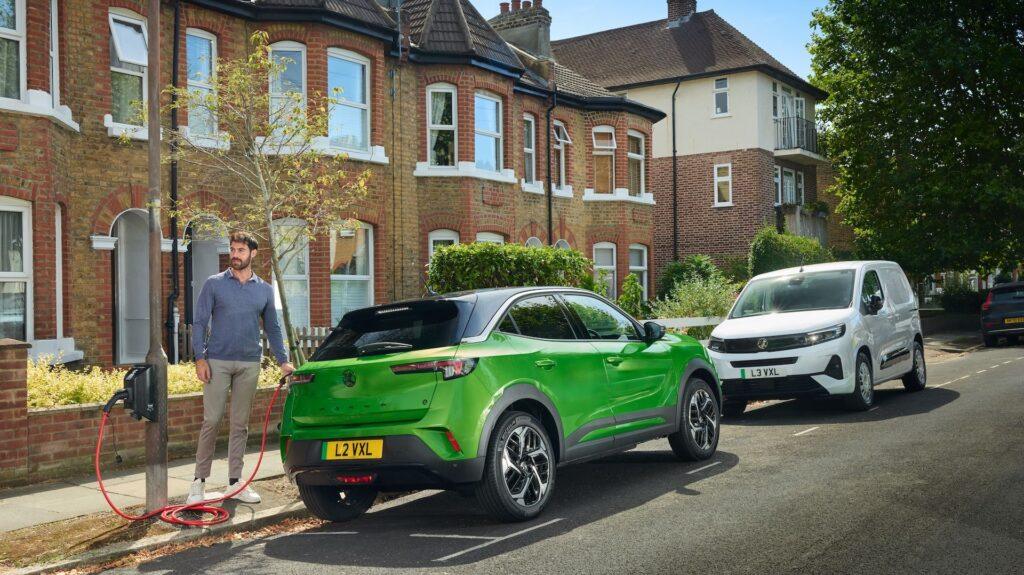
- A London borough is installing 500 electric vehicle chargers on sidewalks
- The solution is a boon for homeowners who cannot afford a home wall box.
- A rise in slower, cheaper charging makes EV ownership more attractive
The London Borough of Harrow announced this week that the region aims to have 500 curbside EV chargers by October 2028. Of the 225 already online, the borough plans to double that number over the next two years.
The announcement will no doubt be music to the ears of inner-city EV owners, most of whom find it difficult to install home charging solutions in wall boxes thanks to many restrictions including lack of driveways, complicated shared parking or lack of off-street parking.
While some councils have tried solutions, including EV charger ramps, which create a safe space to drag cumbersome EV chargers from a house, across a sidewalk and into a vehicle, this is not working for a massive swath of urban dwellers.
According to research by Vauxhall, which contacted all 414 UK local authorities about their future plans for local charging solutions in 2023, it found that 40% of homes in Britain do not have driveways, a figure which rises to a whopping 60% in urban areas.
This means that a huge percentage of potential EV owners are missing out on the low-cost vehicle charging that makes this technology so attractive.
Anyone who has to turn to the public fast charging network (if it exists nearby) will often find that a modern electric vehicle is actually more expensive to run than one with an internal combustion engine, with some fast charging points charging upwards of £1/$1/AU$3 per kW.
Filling up the large battery of a Porsche Taycan or Kia EV9, for example, can cost upwards of £100/$140/AU$200 to cover a measly 300 to 350 miles. That’s thirsty V8 territory.
“Without targeted investment and innovative solutions such as community charging centres, curbside charging and affordable fast charging across the country, residents in less affluent rural and urban areas may find the transition to electric vehicles difficult,” explains Professor Christian Brand, Emeritus Professor of Transport, Energy and Climate Change at the University of Oxford.
Convenient and economical night charging
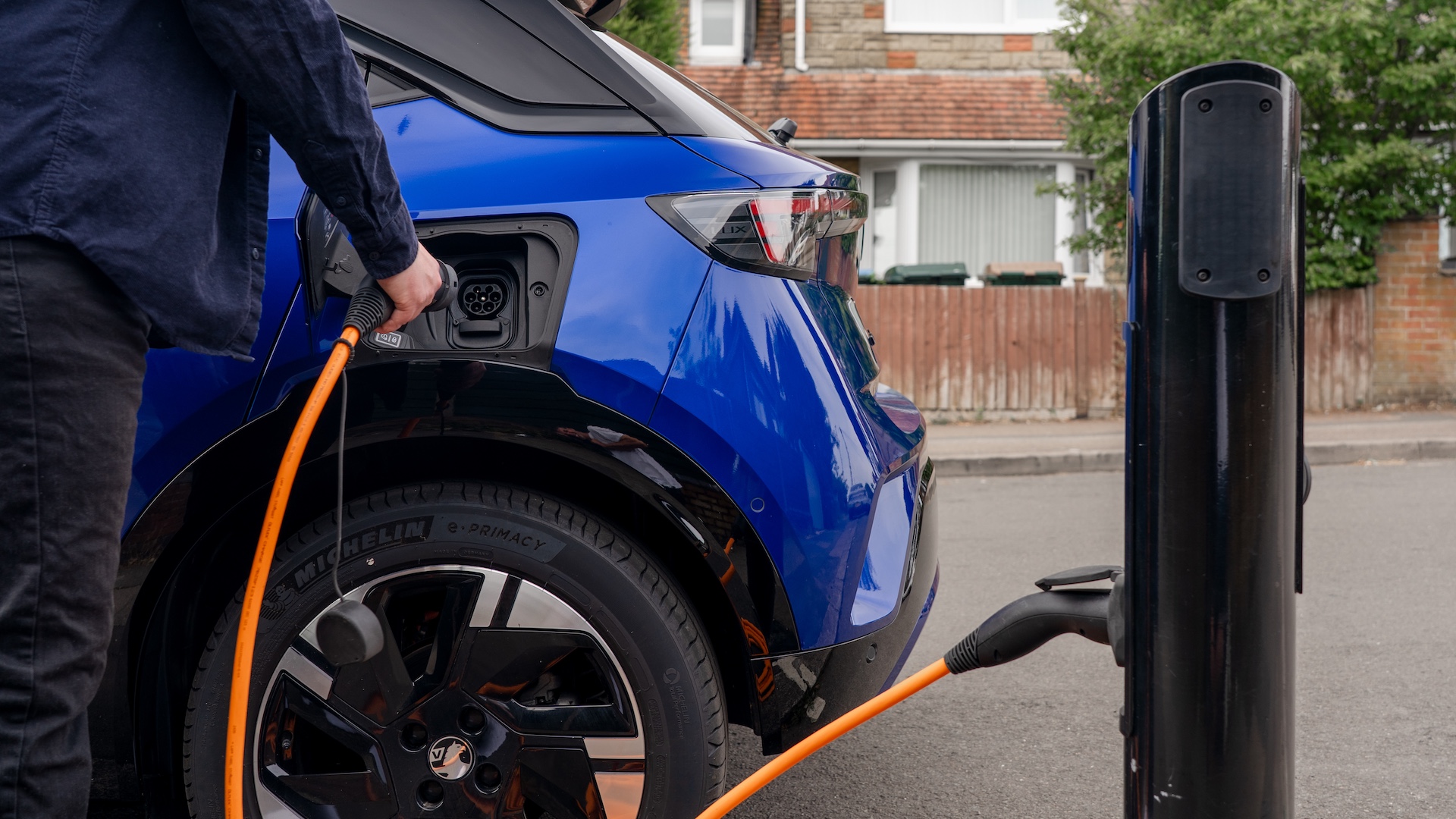
As someone who has owned an electric vehicle for several years, as well as having “borrowed” many of the latest models for journalism purposes, I can attest to the difficulties that arise when it’s not possible to simply plug it in at home.
Currently, my humble home does not have a driveway, nor is street parking close enough to the house to run a cable. We have shared parking, but the commission that manages it is not interested in installing chargers for electric vehicles.
The only sensible solution is a curbside charger like the ones Char.gy has been providing to UK local government for years. In 2025, it reached a milestone by performing its one millionth charging session.
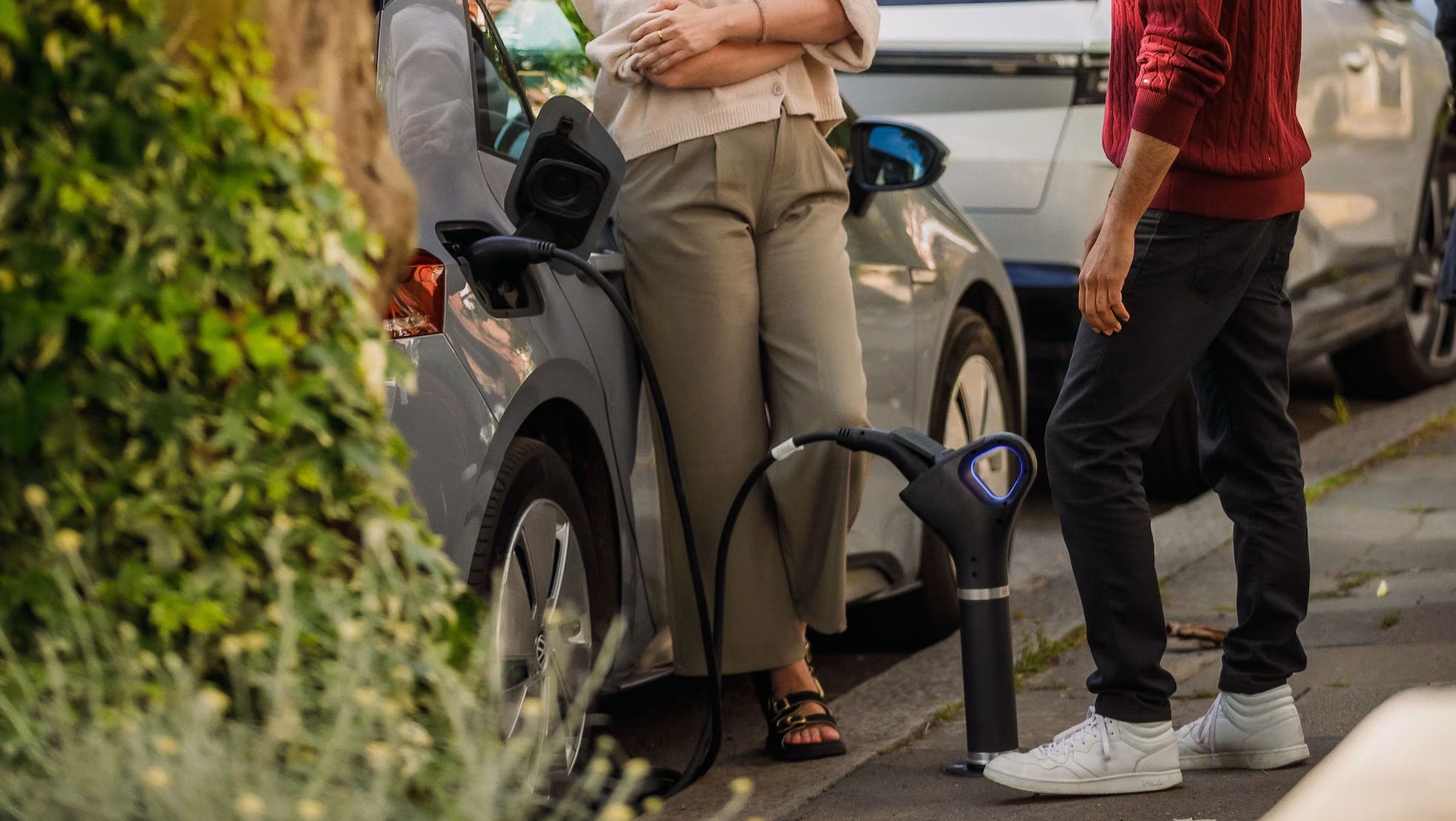
However, the 4,900 charging points installed in the UK (admittedly, most are in London) are so smart that they are tied to streetlights and other existing infrastructure, or come in the form of discreet posts on sidewalks.
Users provide their own charging cable, but can then take advantage of cheaper overnight charging rates, with the midnight to 7am shift costing around 39p per kW (or around 79¢/AU$1.13 per KW).
While it’s not as cheap as some national tariffs, which can be as low as 7p per kW (around 9¢/AU13¢ per KW), it represents a huge saving over the public fast charging network.
What is the delay?
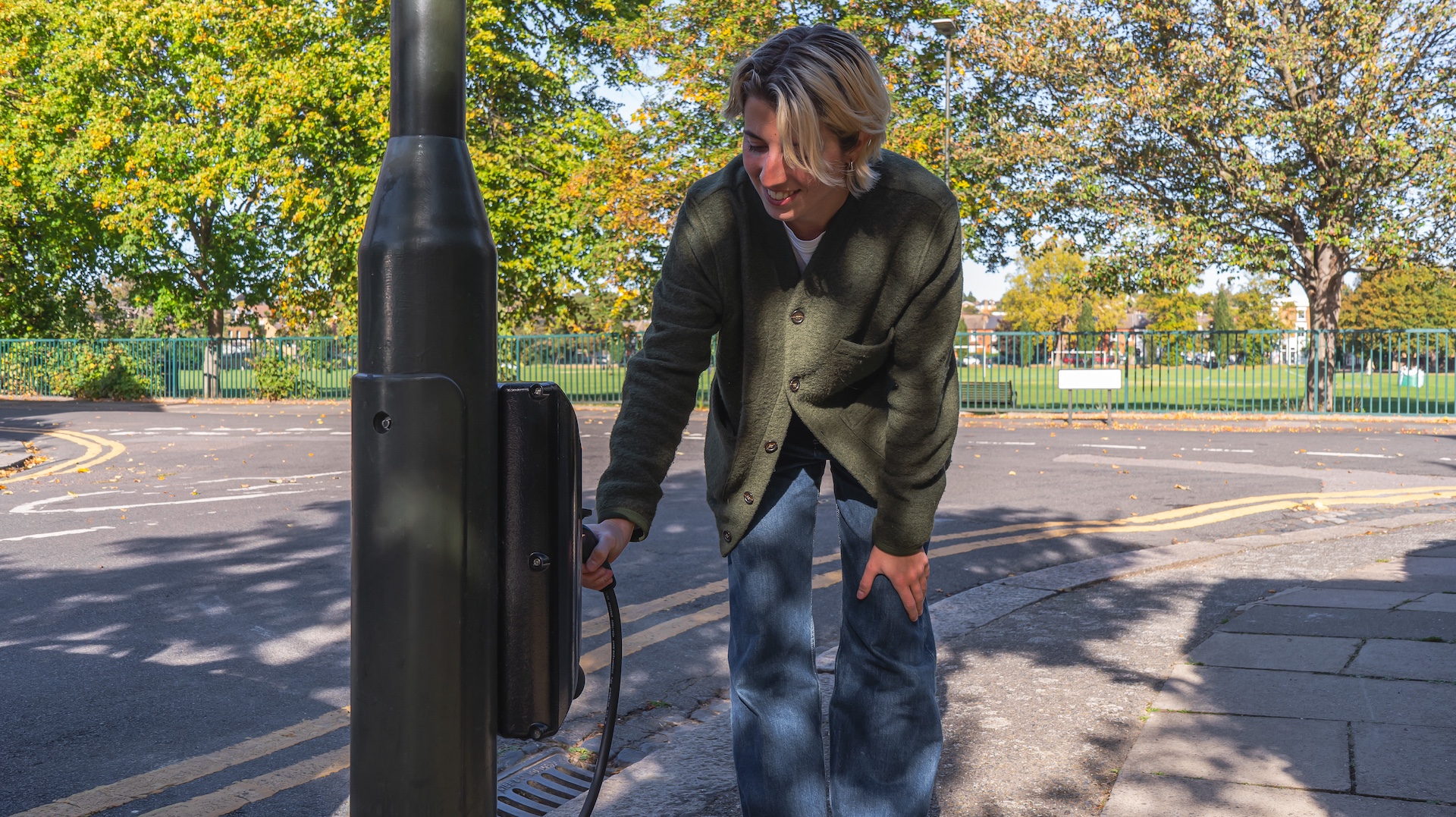
Curbside EV charging seems like the most sensible solution to me. Low-power outputs of 7kWh or 22kWh mean solutions are more subtle and can be easily integrated with existing infrastructure, while the convenience and cost savings of charging while the vehicle is parked overnight makes a lot of sense.
Every morning, EV owners will arrive at their vehicles with a full battery, knowing they can come back and plug them in later that day. Infinitely reduces range anxiety.
But while some UK boroughs are moving forward with the technology, Vauxhall’s Electric Streets of Britain research found that 69% of councils and local authorities had not installed any on-street charging points by 2024.
What’s more, 71.6% of city councils confirmed that they were not planning to install residential chargers on public roads at that time. However, a more recent update suggests that the number of councils with a policy maker dedicated to EV charging has increased from at least 31% in 2023 to 51% in 2025, while 44% of councils say they have installed at least one on-street charger in August this year, compared to 31% in 2023.
“The slowdown in curbside charging is fundamentally about infrastructure. Most urban distribution networks were never designed for simultaneous overnight EV demand at scale,” explains Philip Clarke, founder and CEO of TUAL, a company that overcomes network and vehicle limitations with modular and scalable solutions that allow fleets to take control of charging operations.
“Chargers can be installed on streetlights, but if the local transformer is already close to capacity, the power must be limited or the network reinforced. Reinforcement requires time and capital, which is where projects stall,” he said.
“The limitation lies in the headroom of the network; the UK network is resilient, but it was not designed to offer high capacity at the very edge of the network. Curb charging is a visible example of that limitation,” he adds.
Slow but sure

Local solutions, such as easy-access curbside charging, appear to be one of the easiest ways to accelerate EV adoption in those areas that lack a robust and affordable public charging network.
Companies like Trojan Energy in the UK are coming up with new ideas, with a “flat and recessed” charging outlet integrated into the sidewalk. The community brings its own, admittedly bulky, charging adapter that fits perfectly into the outlet.
Once plugged in, users can enjoy charging speeds of up to 22 kWh, and billing and rates are automatically managed through the adapter. It’s a bit of a bulky solution, but it allows the Trojan community to charge at national rates at 1,200 public charging points.
What about the United States?
It’s a similar story in North America, where a third of American homes are in multi-unit buildings without an easy way to install home chargers.
Beam Global made headlines with its solution that turns streetlights into charging stations, complete with a 1kW solar panel and 1kW wind turbine for truly green energy.
However, they are mainly designed for business and commercial areas, rather than residential areas, as the charging solution is large and unsightly.
Gravity also began rolling out its “loading trees” in New York City in 2024, which consist of high-powered charging solutions mounted on articulated arms. Distributed Energy Access Points (DEAP) eliminate the need to block sidewalks with bulky charging points.
Companies such as Voltpost and EVgo have also made some progress with both curbside EV chargers and streetlight-based systems, but this has not been at the pace seen in the UK and other European countries.
More recently, Ubitricity partnered with oil giant Shell to rebrand its Shell Recharge charging points in the UK. These discreet charging sockets are connected to street lamps, bollards and other simple roadside furniture.
Currently, there are 14,400 public on-street charging stations within the network but, with the backing of a multinational like Shell, those numbers are only going to increase at a pace.
Follow TechRadar on Google News and add us as a preferred source to receive news, reviews and opinions from our experts in your feeds. Be sure to click the Follow button!
And of course, you can also follow TechRadar on YouTube and tiktok for news, reviews, unboxings in video form and receive regular updates from us on WhatsApp also.


