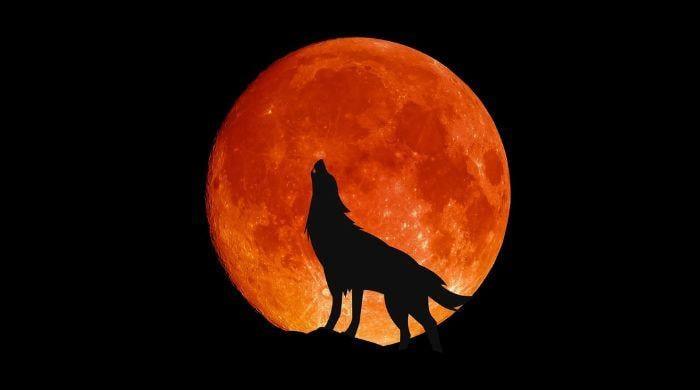
The first full moon of 2026 will rise this weekend and appear larger and brighter than the usual full moon. Called the “Wolf Moon,” it will be visually paired with the planet Jupiter.
The Wolf Moon reaches its full phase early on Saturday, January 3 at 5:02 am EST. But stargazers can capture the most spectacular views later in the night.
When is the best time to watch Wolf Moon?
The best time to observe is when the moon rises in the eastern sky just after sunset. At that time, observers will see the bright full moon flanked by Pollux (a bright star in the Gemini constellation) to the side and Jupiter (the largest planet in the solar system) shining brightly.
Why is the full moon in January called the ‘Wolf Moon’?
The full moon is called the “Wolf Moon” due to ancient traditions in North America, where January was associated with the howling of wolves during the harsh midwinter months. Other historical names include Cold Moon, Hard Moon and After Yule Moon in some parts of Europe.
January’s full moon is also a supermoon, meaning it occurs near perigee. Perigee is the point in the Moon’s orbit when it is closest to Earth.
As a result, it will appear slightly larger and up to 30% brighter than a typical full moon. This is the fourth supermoon in a row, but the first in 2026. The last supermoon was seen in November.
Additionally, the Wolf Moon closely coincides with Earth’s perihelion, the closest annual approach to the Sun, which occurs just a few days later.
How to see the full moon in January?
From the northern hemisphere, it will also arc the highest in the night sky of any full moon this year, remaining visible longer than usual. You don’t need a telescope to observe the full moon. For the best viewing experience, find an open, east-facing spot as the moon rises and watch the Super Wolf Moon rise into the twilight, ushering in the year 2026 with a stunning cosmic display.