
RAWALPINDI:
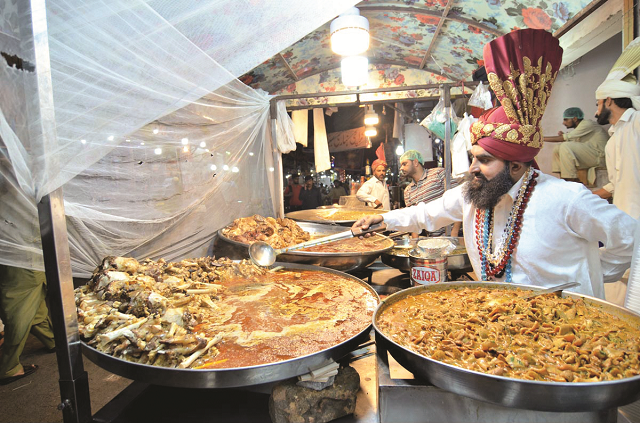
With the holy month of Ramadan around the corner, the Sehri and Iftar market has been set up in the 200-year-old central bazaar of Kartarpura, a historic market dating back to the pre-partition era of the subcontinent.
For the past 80 years, this Sehri bazaar has served a variety of delicious and spicy traditional dishes every Ramadan.
The market will formally activate at sunset on Wednesday.
The shops have been decorated with colorful lights, high-voltage bulbs and street lamps, giving the bazaar the look of noon, even at midnight during Sehri hours.
This year, resistant tiles have been installed on the market that eliminate previous wear and tear and enhance its beauty. The shops and their surroundings are freshly painted. Vendors have also arrived from Lahore and Gujranwala to prepare and sell a variety of spicy Sehri dishes, taking up temporary stalls with high rents for a month.
Traders and helpers wear proper uniforms and colorful turbans to attract customers. The historic bazaar comprises 35 shops and stalls.
Their nihari, paye and channay pathoray are particularly famous and attract regular customers even from Islamabad.
From the first of Ramadan to Eidul Fitr, the market remains in full swing from 5:00 p.m. to 5:00 a.m.
Under bright lights, the midnight scene at Sehri resembles noon. Items available include nihari, pathoray, sweet and thick lassi, sweet yogurt, qeema naan, aloo naan, saag with butter corn roti, small and big paye, small and big ojhri, qeema Matar, mutton aloo, beef aloo, roast chicken, chicken boti, chicken makhni karahi, mutton and beef tikka kabab, plain naan, sesame naan, sesame naan and kalonji, paratha, tandoori paratha dishes, roghni naan, plain roti and qeema aloo.
There are six varieties of nihari available: plain nihari, maghaz nihari, mixed nihari and bong nihari among the most popular. However, this year’s prices are described as “smoke coming out of ears.”


