
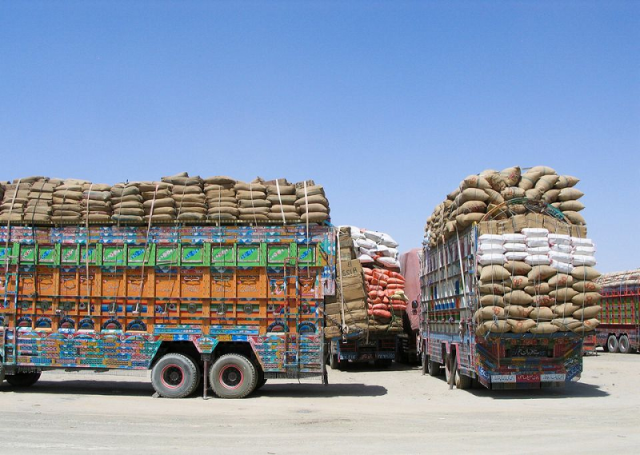
Financial advisor Muzzammil Aslam says the closures hurt employment and income, with an 80% decrease in taxes on border trade.
Trucks loaded with supplies wait to cross into Afghanistan at the Friendship Gate crossing point in the Pakistan-Afghanistan border town of Chaman. PHOTO: REUTERS/FILE
KHYBER PAKHTUNKHWA:
The Khyber Pakhtunkhwa government has warned the federal government that the prolonged closure of trade on the Pakistan-Afghanistan border is leading to revenue losses and job cuts.
In a letter to Federal Commerce Minister Jam Kamal, KP financial advisor Muzzammil Aslam said cross-border trade had been severely disrupted and commercial activity had “effectively stopped”. He noted that the situation was especially worrying as Pakistan faces declining exports, slower economic growth and rising unemployment.
Aslam said the province had been informed of an “alarming” 80 per cent decline in the collection of the Infrastructure Development Tax, a tax linked to border trade. He attached a letter from the Khyber Pakhtunkhwa Revenue Authority (KPRA) on tax revenue, highlighting broader revenue challenges.
The financial advisor has convened a high-level meeting of federal and provincial stakeholders to assess the revenue implications for Khyber Pakhtunkhwa and address the challenges faced by exporters and traders.
Border closure
Major border crossings with Afghanistan have remained closed to trade and regular transit since October 10, 2025, following deadly clashes along the border and reports of Pakistani airstrikes. Islamabad has linked the escalation to demands that Kabul act against militants it claims are launching attacks from Afghan soil, which the Taliban has denied.
Read: Pakistan seals border with Afghanistan after cross-border fire
A ceasefire was discussed at talks hosted by Qatar and Turkey and was reported to be holding, but trade has not resumed and negotiations have stalled as both sides continue to blame each other.
In early December, Pakistani officials said Islamabad approved a limited humanitarian exception to allow U.N. aid containers into Afghanistan, while maintaining the broader closure of the border to regular trade.
New efforts have been made to resolve the impasse through trade-focused engagement. Pakistan and Afghanistan agreed to form a 13-member joint committee to hold formal negotiations in Torkham to ease border management issues and restore cross-border trade.


