
Khawaja Asif says political parties have systematically sidelined local governments
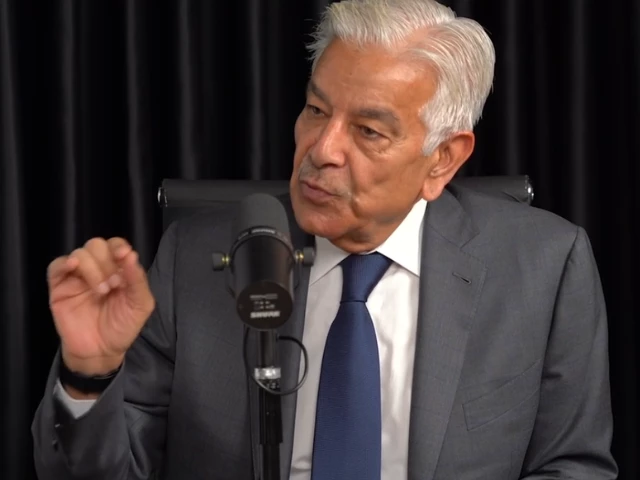
Defense Minister Khawaja Asif speaks during an interview with British-American journalist Mehdi Hasan on his show Mehdi Unfiltered. SCREEN CAPTURE
LAHORE:
Defense Minister Khawaja Asif on Saturday acknowledged that Pakistan’s political parties had systematically sidelined local governments despite their demonstrated role in strengthening grassroots politics, and warned that this neglect had weakened the civilian government itself.
Speaking at a panel discussion titled “Devolution for Revolution” during ThinkFest, the Defense Minister argued that the failure to institutionalize empowered local bodies was not accidental but a consequence of political decisions made over time.
The session was attended by Lahore University of Management Sciences (LUMS) Vice-Chancellor Ali Cheema, former State Bank Governor Dr Ishrat Hussain and former MPA Mary James Gill.
Reflecting on Pakistan’s political history, Asif noted that three military rulers, Ayub Khan, Ziaul Haq and Pervez Musharraf, remained in power longer than any civilian government, largely because they introduced systems of local government and derived political legitimacy and strength from them.
He admitted that the inability of civilian governments to do the same amounted to “a political failure on our part.”
He noted that local government elections, whenever they had been held, were historically much less controversial than national elections. “Yet we have continued to avoid them,” he said, lamenting the persistent reluctance to delegate power.
Asif recalled that local bodies were included in the Charter of Democracy signed by the PPP and the PML-N in 2006.
However, the compromise failed to secure adequate space in the 18th Constitutional Amendment, even though most of the other agreed reforms were incorporated. He added that resistance to empowering the grassroots level largely came from the bureaucracy, which feared losing authority to elected representatives.
The discussion then turned to constitutional and fiscal reforms, with former State Bank Governor Dr Ishrat Hussain pointing out that while the 18th Amendment clearly delineated the functions of the federal and provincial governments, it failed to adequately define the functions and powers of local governments.
“This ambiguity continues to create political and administrative friction,” he said.
Dr. Hussain argued that the Amendment should have included provisions for a provincial finance commission to directly channel funds to underdeveloped areas within the provinces.
Strong local governments, he added, would not only improve development efficiency but could also “generate their own revenue by improving tax collection and identifying new sources of revenue.”
He further said that if institutions like Lahore Development Authority, Water and Sanitation Agency and other civic bodies were brought under the authority of an elected mayor, municipal administrations would be financially stronger and more self-sufficient.


